
(To see other currencies, click on price)
MORE ABOUT THIS BOOK
Main description:
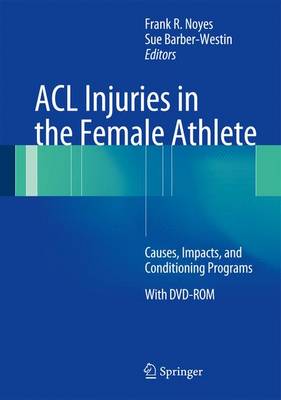
Nearly a million anterior cruciate ligament (ACL) injuries occur each year worldwide, causing long-term problems in the knee joint. This textbook examines the short- and long-term impacts of ACL injuries on the basis of hundreds of published studies. Risk factors for such injuries are explored using data from hypothesis-driven investigations, and possible causes of the higher risk of noncontact ACL injuries in female athletes are analyzed. Neuromuscular training programs shown to reduce the rate of these injuries in female athletes are described in step-by-step detail with the aid of numerous color photographs and video demonstrations. In addition, detailed descriptions are provided for rehabilitation programs to be used after ACL reconstruction in order to reduce the risk of a future injury. The book will be of value to orthopedic surgeons, physical therapists, athletic trainers, sports medicine primary care physicians, and strength and conditioning specialists.
Feature:
Provides step-by-step details of training programs of proven value in reducing the rate of noncontact ACL injuries in female athletes
Describes the risk factors for ACL injuries in female athletes using data from hypothesis-driven investigations
Summarizes hundreds of published studies, providing a clear understanding of the short- and long-term impacts of ACL injuries
Back cover:
Nearly a million anterior cruciate ligament (ACL) injuries occur each year worldwide. Such injuries can cause long-term problems in the knee joint, including in particular the early onset of osteoarthritis. It has been evident for some time that a tremendous gender disparity exists in noncontact ACL injuries in sports, and this aspect has been the subject of intensive research.
This textbook, focusing on female athletes, reviews and discusses:
- The short- and long-term impacts of ACL injuries
- Risk factors and possible causes of the higher injury risk in females
- Neuromuscular training programs and their effectiveness in reducing noncontact ACL injury rates in females
- Sports-specific programs for a range of sports with proven improvements in athletic performance
- Rehabilitation programs after ACL reconstruction that reduce the risk of a future injury
- Worldwide implementation of neuromuscular retraining
The book will be of value to orthopedic surgeons, physical therapists, athletic trainers, sports medicine primary care physicians, and strength and conditioning specialists.
Contents:
Introduction: The ACL: Anatomy, Biomechanics, Mechanisms of Injury, and the Gender Disparity. The Impact of ACL Injuries: Short- and Long-Term Effects on the Knee Joint: Consequences of Complete ACL Ruptures.- ACL Reconstruction: Chondroprotective Effects, Risks of Reinjury. Proposed Risk Factors of Noncontact ACL Injuries: Role of Shoe-Surface Interaction and Noncontact ACL Injuries.- Neuromuscular Differences Between Men and Women.- Gender Differences in Muscular Protection of the Knee.- Effects of Alterations in Gait Mechanics on the Development of Osteoarthritis in the ACL-Deficient Knee.- Analysis of Male and Female Athletes’ Muscle Activation Patterns During Running, Cutting, and Jumping.- Proximal Risk Factors for ACL Injury: Role of Core Stability.- Proximal Risk Factors for ACL Injury: Role of the Hip.- Gender Differences in Core Strength and Lower Extremity Function During the Single-leg Squat Test.- Gender Effect of Fatigue on Lower Extremity Kinematics and Kinetics During Athletic Tasks.- Testing for Neuromuscular Problems and Athletic Performance. ACL Injury Prevention Programs: Sportsmetrics ACL Intervention Training Program: Components, Results.- Sports-Specific Programs for Soccer, Basketball, Volleyball, Tennis.- ACL Injury Prevention in Soccer: The Santa Monica Experience.- ACL Injury Prevention Warm-up Programs.- Effect of Intervention Programs on Reducing the Incidence of ACL Injuries, Improving Neuromuscular Deficiencies, and Enhancing Athletic Performance. Reducing the Risk of Reinjury After ACL Reconstruction: Rehabilitation After ACL Reconstruction.- Restoration of Proprioception and Neuromuscular Control Following ACL Injury and Surgery. Future Directions : Promotion of ACL Intervention Training Worldwide.- What We Know and Goals for Future Research.
PRODUCT DETAILS
Publisher: Springer (Springer Berlin Heidelberg)
Publication date: January, 2013
Pages: 568
Availability: Not available (reason unspecified)
Subcategories: Orthopaedics and Fractures, Public Health, Rehabilitation, Sports Medicine