(To see other currencies, click on price)
MORE ABOUT THIS BOOK
Main description:
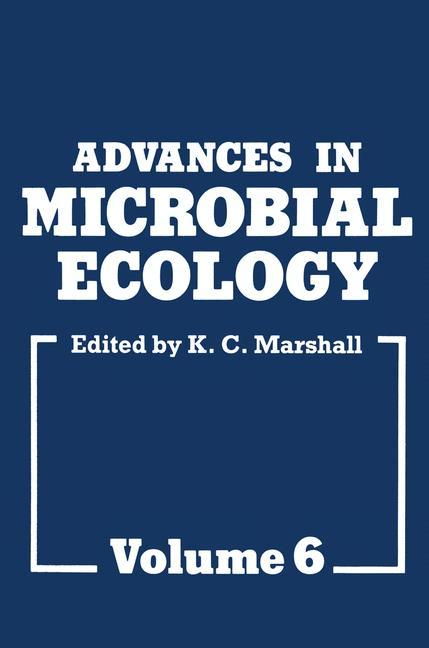
This volume of Advances in Microbial Ecology marks a change in the editor ship of the series. The Editorial Board wishes to take this opportunity to express its gratitude to Martin Alexander, the founding editor and editor of the first five volumes, for his enterprise in establishing the series and in ensuring that Advances has become an outstanding focal point for the identification of new developments in the rapidly expanding field of microbial ecology. With the publication of this volume, we welcome Howard Slater to the Editorial Board. The policies of the Editorial Board remain the same as before. Most con tributions to Advances in Microbial Ecology will be solicited by the Board. However, individuals are encouraged to submit outlines of unsolicited contri butions to the Board for consideration for inclusion in the series. Advances is designed to serve an international audience and to provide critical reviews on basic and applied aspects of microbial ecology. Contributions in the present volume are predominantly concerned with the ecology of aquatic microorganisms, but encompass a variety of approaches to this area. The exception is the chapter by J. W. Doran on the role of micro organisms in the cycling of selenium. G-Y. Rhee discusses the effects of envi ronmental factors on phytoplankton growth. The factors limiting the produc tivity of freshwater microbial ecosystems are considered by H. W. Paerl.
Contents:
1: Microorganisms and the Biological Cycling of Selenium.- 1. Introduction.- 2. Selenium in the Environment.- 2.1 Biogeochemistry.- 2.2 Mobilization of Selenium.- 3. Microbial Transformations of Selenium.- 3.1 Oxidation and Reduction of Inorganic Selenium.- 3.2 Immobilization and Mineralization.- 3.3 Methylation and Volatilization.- 4. Biological Cycling of Selenium.- 4.1 Soil, Plants, and Animals.- 4.2 Atmospheric Selenium.- 5. Conclusions and Remarks.- References.- 2: Effects of Environmental Factors and Their Interactions on Phytoplankton Growth.- 1. Introduction.- 2. Nutrients.- 2.1 Limiting Nutrients: Growth and Uptake.- 2.2 Optimum N: P Ratio and Multinutrient Limitation.- 3. Light.- 3.1 Growth and Photosynthesis.- 3.2 Light Adaptation.- 3.3 Interaction with Nutrient Limitation.- 4. Temperature.- 4.1 Growth.- 4.2 Temperature Adaptation.- 4.3 Interactions with Nutrient Limitation.- 4.4 Temperature-Light Interactions.- 5. Concluding Remarks.- References.- 3: Factors Limiting Productivity of Freshwater Ecosystems.- 1. A Perspective on Freshwater Ecosystems.- 2. The Concept of Limiting Factors.- 3. Geological, Physical, Chemical and Biological Characteristics of Freshwater Ecosystems in Relation to Nutrient Limitation.- 4. The CO2 Limitation Question.- 5. Vitamins and Growth Promoting Substances as Limiting Factors.- 6. Microbial Strategies Counteracting Growth Limitations.- 7. Determining Factors Limiting Primary Productivity in Freshwater.- 8. Concluding Remarks.- References.- 4: Biomass and Metabolic Activity of Heterotrophic Marine Bacteria.- 1. Introduction.- 2. Determination of Bacterial Number and Biomass.- 2.1 Bright Field and Phase Contrast Microscopy.- 2.2 Epifluorescence Microscopy.- 2.3 Viable Count Techniques.- 2.4 Chemical Determinations.- 3. Determinations of Bacterial Activity.- 3.1 Biological Oxygen Consumption Rate and Diurnal Oxygen Curve Analysis.- 3.2 Heterotrophic 14CO2 Uptake.- 3.3 Uptake of Labeled Organic Substrates.- 3.4 Rate of Nucleotide Incorporation into RNA and DNA.- 3.5 Enzyme Activity.- 3.6 Increase of Cell Density in Incubators.- 3.7 Frequency of Dividing Cells.- 3.8 Enclosure Effects.- 4. Discussion.- 4.1 Bacterial Numbers and Biomass.- 4.2 The Active Fraction.- 4.3 Heterotrophic Bacterial Activity.- 4.4 Bacterial Growth and Biomass Production in Relation to the Food Web.- 4.5 Outlook.- References.- 5: Starvation-Survival of Heterotrophs in the Marine Environment.- 1. Introduction.- 2. Background Information.- 3. Organic Matter in Oligotrophic Marine Waters.- 4. Starvation-Survival.- 4.1 Viability Curves or Patterns.- 4.2 Miniaturization of Bacterial Cells.- 4.3 Energy of Maintenance and Endogenous Metabolism.- 4.4 Changes in Cellular Components.- 5. Substrate Capture.- 6. Chemotaxis.- 7. ATP and Energy Charge.- 8. Substrate Uptake.- 9. Conclusions.- References.- 6: Are Solid Surfaces of Ecological Significance to Aquatic Bacteria?.- 1. Introduction.- 2. Characteristics of a Surface.- 2.1 Physicochemical Factors.- 2.2 Physical Factors.- 2.3 Biological Factors.- 3. Conditioning Films.- 3.1 Difficulties in Evaluating Adsorbed Films.- 3.2 Modification to Surface Charge and Surface Free Energy.- 3.3 Possible Nutritional Implications of Conditioning Films.- 4. Adhesion Mechanisms.- 4.1 Reversible Attachment.- 4.2 Irreversible Attachment.- 4.3 Strength of Adhesion.- 5. Bacterial Nutrition Relative to the Trophic State of Waters.- 5.1 Oligotrophic Bacteria.- 5.2 Copiotrophic Bacteria.- 6. Ecological Advantages of Attachment.- 6.1 Fast-Flowing Systems.- 6.2 Attachment to Substrates.- 6.3 The Adsorption of Nutrients at Surfaces.- 7. Succession and Microbial Film Development.- 7.1 Film Development.- 7.2 Role of Prior Conditioning or Colonization on Succession in Microbial Films.- 7.3 Role of Original Surface Properties in Influencing Succession.- 7.4 Possible Control of Film Formation.- 8.Concluding Remarks.- References.
PRODUCT DETAILS
Publisher: Springer (Springer-Verlag New York Inc.)
Publication date: December, 2011
Pages: 252
Weight: 379g
Availability: Available
Subcategories: Biochemistry
From the same series