
(To see other currencies, click on price)
MORE ABOUT THIS BOOK
Main description:
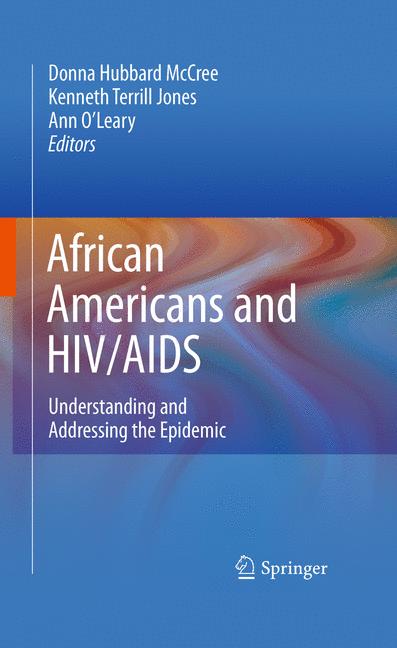
Among U. S. racial and ethnic minority populations, African American communities are the most disproportionately impacted and affected by HIV/AIDS (CDC, 2009; CDC, 2008). The chapters in this volume seek to explore factors that contribute to this disparity as well as methods for intervening and positively impacting the e- demic in the U. S. The book is divided into two sections. The first section includes chapters that explore specific contextual and structural factors related to HIV/AIDS transmission and prevention in African Americans. The second section is composed of chapters that address the latest in intervention strategies, including best-evidence and promising-evidence based behavioral interventions, program evaluation, cost effectiveness analyses and HIV testing and counseling. As background for the book, the Introduction provides a summary of the context and importance of other infectious disease rates, (i. e. , sexually transmitted diseases [STDs] and tubercu- sis), to HIV/AIDS prevention and treatment in African Americans and a brief introductory discussion on the major contextual factors related to the acquisition and transmission of STDs/HIV. Contextual Chapters Johnson & Dean author the first chapter in this section, which discusses the history and epidemiology of HIV/AIDS among African Americans. Specifically, this ch- ter provides a definition for and description of the US surveillance systems used to track HIV/AIDS and presents data on HIV or AIDS cases diagnosed between 2002 and 2006 and reported to CDC as of June 30, 2007.
Feature:
Broken down into different subpopulations of current research interest: prison inmates, adolescents, MSM, etc.
Offers a wealth of evidence-based and emerging interventions (including behavioral interventions, and counseling and testing strategies) tailored to specific subpopulations.
Allows public health professionals to understand the context in which high-risk behavior occurs and have access to relevant, and current, prevention strategies.
Back cover:
African Americans and HIV/AIDS
Understanding and Addressing the Epidemic
Donna Hubbard McCree, Kenneth T. Jones, and Ann O’Leary, editors
According to the Centers for Disease Control and Prevention, nearly half of the more than one million Americans living with HIV/AIDS are African Americans, despite the fact that they comprise only thirteen percent of the US population. Incidence among African Americans is estimated to be approximately 8 times that of European Americans. HIV/AIDS disparities have existed across this diverse group, and continue to take a devastating toll. To intervene effectively, public health professionals must understand the context in which high-risk behavior occurs, and have access to relevant and current prevention strategies.
African Americans and HIV/AIDS succeeds on both counts by providing an analysis of the historical, psychosocial, economic, and political issues related to HIV transmission in the black community, and offering a wealth of evidence-based and emerging interventions (including behavioral interventions, and counseling and testing strategies) tailored to specific subpopulations. This dual perspective gives readers the widest understanding of these and other key areas including:
• The relationship between poverty, discrimination, and other social disparities to HIV.
• The evolving response of the black church to the HIV/AIDS epidemic.
• HIV/AIDS in the context of other sexually transmitted infections.
• HIV/AIDS prevention strategies specifically targeting heterosexually active men, and women, men who have sex with men, injection drug users, and adolescents.
• Prison-based intervention programs.
• Structural interventions emphasizing social conditions.
Practitioners, researchers, and graduate students in public health, disease prevention, health disparities, and minority health will find African Americans and HIV/AIDS a ready source of valuable background and practical knowledge.
Contents:
The Contribution to and Context of Other Sexually Transmitted Diseases and Tuberculosis in the HIV/AIDS Epidemic Among African Americans.- Context Chapters.- Epidemiology and Surveillance of HIV Infection and AIDS Among Non-Hispanic Blacks in the United States.- Racism, Poverty and HIV/AIDS Among African Americans.- Organized Religion and the Fight Against HIV/AIDS in the Black Community: The Role of the Black Church.- Disproportionate Drug Imprisonment Perpetuates the HIV/AIDS Epidemic in African American Communities.- Violence, Trauma, and Mental Health Disorders: Are They Related to Higher HIV Risk for African Americans?.- Countering the Surge of HIV/STIs and Co-occurring Problems of Intimate Partner Violence and Drug Abuse Among African American Women: Implications for HIV/STI Prevention.- Childhood Sexual Abuse, African American Women, and HIV Risk.- Interventions.- A Systematic Review of Evidence-Based Behavioral Interventions for African American Youth at Risk for HIV/STI Infection, 1988–2007.- HIV Behavioral Interventions for Heterosexual African American Men: A Critical Review of Cultural Competence.- HIV Prevention for Heterosexual African-American Women.- Formulating the Stress and Severity Model of Minority Social Stress for Black Men Who Have Sex with Men.- HIV Prevention Interventions for African American Injection Drug Users.- Structural Interventions with an Emphasis on Poverty and Racism.- HIV Behavioral Interventions for Incarcerated Populations in the United States: A Critical Review.- The HIV/AIDS Epidemic in the African American Community: Where Do We Go from Here?.
PRODUCT DETAILS
Publisher: Springer (Springer New York)
Publication date: September, 2010
Pages: 344
Weight: 1450g
Availability: Not available (reason unspecified)
Subcategories: Public Health
Publisher recommends
CUSTOMER REVIEWS
From the reviews:
“This book reviews the history and context of HIV/AIDS in African Americans and discusses interventions targeting specific subpopulations. … The authors intend this book for anyone interested in a greater understanding of HIV among African Americans and it is appropriate for health workers, researchers, academics, students, and activists. Each chapter is written by leading experts in the area. … This is an expertly written body of work that superbly summarizes some key areas for understanding the HIV/AIDS epidemic disparity among African Americans.” (Basmattee Boodram, Doody’s Review Service, January, 2011)
“This wide-ranging text compiled by experts at the Centers for Disease Control and Prevention (CDC) addresses many of the key issues associated with this disparity while making an important contribution to the field of HIV prevention. … Readers who believe this epidemic can be stopped by more creative approaches to increasing consistent condom use or that the disparity is because African Americans engage in more risk behaviors than whites owe it to themselves to pick up this engaging book.” (Eve D. Mokotoff, Journal of the American Medical Association, May, 2011)