
(To see other currencies, click on price)
MORE ABOUT THIS BOOK
Main description:
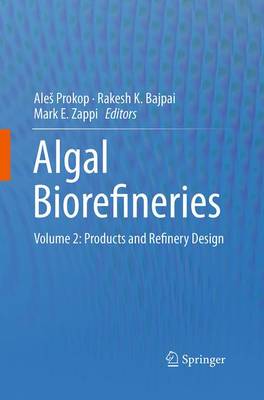
Algae offer potential to produce renewable chemicals and fuels using solar energy and carbon dioxide from atmosphere or in flue gases while simultaneously reducing the generation of greenhouse gases. Since these can be grown on marginal lands with micronutrients and macronutrients often present in waste streams, algae-based chemicals and fuels do not compete with foods. Still large-scale production of algae-based fuels and chemicals faces considerable technological and economical challenges and it would by necessity require a biorefinery approach wherein all the possible algal components are converted into value-added compounds. The present series on algal biorefineries represents a forum for reporting the state of the art of different technologies as well as the latest advances in this field. The volume II of this series complements the volume I in terms of the current state of the art. Different chapters in this volume address diverse issues ranging from genetically modifies algae to new products to life-cycle analysis of algal products.
Contents:
Algal Biorefineries II: Products and Refinery Design
Editorial and Introduction to Volume 2: Ales Prokop, Rakesh K Bajpai and Mark Zappi, Editors
Algal growth, products and optimization
Microalgal systems biology for biofuel production: Seong-Joo Hong and Choul-Gyun Lee
Government regulation of the uses of genetically modified algae and other microorganisms in biofuel and bio-based chemical production: David J. Glass
Algal heterotrophic and mixotrophic culturing for biorefinery: From metabolic routes to techno-economics: Octavio Perez-Garcia and Joav Bashan
Algal Closed Reactor Design: Martin Koller
Algal tubular reactor design: Graziella Chini-Zitelli and Giuseppe Torzillo
Photobioreactors with internal illumination: Magda Sergejevova, Jose Romel Malapascua, Jiri Kopecky and Jiri Masojidek
Thin-layer systems for mass cultivation of microalgae: flat panels and sloping cascades: Jiri Masojidek, Magda Sergejevova, Jose R. Malapascua and Jiri Kopecky
Gas balances and growth in algal cultures: Marcai Morales, Juan Cabello and Sergio Revah
Beneficial or toxic effects of selenium on green algae and their application as nutrient supplements or bio-remediators: Milada Vitova, Katerina Bisova, Jiri Doucha and Vilem Zachleder
Rare earth elements and algae: Physiological effects, biorefinery and recycling: Franz Goecke, Vilem Zachleder and Milada Vitova
Biorefinery design and processing steps
Utilization of biorefinery waste proteins as feed, glues, composites, and other co-products: William M Chirdon
Utilization alternatives of algal wastes for solid algal products: Didem OEzcimen, Benan Inan, Sevgi Akis and Anil Tevfik Kocer
Algal Cell Disruption and Lipid Extraction: A Review on Current Technologies and Limitations: Chandra S. Theegala
Microalgal derived biomethanization and biohydrogen production - a review of modeling approaches: Marc Wichern and Manfred Lubken
Hydrothermal pretreatment of macroalgal biomass for biorefineries: Hector A. Ruiz, Rosa M Rodriguez-Jasso, Mario Aguedo and Zsofia Kadar
Conversion of microalgae bio-oil into bio-diesel: Aimaro Sanna and Abd Rahman Nur Adilah
A framework for sustainable design of algae biorefineries: Economic aspects and life cycle analysis: Peam Cheali, Carina Gargalo, Krist V Gernaey and Gurkan Sin
Multi-actor life cycle assessment of algae-derived biofuels for U.S. airline industry: Datu Buyung Agusdinata and Daniel DeLaurentis
PRODUCT DETAILS
Publisher: Springer (Springer International Publishing AG)
Publication date: August, 2016
Pages: 557
Weight: 8482g
Availability: Available
Subcategories: General Issues