
(To see other currencies, click on price)
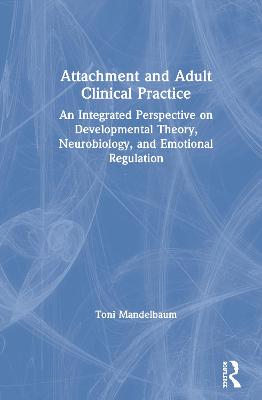
MORE ABOUT THIS BOOK
Main description:
This comprehensive volume addresses attachment theory's history as well as its integration with neurobiology, psychophysiology, theories of emotion, regulation theory, and mentalization theory. It explores how clinicians can connect with their clients so that they feel completely seen and heard.
Attachment theory speaks to one's biological drive to connect, to relate, and to feel heard. The author aims to achieve this by condensing the enormous and diverse literature of the field into a singular, manageable work that clinicians can use to foster these connections. The book traces the history of attachment theory and describes how neurobiological research has influenced the expansion of attachment theory, and how emotions and psychophysiology have become critical to our understanding of human attachment connections. It concludes with a detailed examination of how to apply these theories in clinical practice.
This practical book addresses attachment theory's take on integrating the mind, body, and emotion when striving toward well-being. It will be of great importance for psychotherapy students, beginning therapists, and experienced clinicians with an interest in attachment theory.
Contents:
1. Attachment Theory
2. Mary Answorth
3. The Adult Attachment Interview
4. Self-Report Measures
5. The Developmental Pathway of Attachment
6. The Brain
7. Psychophysiology
8. Emotions and Attachment
9. Affect Regulation
10. Mentalization
11. Attachment and Therapy: The Client
12. Attachment and Therapy: The Therapist and Intervention
PRODUCT DETAILS
Publisher: Taylor & Francis (Routledge)
Publication date: September, 2020
Pages: 272
Weight: 498g
Availability: Available
Subcategories: Neuroscience, Psychotherapy