
(To see other currencies, click on price)
MORE ABOUT THIS BOOK
Main description:
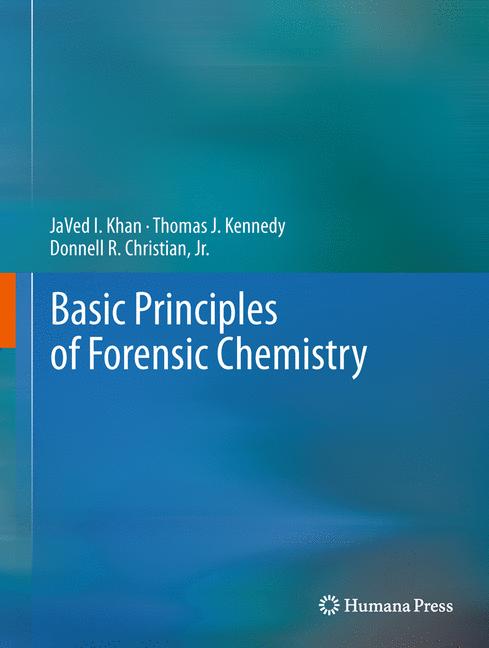
This book focuses on a marvel approach that blends chemistry with forensic science and is used for the examination of controlled substances and clandestine operations. The book will particularly interest forensic chemists, forensic scientists, criminologists, and biochemists.
Feature:
With numerous high quality illustrations
Comprehensive in scope
Written by experts
Back cover:
Basic Principles of Forensic Chemistry is designed to provide a clear and concise understanding of forensic chemistry. The text begins with an introduction to the basic principles of chemistry and expands through organic chemistry into forensic investigation. The detailed chapters focus on both the theoretical and practical aspects of forensic chemistry with emphasis on controlled substance testing and identification. Leading experts in the field contribute general examination techniques followed by applications to more specific models. In addition, the text contains a comprehensive collection of information and data on controlled substances commonly encountered in forensic investigation including; detailed structural analysis, physical and physiological effects, functional group reactivity, and results of analytical examination. Also illustrated is arguably the greatest challenge to the forensic chemist: the investigation and processing of clandestine laboratory operations. The Forensic Chemistry Laboratory Manual is included on a CD-ROM and contains a collection of practical exercises designed to support theoretical principles covered in the text. This provides the student with valuable hands-on experience while adding clarity and continuity to the topics of discussion.
Essential and comprehensive, Basic Principles of Forensic Chemistry provides the fundamental knowledge required for a rewarding journey into the field of forensic chemistry.
Contents:
Table of Contents
Part I: Introduction to Forensic Chemistry
Chapter One: Introduction
Chapter Two: Atomic Structure
Chapter Three: Molecules
Chapter Four: Organic Chemistry
Part II: Tools of Forensic Chemistry
Chapter Five: Forensic Language
Chapter Six: Forensic Documentation
Chapter Seven: Chemical Screening
Chapter Eight: Microcrystal Techniques
Chapter Nine: Chemical Extractions and Sample Preparation
Chapter Ten: Gas Chromatography and Mass Spectrometry
Chapter Eleven: Infrared Spectrometry
Part III: Examination of Drugs/Narcotics
Chapter Twelve: Marijuana
Chapter Thirteen: Phenethylamines
Chapter Fourteen: Tertiary Amines
Chapter Fifteen: Tryptamines
Chapter Sixteen: Anabolic Steroids
Chapter Seventeen: Miscellaneous Controlled Substances
Part IV: Clandestine Laboratory Operations
Chapter Eighteen: Clandestine Operations, Hazard, and Safety
Chapter Nineteen: Evidence Identification and Collection
Chapter Twenty: Examination of the Clandestine Evidence
PRODUCT DETAILS
Publisher: Springer (Humana Press)
Publication date: November, 2011
Pages: 580
Weight: 1164g
Availability: Not available (reason unspecified)
Subcategories: Forensics, Pharmacology
Publisher recommends
CUSTOMER REVIEWS
From the reviews:
“This is a textbook of basic principles of forensic chemistry. … It is intended for students of forensic chemistry, specifically undergraduates majoring in criminalistics intent on a future career as a forensic examiner. This book also would be of interest to anyone with a science background … curious about today’s practice and underlying theory regarding forensic chemistry.” (Valerie L. Ng, Doody’s Book Reviews, March, 2012)
“The book focuses on literature data and on applications in the field of drug identification. … This book will be of interest to beginners and experienced scientists. This book can be recommended to laboratories in departments of criminal investigation, forensic and clinical toxicology, and doping control. The book ‘Basic Principles of Forensic Chemistry’ focuses on the characterization of seized material, covering all the aspects, from collection of evidence to interpretation. It is a helpful resource for all scientists involved in drug identification.” (Pascal Kintz, Analytical and Bioanalytical Chemistry, Vol. 403, 2012)