
(To see other currencies, click on price)
MORE ABOUT THIS BOOK
Main description:
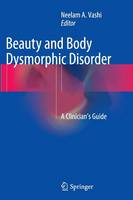
Over the decades, research has demonstrated that in categories of life deemed to be important, beautiful people achieve more desirable outcomes, are judged more favorably, and receive preferential treatment. An understanding of the historical aspects, science, and implications of what the human mind finds aesthetically pleasing is quintessential for dermatologists, plastic surgeons, and others who practice aesthetic medicine as the importance of beauty in today's society is what brings patients into clinics.
While an element of dissatisfaction with one's appearance is commonplace, clinicians should remain vigilant for individuals who seek cosmetic procedures to quell excessive body image concerns that are out of proportion to objective physical findings. Body dysmorphic disorder (BDD) is a disorder of self-perception; it is the impairing preoccupation with a nonexistent or minimal flaw in appearance. According to recent statistics, BDD occurs in 0.7-2.4% of the general population; however, multiple studies have suggested an incidence of 6-16% in patients seeking aesthetic medical treatments. Moreover, a vast majority will at some point seek dermatologic treatment and cosmetic surgery. Such patients are unlikely to be satisfied with corrective procedures, and only 15% of dermatologists surveyed thought that they could successfully treat BDD. Therefore, Beauty and Body Dysmor
phic Disorder aims to assist dermatologists, plastic surgeons, and other aesthetic providers in recognizing key characteristics as well as providing treatment strategies to help in caring for those with BDD.
Contents:
Chapter 1: Historical Importance of Beauty
Neelam A. Vashi, MD
Chapter 4: Subjective Aspects of Beauty
Neelam A. Vashi, MD and Ellinor R. Quay, MD
Chapter 6: Body Dysmorphic Disorder: Historical Aspects
Sarah Hahn, MD and Neelam A. Vashi, MD
Chapter 7: Diagnosis of Body Dysmorphic Disorder
Neelam Vashi1, MD, Katlein Franca, MD, MSc, and Mohammad Jafferany, MD, FAPA
Chapter 8: Body Dysmorphic Disorder: Etiology and Pathophysiology
Roopal V. Kundu, MD
Chapter 9: Body Dysmorphic Disorder: Epidemiology and Specific Cohorts
Kavitha K. Reddy, MD and Justin Besen, BA
Chapter 10: Body Dysmorphic Disorder: Effects of Aesthetic Treatments and Implications for the Dermatologist and Cosmetic Surgeon
Yakir Levin, MD, PhD and Emmy M. Graber, MD, MBA
Chapter 11: Body Dysmorphic Disorder: Screening Patients and Associated Algorithms
Amanda Champlain and Anne Laumann
Chapter 12: Therapeutic Interventions for Body Dysmorphic Disorder
Rachel Holtzman, BS, Eric Sorenson, AB, and John Koo, MD
Chapter 13: Prognosis and the Effect of Body Dysmorphic Disorder on Life
Jonathan Stuart Thiele, MD and Gareen Hamalian, MD
Chapter 14: Approach and Resources
Neelam A. Vashi, MD and Mayra Buainain de Castro Maymone, MD, M
Sc
PRODUCT DETAILS
Publisher: Springer (Springer International Publishing AG)
Publication date: October, 2016
Pages: None
Weight: 3401g
Availability: Available
Subcategories: Dermatology, Plastic/Reconstructive & Aesthetic, Psychiatry