
(To see other currencies, click on price)
MORE ABOUT THIS BOOK
Main description:
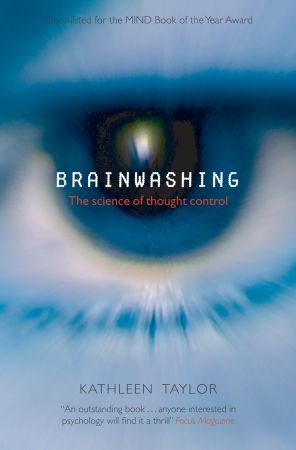
Throughout history, humans have attempted to influence and control the thoughts of others. Since the word 'brainwashing' was coined in the aftermath of the Korean War, it has become part of the popular culture, served as a topic for jokes, and been exploited to create sensational headlines. It has also been the subject of learned discussion from many disciplines: including history, sociology, psychology, and psychotherapy. But until now, a crucial part of the debate has been
missing: that of any serious reference to the science of the human brain. Descriptions of how opinions can be changed, whether by persuasion, deceit, or force, have been almost entirely psychological.
In Brainwashing, Kathleen Taylor brings the worlds of neuroscience and social psychology together for the first time. In elegant and accessible prose, and with abundant use of anecdotes and case-studies, she examines the ethical problems involved in carrying out the required experiments on humans, the limitations of animal models, and the frightening implications of such research. She also explores the history of thought-control and shows how it still exists all around us, from
marketing and television, to politics and education.
PRODUCT DETAILS
Publisher: Oxford University Press (OUP Oxford)
Publication date: July, 2006
Pages: 336
Dimensions: 129.00 x 196.00 x 24.20
Weight: 252g
Availability: Not available (reason unspecified)
Subcategories: Neurology, Psychiatry
CUSTOMER REVIEWS
An ambitious and well-written study