
(To see other currencies, click on price)
MORE ABOUT THIS BOOK
Main description:
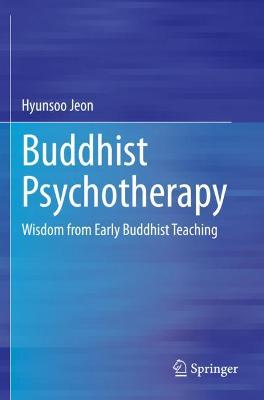
This book explores how to utilize Buddhism in psychotherapy and how Buddhism itself acts as a form of psychotherapy, using Buddhism practices as a lens for universal truth and wisdom rather than as aspects of a religion. Based on the author's over 30 years of study and practice with early Buddhism and his experiences of Buddhism with his patients, the book outlines a new form of psychotherapy incorporating three Buddhist principles: the properties of the body and mind, the principle of world's movement, and living with wisdom. This technique provides a unique perspective on mental health and offers new approaches for clinicians and researchers to effectively addressing mental health and well-being.
Contents:
Chapter 1 - What is Buddhist Psychotherapy?
The First Act of Buddhist Psychotherapy
The Second Act of Buddhist Psychotherapy
The Essence of Psychotherapy
Buddhism is a Very Complete Psychotherapy
Buddhist Psychotherapy is Wisdom-therapy
The Three Ways Suffering Arises
Why We Need to Understand the Cognitive Process
The Buddha's Analysis of and Solution for Anxiety
The Four Noble Truths and the Noble Eightfold Path Seen from the Perspective of Buddhist Psychotherapy
How Would the Buddha Have Provided Treatment?
The Three Principles of Buddhist Psychotherapy
Chapter 2 - The First Principle of Buddhist Psychotherapy: The Properties of the Body and Mind
Where Does Suffering Come From?
Knowing the Properties of the Body and Mind through Mindful Observation
Properties of the Body
Properties of the mind
Wise Attention and Unwise Attention
Past, Present, Future
The Principles of Making Paths in the Mind
The Body and Mind Are Not Ours
How to Prevent the Mind from Suffering When the Body Suffers
How to Prevent the Mind from Suffering Again When the Mind Suffers
The changes that come from knowing that the body and mind are not ours
Properties of thought
Creating a system of a mind without anger
What causes thoughts?
We can control our desires if we control our thoughts
Meditation is dwelling in the present
Ways to control the mind
The nature of regret
True introspection
Properties of will
The correct understanding of will
A scientific experiment on free will
How do we deal with will in psychotherapy?
Creating a system of quitting alcohol addiction
Chapter 3 - The Second Principle of Buddhist Psychotherapy: The Principles of the World's Movement
The reason why life is bound to be suffering
The composition of the world
Interactions between ourselves and things that are not alive
Interactions between ourselves and others
The image of ourselves in others determines our lives
Finding good in ourselves and in others
The Buddha's teachings on good in ourselves and in others
Five things we should prepare for when talking
Practicing empathy
The neurobiology of empathy
The Way of Unifying People's Minds
Four ways to cultivate a broad mind
Chapter 4 - The Third Principle of Buddhist Psychotherapy: Living with Wisdom
Contentment is the gift of wisdom
Three obstacles that prevent us from seeing reality
Focusing on the present
Three things that poison the mind
The importance of seeing clearly
A Beautiful Mind
Training to see reality
The Buddha's step-by-step instructions
Conditional freedom and happiness vs. unconditional freedom and happiness
Obtaining unconditional freedom and happiness: concerning physical health
Obtaining unconditional freedom and happiness: concerning money
Obtaining unconditional freedom and happiness: freeing ourselves from comparing
Living wisely: seventeen paths leading to good mental health
Chapter 5 - Understanding People with Mental Problems
How do we establish relationships?
Relaxed intervention
Special relationships placed on top of normal relationships
The therapist's state of mind during the first session
The first required task during the first session
The second required task during the first session
Dreams
Analyzing past treatments
Drug treatment and other considerations
Chapter 6 - Methods of Buddhist Psychotherapy
Psychotherapy
Drug treatment
Meditation and practice
Sleeping well
Dealing with bodily and mental pain
Escaping from obsessive-compulsive disorder
Final words
PRODUCT DETAILS
Publisher: Springer (Springer Nature Switzerland AG)
Publication date: January, 2022
Pages: 157
Weight: 279g
Availability: Available
Subcategories: Psychotherapy