
(To see other currencies, click on price)
MORE ABOUT THIS BOOK
Main description:
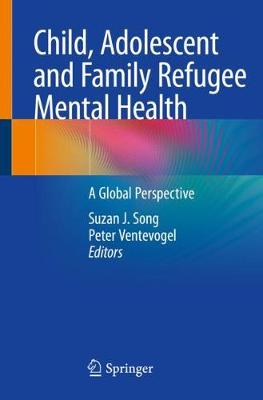
More than half of the 25.9 million refugees in the world are under the age of 18 and the mental health of these children and adolescents constitutes a growing global public health priority. Refugee children and their families are at increased risk to develop mental health problems, but they often face major challenges in accessing adequate treatment and mental health professionals frequently feel ill-equipped to assist this group.
Refugees are faced with a plethora of issues including the ambiguous loss of loved ones, psychological trauma related to past experiences of violence and atrocities, the complexities of daily life as a refugee, and the challenges to adapt to new systems of care and support. Refugees' life circumstances all too often undermine their agency, asthey face discrimination, stigma, and social isolation or exclusion. Refugees are frequently disconnected from the usual family and community supports that they once had, which creates additional mental distress. As parents struggle with these changes, their children often find it even more difficult to adapt and connect with them. This all leads to increased prevalence of mental health conditions among refugees.
Humanitarian policies recommend family-centered interventions that are multi-sectoral,multi-disciplinary, and focus on optimizing resource utilization. Over the last decade, a considerable body of research has emerged around socio-ecological models of mental health, family and community approaches, and resilience and strengths-based theories, but these insights are insufficiently incorporated in the practice of mental health care for refugee children. Clinicians often struggle to grasp the common unique stressors that families face and are not familiar with working with families as units for intervention. Using culturally and contextually informed assessment methods and family-oriented management approaches not only help individual children or adolescents, but also their families.
This book aims to provide an overview of the latest theoretical insights from research on sociocultural aspects of mental health and connect these with clinical insights from practical mental health care provision. Using strengths-based, resiliency-oriented and family-centered approaches can enrich clinical practice in refugee mental health, but clinicians need to translate the emerging evidence into concrete steps and interventions. This requires additional skills for the assessment and management of mental health conditions in refugee children and families.
The chapters in this book are written by a diverse group of authors using global, multi-disciplinary approaches. The chapters provide examples from various contexts including refugees who are displaced to neighboring countries, refugees 'on the move', and refugees and asylum seekers in resettlement settings. This book is therefore a unique resource for clinicians, researchers and policy makers working on mental health issues of refugee children and adolescents around the world.
Contents:
PART 1 Background
Chapter 1 Overview of refugee children and youth globally
Chapter 2 Child- and youth-hood in diverse contexts
Chapter 3 Defining culture and context
PART 2 Theoretical approaches
Chapter 4 Resiliency approach
Chapter 5 Family-centered
PART 3 Assessment Considerations
Chapter 6 How to do a culturally-informed mental health and psychosocial assessment of refugee children
Chapter 7 How to do a culturally-informed mental health and psychosocial assessment of refugee adolescents
Chapter 8 How to assess the mental health of families
PART 4 Symptom clusters and interventions
Chapter 10 Loss
Chapter 11 Trauma and stress
Chapter 12 Depression and anxiety
Chapter 13 Severe mental disorders and psychosis
Chapter 14 Pervasive developmental disorders, intellectual disabilities, and cognitive delays
Chapter 15 Neuropsychiatric conditions
Chapter 16 Substance abuse
PART 5 Integration and Challenges
Chapter 17 Special considerations faced by refugees
Chapter 18 Challenges and solutions to implementing family- and resiliency-based approaches
PRODUCT DETAILS
Publisher: Springer (Springer Nature Switzerland AG)
Publication date: June, 2020
Pages: 300
Weight: 456g
Availability: Available
Subcategories: General Practice, Neurology, Paediatrics and Neonatal, Psychiatry, Psychology