
(To see other currencies, click on price)
MORE ABOUT THIS BOOK
Main description:
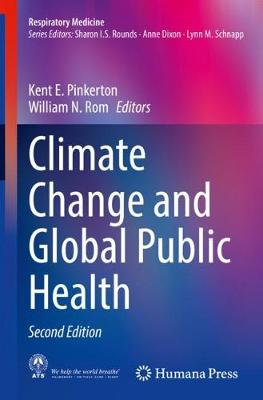
This book is a guide to the research, findings, and discussions of US and international experts on climate change and respiratory health. Since the publication of the first edition, climate change has been increasingly acknowledged as being directly related to the prevalence and incidence of respiratory morbidity. Evidence is increasing that climate change does drive respiratory disease onset and exacerbation as a result of increased ambient and indoor air pollution, desertification, heat stress, wildfires, and the geographic and temporal spread of pollens, molds and infectious agents.
This second edition is fully updated to include the latest research by international experts on topics such as heat waves causing critical care-related diseases, climate-driven air pollution increases, and high-level ozone and ozone exposure linked to idiopathic pulmonary fibrosis, lung cancer, and acute lower respiratory infection. Seven new chapters have also been added on extreme weather and agricultural safety in California; desert dust effects on lung health; climate policy and the EPA; California's integrated approach to air quality and climate change; integrating climate change, the environment, and sustainability themes into professional health science courses; and the role of the physician as climate advocate. This is an ideal guide for all pulmonologists and health professionals treating patients with pulmonary disease.
Contents:
1. Introduction: Consequences of Global Warming to Planetary and Human Health
2. Climate Variability and Change Data and Information for Global Public Health
3. Climate Change: Updates on Recent Global and United States Temperature Anomalies and Impacts to Water, Forests and Environmental Health
4. Eyewitness to Climate Change
5. Arctic Connections to Global Warming and Health
6. Assessing the Health Risks of Climate Change
7. Heat Waves and Rising Temperatures: Human Health Impacts and the Determinants of Vulnerability
8. Climate, Air Quality and Allergy: Emerging Methods for Detecting Linkages
9. The Human Health Co-benefits of Air Quality Improvements Associated with Climate Change Mitigation
10. Asthma, Hayfever, Pollen, & Climate Change
11. California and Climate Changes: An Update
12. Vector-borne Diseases in a Changing Climate and World
13. Dengue Fever and Climate Change
14. Climate Variability and Change: Food, Water and Societal Impacts
15. Hurricanes and Health: Vulnerability in an Age of Climate Change
16. The Impact of Climate Change and Extreme Weather Conditions on Agricultural Health and Safety in California
17. Household Air Pollution from Cookstoves: Impacts on Health and Climate
18. Biomass Fuel and Lung Diseases: An Indian Perspective
19. Climate Change and Women's Health: Risks and Opportunities
20. The impact of Climate Change on Public Health in Small Island States and Caribbean Countries
21. Global Climate Change, Desertification, and Its Consequences in Turkey and the Middle East
22. Climate change and the risk of desertification with a focus in the United States
23. Federal Programs in Climate Change and Health Research
24. Management of Climate Change Adaptation at the United States Centers for Disease Control and Prevention
25. Rules, Rulings, and Repeals: The Shifting State of Climate Policy at U.S. EPA
26. California's Integrated Approach to Air Quality and Climate Change
27. Climate Change and Public Health Interventions
28. Integrating Climate Change, the Environment, and Sustainability Themes into Professional Health Sciences Courses: A Case Study Across a University System
29. The Physician's Response to Climate Change
PRODUCT DETAILS
Publisher: Springer (Springer Nature Switzerland AG)
Publication date: November, 2021
Pages: 605
Weight: 1105g
Availability: Available
Subcategories: General Practice, Public Health, Respiratory Medicine