
(To see other currencies, click on price)
MORE ABOUT THIS BOOK
Main description:
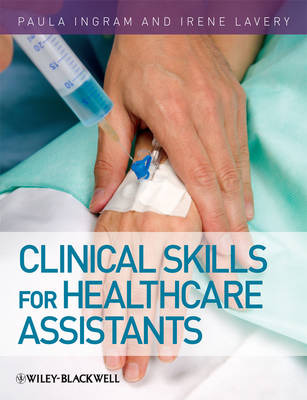
Clinical Skills for Healthcare Assistants is an accessible, easy to read guide, outlining the fundamental and core skills integral to clinical practice. Divided into three sections, the first looks at fundamental skills applicable to all staff, such as accountability, communication and record keeping. Section two explores core clinical skills for example respiratory care, pulse, blood glucose management, catheter care, and fluid balance. Section three outlines complex clinical skills that require more in–depth training and may be restricted to specialist areas of practice, such as medication, and intravenous cannulation.
Each chapter follows the same easy to use structure, starting with the aims and objectives of the chapter, followed by the explanation of why the skill is performed, relevant anatomy and physiology, related aspects and terminology, how to perform the skill and common problems. Aimed primarily at healthcare assistants, this will also be a useful resource for newly qualified practitioners and students in health and social care.
Contents:
Preface ix
Acknowledgements x
Introduction xi
Section 1: Fundamental skills
1 Accountability 1
Aim of this chapter 1
Regulatory body 1
What do we mean by accountability? 3
Delegation 4
Related aspects and terminology 7
Summary 11
Self–assessment 12
Table of cases 12
2 Communication in healthcare 14
Aim of this chapter 14
Why good communication is important 14
Communication methods 16
Strategies to improve communication 20
Related aspects and terminology 21
Summary of good communication 23
Self–assessment 24
Addendum 24
3 Psychological care 26
Aim of this chapter 26
What is meant by psychological care? 26
Psychological assessment in the healthcare setting 27
The importance of psychological care in the healthcare setting 28
Strategies to optimise psychological wellbeing 31
Pharmacological (drug–related) options 34
Non–pharmacological options 34
Therapeutic sense of self 34
Common problems 35
Summary 36
Self–assessment 37
4 Documentation and record keeping 38
Aim of this chapter 38
The importance and purpose of documentation in relation to clinical skills 38
Confidentiality in records and documentation 40
Types of documentation 40
Legal aspects relating to documentation 41
Strategies to improve standards of record keeping 43
Related aspects and terminology 44
Common problems 45
Summary 45
Recommendation: the review of Skills for Health (2004a c) 47
Self–assessment 47
Section 2: Core clinical skills
5 Pulse 51
Aim of this chapter 51
What is a pulse? 51
Relevant anatomy and physiology 51
Related aspects and terminology 52
Factors affecting the pulse rate 55
Terminology 56
Automated devices 58
Fetal heartbeat 59
Documentation 61
Common problems 61
Summary 63
Self–assessment 65
6 Blood pressure monitoring 67
Aim of this chapter 67
What is blood pressure? 67
Reasons for monitoring blood pressure 67
Who requests the test? 67
Who can take a BP reading? 68
What is done with the readings/information? 68
Relevant anatomy and physiology 68
Related aspects and terminology 70
Terminology 72
Equipment 73
Sites for recording blood pressure 78
Taking blood pressure 78
Documentation 79
Common problems 81
Summary 82
Self–assessment 85
7 Thermometry 88
Aim of this chapter 88
What is temperature? 88
Reasons for measuring temperature 88
Normal limits 89
Relevant anatomy and physiology 89
Related aspects and terminology 90
Terminology 94
Taking a temperature reading 97
Route 100
Taking a temperature reading 100
Documentation 103
Common problems 104
Summary 105
Self–assessment 107
8 Pulse oximetry 109
Aim of this chapter 109
What is an oxygen saturation reading? 109
Who can perform the test? 109
Reasons for recording an oxygen saturation level 109
Relevant anatomy and physiology 110
Related aspects and terminology 111
Themechanics of pulse oximetry 111
Equipment 112
Normal readings 112
Using a pulse oximeter 113
Documentation 115
Common problems 116
Summary 118
Self–assessment 118
9 Respiratory care 120
Aim of this chapter 120
What do we mean by respiratory care? 120
Relevant anatomy and physiology 120
Upper respiratory system 121
Lower respiratory system 122
Recording a respiratory rate 123
How to measure and record a respiratory rate accurately 126
Measuring and recording a peak expiratory flow rate 126
Performing suctioning 129
Related aspects and terminology 131
Common problems 131
Summary 132
Self–assessment 136
Addendum 136
10 Urinalysis and faecal occult blood testing 139
Aim of this chapter 139
Reasons for performing urinalysis and FOB tests 139
Relevant anatomy and physiology 139
Urinalysis testing 140
Faecal occult blood testing 146
Related aspects and terminology (Tortora and Derrickson 2006) 148
Common problems 148
Summary 148
Self–assessment 149
Addendum 153
11 Urinary catheterisation and catheter care 154
Aim of this chapter 154
Reasons for urinary catheterisation and catheter care 154
Relevant anatomy and physiology 154
Types of catheterisation 157
Patient preparation for catheterisation 161
Insertion technique 161
Catheter care 164
Sampling 166
Removal of catheter 167
Related aspects and terminology 168
Terminology 169
Common problems 169
Summary 175
Self–assessment 176
12 Venepuncture 178
Aim of this chapter 178
Reasons for performing venepuncture 178
Relevant anatomy and physiology 178
Common sites for venepuncture 179
Infection 179
Hand hygiene 181
Aseptic (sterile) technique 181
Protective clothing 181
Environment 181
Performing the skill: requirements and technique 181
Related aspects and terminology 187
Common problems 190
Summary 191
Self–assessment 192
13 Blood glucose monitoring 195
Aim of this chapter 195
What causes diabetes? 195
Reasons for performing blood glucose measurement 195
Relevant anatomy and physiology 196
Related aspects and terminology 198
Types of diabetes 198
Blood glucose levels 200
Hypoglycaemia 203
Hyperglycaemia 207
Common problems 207
Summary 209
Self–assessment 212
14 Fluid balance and intravenous maintenance 214
Aim of this chapter 214
Reasons for monitoring fluid balance 214
Related anatomy and physiology 214
Electrolytes 215
Related aspects and terminology 216
Fluid balance charts 218
The intravenous route 218
Care of the cannula 221
Discontinuing an IV infusion 222
Common problems 223
Summary 224
Self–assessment 225
Section 3: Complex clinical skills
15 Medicines 231
Aim of this chapter 231
Healthcare assistants role within medicine administration 231
Types of medicines 231
Medication prescribing and legal aspects 232
Related aspects and terminology 234
Common medications 237
Errors in administration and adverse reactions 241
Summary 241
16 Peripheral intravenous cannulation 243
Aim of this chapter 243
Reasons for cannulation 243
Why perform peripheral IV cannulation 243
Relevant anatomy and physiology 244
How to insert and remove a peripheral IV cannula 245
Environment 248
Performing peripheral IV cannula: requirements and technique 248
Patient education for peripheral IV cannulation 253
Related aspects and terminology 254
Common problems/potential complications of peripheral IV cannulation 255
Summary 261
Self–assessment 261
17 Recording a 12–lead ECG 265
Aim of this chapter 265
Relevant anatomy and physiology 265
The heart s conduction system 266
Electricity of the heart 267
Reasons for recording a 12–lead ECG 267
How to perform a 12–lead ECG 268
Related aspects and terminology 272
Common problems and actions 275
Summary 276
Self–assessment 276
Index 281
PRODUCT DETAILS
Publisher: John Wiley & Sons Ltd (Wiley–Blackwell)
Publication date: June, 2009
Pages: 304
Dimensions: 190.00 x 245.00 x 16.78
Weight: 594g
Availability: Not available (reason unspecified)
Subcategories: Nursing