
(To see other currencies, click on price)
MORE ABOUT THIS BOOK
Main description:
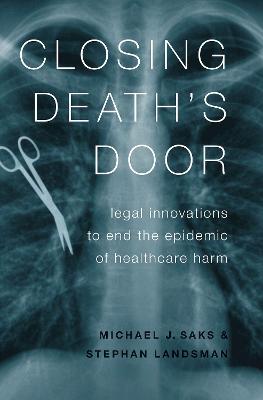
After heart disease and cancer, the third leading cause of death in the United States is iatrogenic injury (avoidable injury or infection caused by a healer). Research suggests that avoidable errors claim several hundred thousand lives every year. The principal economic counterforce to such errors, malpractice litigation, has never been a particularly effective deterrent for a host of reasons, with fewer than 3% of negligently injured patients (or their families)
receiving any compensation from a doctor or hospital's insurer.
Closing Death's Door brings the psychology of decision making together with the law to explore ways to improve patient safety and reduce iatrogenic injury, when neither the healthcare industry itself nor the legal system has made a substantial dent in the problem. Beginning with an unflinching introduction to the problem of patient safety, the authors go on to define iatrogenic injury and its scope, shedding light on the culture and structure of a healthcare industry that has failed to
effectively address the problem-and indeed that has influenced legislation to weaken existing legal protections and impede the adoption of potentially promising reforms. Examining the weak points in existing systems with an eye to using law to more effectively bring about improvement, the authors conclude by
offering a set of ideas intended to start a conversation that will lead to new legal policies that lower the risk of harm to patients. Closing Death's Door is brought to vivid life by the stories of individuals and groups that have played leading roles in the nation's struggle with iatrogenic injury, and is essential reading for medical and legal professionals, as well as lawmakers and laypeople with an interest in healthcare policy.
Contents:
Chapter 1. Introduction
Chapter 2. Nightmare in Dallas-The Ebola Case: A Medical Error Paradigm
Chapter 3. IOM and Public Disclosure of the Error Problem - To Err is Human
Chapter 4. Injury Incidence: The Scope of the Problem
Chapter 5. The Medical Malpractice Litigation System
Chapter 6. Meditations on Medical Torts
Chapter 7. Defensive Medicine: A Response to the Legal Response?
Chapter 8. Error Reporting: A Flawed Panacea
Chapter 9. Legal Innovations to Promote Patient Safety-An Introduction
Chapter 10. Incentives-Good, Bad, and Perverse
Chapter 11. Systems, Errors, and Responsibility-It's the System's Fault!
Chapter 12. Regulation and Engaged Surveillance
Chapter 13. Information Technology
Epilogue
PRODUCT DETAILS
Publisher: Oxford University Press (Oxford University Press Inc)
Publication date: March, 2021
Pages: 336
Dimensions: 156.00 x 245.00 x 30.00
Weight: 618g
Availability: Available
Subcategories: Public Health