
(To see other currencies, click on price)
MORE ABOUT THIS BOOK
Main description:
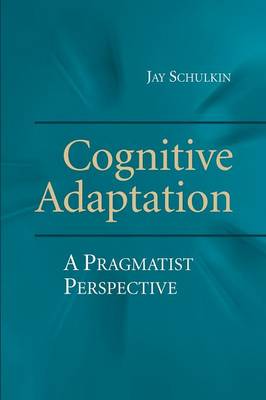
Cognitive Adaptation: A Pragmatist Perspective argues that there is a fundamental link between cognitive/neural systems and evolution that underlies human activity. One important result is that the line between nature and culture and scientific and humanistic inquiry is quite permeable - the two are fairly continuous with each other. Two concepts figure importantly in our human ascent: agency and animacy. The first is the recognition of another person as having beliefs, desires, and a sense of experience. The second term is the recognition of an object as alive, a piece of biology. Both reflect a predilection in our cognitive architecture that is fundamental to an evolving, but fragile, sense of humanity. The book further argues for a regulative norm of self-corrective inquiry, an appreciation of the hypothetical nature of all knowledge. Schulkin's perspective is rooted in contemporary behavioral and cognitive neuroscience.
Contents:
1. Cognitive adaptation: objects and inquiry; 2. The human situation: uncertainty and adaptation; 3. Time and memory: historical sensibilities; 4. Education: learning from others, neurogenesis; 5. Cognitive and neurobiological basis of religious inquiry.
PRODUCT DETAILS
Publisher: Cambridge University Press
Publication date: November, 2014
Pages: 198
Dimensions: 152.00 x 230.00 x 10.00
Weight: 300g
Availability: Available
Subcategories: Neuroscience