
(To see other currencies, click on price)
MORE ABOUT THIS BOOK
Main description:
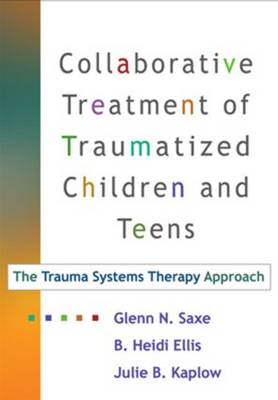
For too many traumatized children and their families, chronic stressors such as poverty, substance abuse, and family or community violence - coupled with an overburdened care system - pose seemingly insurmountable barriers to treatment. This empowering book provides a user-friendly blueprint for making the most of limited resources to help those considered the "toughest cases." Evidence-based strategies are presented for effectively integrating individualized treatment with services at the home, school, and community levels. Written in an accessible, modular format with reproducible forms and step-by-step guidelines for assessment and intervention, the approach is grounded in the latest knowledge about child traumatic stress. It has been recognized as a treatment of choice by state mental health agencies nationwide.
Contents:
Introduction: Trauma Systems Therapy for Child Traumatic Stress. Part I: Foundations. Survival Circuits: How Traumatic Stress Is about Survival-in-the-Moment. The Regulation of Emotional States: How Child Traumatic Stress Is a Disorder of the Regulation of Emotional States. The Social Environment and System of Care: Traumatic Stress Responses Are Embedded in a Social Context. Signals of Care: The Importance of Caring Relationships for Traumatized Children. Part II: Getting Started. Ten Treatment Principles: The Principles That Guide TST. Assessment: How to Assess Child Traumatic Stress. Treatment Planning: How to Plan for Child Traumatic Stress Interventions. The Treatment Team: How to Build a Multidisciplinary Treatment Team (and Keep It Going!)Part III: Doing Trauma Systems Therapy. Ready-set-go: How to Engage a Family in TST. Stabilization on Site: Community-Based Care to Help Kids Stay in Their Homes and Schools. Systems Advocacy: Integrating Advocacy into Critical Treatment. Psychopharmacology: How Psychopharmacology Is Integrated within TST. Emotion Regulation Skills: How to Help Children Regulate Emotional States. Cognitive Processing Skills: How to Help Children Think and Talk about Their Traumatic Experiences. Meaning-making Skills: How to Help Children Make Meaning Out of Their Traumatic Experiences and Move On with Their Lives. Conclusions: Leaving a Better System. Appendix. TST Treatment Planning Form. Weekly TST Check-in. TST Treatment Fidelity Form. Emotional Regulation Guide. Cognitive Coping Log. Systems Advocacy Screener. Goal-setting Guide.
PRODUCT DETAILS
Publisher: Taylor & Francis (Guilford Publications)
Publication date: August, 2009
Pages: 338
Dimensions: 174.00 x 246.00 x 23.00
Weight: 630g
Availability: Not available (reason unspecified)
Subcategories: Paediatrics and Neonatal, Psychotherapy