(To see other currencies, click on price)
MORE ABOUT THIS BOOK
Main description:
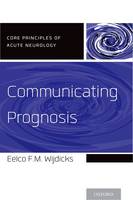
Prognostication of acute neurologic disease is a major task for neurohospitalists and neurointensivists. The family conference raises the delicate matter of how to decide that outcome is indefinitely poor and how to define disability. This monograph is the first book on how to communicate prognosis in acute neurologic conditions. Communicating Prognosis includes useful data on prognosis in all major neurologic conditions and provides practical advice on how
to effectively lead such a conference and how to resolve potential conflicts. This book provides straightforward common sense on-the-spot advice and touches on all aspects of support of devastated families.
Contents:
Chapter 1: Prognostication after Traumatic Brain injury ; Chapter 2: Prognostication after Ischemic or Hemorrhagic Stroke ; Chapter 3: Prognostication of Coma after Cardiac Arrest ; Chapter 4: Prognostication after Brain Injury-Associated Seizure and Status Epilepticus ; Chapter 5: Prognostication after Infections of the Central Nervous System ; Chapter 6: Prognostication Following Acute Neuromuscular Disorders ; Chapter 7: Principles of Neuropalliation ; Chapter 8: The Conversation and Words We Use ; Chapter 9: Withdrawal of Support and Palliation ; Chapter 10: Troubleshooting: Families Who Won't Let Go
PRODUCT DETAILS
Publisher: Oxford University Press (Oxford University Press Inc)
Publication date: May, 2014
Pages: 144
Dimensions: 165.00 x 234.00 x 9.00
Weight: 318g
Availability: Available
Subcategories: Critical Care Medicine, Ethics, Medical Diagnosis, Neurology, Psychiatry
From the same series