(To see other currencies, click on price)
MORE ABOUT THIS BOOK
Main description:
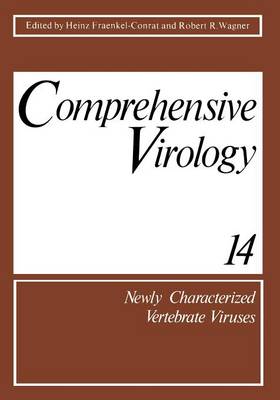
The time seems ripe for a critical compendium of that segment of the biological universe we call viruses. Virology, as a science, having passed only recently through its descriptive phase of naming and num bering, has probably reached that stage at which relatively few new-truly new-viruses will be discovered. Triggered by the intellectual probes and techniques of molecular biology, genetics, bio chemical cytology, and high resolution microscopy and spec troscopy, the field has experienced a genuine information explosion. Few serious attempts have been made to chronicle these events. This comprehensive series, which will comprise some 6000 pages in a total of about 18 volumes, represents a commitment by a large group of active investigators to analyze, digest, and expostulate on the great mass of data relating to viruses, much of which is now amorphous and disjointed, and scattered throughout a wide literature. In this way, we hope to place the entire field in perspective, and to develop an invalua ble reference and sourcebook for researchers and students at all levels. This series is designed as a continuum that can be entered anywhere, but which also provides a logical progression of developing facts and integrated concepts.
Contents:
1Bunyaviridae.- 1. Introduction.- 1.1. Characteristics of the Bunyaviridae.- 1.2. Isolation and Relationships of Members and Possible Members of the Bunyaviridae Family..- 2. Structural Components and Their Functions.- 2.1. Virus Particle Morphology and Morphogenesis.- 2.2. Composition and Properties of Bunyavirus Particles.- 2.3. Diagrammatic Representation of Bunyavirus Virions.- 3. Replication of Bunyaviruses.- 3.1. Adsorption and Penetration.- 3.2. Primary Transcription: Early Viral Messenger RNA Synthesis.- 3.3. Viral Protein Synthesis.- 3.4. Virus RNA Replication.- 3.5. Secondary Transcription: Amplified Messenger RNA Synthesis.- 3.6. Virus Assembly and Budding.- 4. Genetics.- 4.1. Isolation and Characterization of Temperature-Sensitive, Conditional Lethal Bunyavirus Mutants.- 4.2. High-Frequency Homologous Virus Genetic Recombination.- 4.3. Complementation Analyses.- 4.4. Group I/II Double Mutants.- 4.5. High-Frequency Heterologous Recombination between Certain Bunyaviruses.- 4.6. Summary of the Bunyavirus Genetics Studies.- 5. Defective Interfering Virus.- 6. Conclusions.- 7. References.- 2Arenaviruses.- 1. Introduction.- 2. Historical Considerations.- 3. Pathobiology.- 4. Morphologic and Physical Properties.- 5. Proteins.- 5.1. Polypeptides.- 5.2. Antigens.- 6. Nucleic Acids.- 7. Internal Components of the Virus.- 7.1. Virus-Associated Ribosomes.- 7.2. Ribonucleoprotein Core.- 7.3. Virus-Associated Enzymes.- 8. Replication in Cultured Cells.- 9. Interference and Defective Interfering Particles.- 10. Concluding Remarks.- 11. References.- 3Coronaviridae.- 1. Introduction.- 1.1. Summary.- 1.2. Definition and Members of the Coronavirus Family.- 2. Virions.- 2.1. Morphology.- 2.2. Composition.- 2.3. Fine Structure and Arrangement of Virion Components.- 3. Growth Properties in Cell and Organ Culture.- 3.1. Infectivity Assays.- 3.2. Growth Curves and Multiplication Kinetics.- 3.3. Modification of Infectivity.- 4. Multiplication of Virus.- 4.1. Adsorption.- 4.2. Penetration and Uncoating.- 4.3. Biosynthesis of Viral Macromolecules.- 4.4. Assembly.- 4.5. General Comments.- 5. Alteration in Host Cell Metabolism.- 6. Defective Virus and Viral Interference.- 6.1. Defective Virus.- 6.2. Interference by Defective Virus.- 6.3. Other Forms of Interference.- 7. Pathogenesis of Coronavirus Disease.- 7.1. Spectrum of Disease.- 7.2. Route of Infection.- 7.3. Animal Response to Infection.- 7.4. Summary of Pathogenesis.- 8. Persistent Infections.- 9. Genetics.- 10. Conclusion.- 11. References.- 4Caliciviruses.- 1. Introduction and Classification.- 2. Natural History and Disease Aspects.- 2.1. Vesicular Exanthema of Swine Virus (VESV).- 2.2. San Miguel Sea Lion Virus (SMSV).- 2.3. Relationship between VESV and SMSV.- 2.4. Feline Calicivirus (FCV).- 2.5. Human Calicivirus.- 3. Antigenic Aspects.- 3.1. VESV and SMSV.- 3.2. FCV.- 3.3. Relation between FCV and VESV/SMSV.- 4. Caliciviruses in Cultured Cells.- 4.1. Growth and Host Range.- 4.2. Cytopathology.- 4.3. Genetics.- 4.4. Viral RNA.- 4.5. Viral Protein.- 5. The Virion.- 5.1. Purification.- 5.2. Morphology and Structure.- 5.3. Sedimentation.- 5.4. Buoyant Density.- 5.5. Inactivation and Stability.- 5.6. Virion RNA.- 5.7. Virion Protein.- 5.8. Virion Mass.- 6. Defective Interfering Virus.- 7. Concluding Remarks.- 8. Addendum.- 9. References.- 5Orbiviruses.- 1. Introduction.- 2. Propagation and Assay Systems.- 2.1. Primary Isolation.- 2.2. Cultivation.- 2.3. Cytopathology.- 2.4. Assay Systems.- 3. The Virion.- 3.1. Morphology.- 3.2. Physicochemical Properties.- 3.3. The Viral Genome.- 3.4. The Viral Capsid.- 3.5. Viral Enzymes.- 4. Replication.- 4.1. Adsorption and Penetration.- 4.2. Site of Replication.- 4.3. Synthesis of Viral Nucleic Acids.- 4.4. Synthesis of Viral Proteins.- 4.5. Mutants and Defective Particles.- 4.6. Effect of Viral Infection on Cellular Functions.- 5. Antigenic Properties.- 5.1. Serological Reactions.- 5.2. Serological Classification.- 5.3. Antigens Involved in Antigenic Variation.- 5.4. Immunity.- 6. Epizootiology.- 6.1. Host Range.- 6.2. Transmission.- 6.3. Ecological Factors.- 6.4. Pathogenesis.- 7. Concluding Remarks.- 8. References.- 6Icosahedral Cytoplasmic Deoxyriboviruses.- 1. Introduction.- 2. Classification and General Biological Properties of Icosahedral Cytoplasmic Deoxyriboviruses.- 3. Size, Morphology, and Structure.- 3.1. Size.- 3.2. Morphology and Structure.- 4. Physical Properties.- 5. Chemical Composition.- 5.1. DNA.- 5.2. Proteins and Enzyme Activities.- 5.3. Lipids.- 6. Replication.- 6.1. Replication of Frog Virus 3.- 6.2. Nuclear Requirement for ICDV Replication.- 7. Conclusions and Prospects for the Future.- 8. References.- 7Fish Viruses and Viral Infections.- 1. Introduction.- 2. Fish Herpesviridae.- 2.1. Biology of the Diseases.- 2.2. Biology of the Viruses.- 3. Fish Iridoviridae.- 3.1. Biology of the Diseases.- 3.2. Biology of the Viruses.- 4. Fish Reoviridae.- 4.1. Biology of the Diseases.- 4.2. Biology of the Viruses.- 5. Fish Rhabdoviridae.- 5.1. Biology of the Diseases.- 5.2. Biology of the Viruses.- 6. Fish Retroviridae.- 6.1. Biology of the Diseases.- 6.2. Evidence of Putative Virus.- 7. Unclassified and Putative Fish Viruses Associated with Neoplasia.- 7.1. Stomatopapilloma of Eel-Associated Viruses.- 7.2. Brown Bullhead Papilloma-Associated Virus.- 7.3. Atlantic Salmon Papilloma-Associated Virus.- 7.4. Pleuronectid Epidermal Papilloma-Associated Virus.- 8. Unclassified and Putative Fish Viruses.- 8.1. Bluegill Virus.- 8.2. Grunt Fin Agent.- 8.3. Ulcerative Dermal Necrosis-Associated Virus.- 8.4. Gill Necrosis of Carp-Associated Virus.- 9. References.- 8Viruses of Human Hepatitis A and B.- 1. Introduction: Recognition of Hepatitis Viruses.- 2. Hepatitis B Virus (HBV).- 2.1. Infectious HBV.- 2.2. Hepatitis B Surface Antigen.- 2.3. Hepatitis B Virion and Its DNA.- 2.4. Incomplete Hepatitis B Viral Forms.- 2.5. Hepatitis B Core Antigen (HBcAg).- 2.6. Hepatitis Be Antigen (HBeAg).- 2.7. Synthesis of HBV Antigens in Infected Liver.- 2.8. Current Estimate of the Number of HBV Genes and the Total Virus-Specified Polypeptide.- 3. Course of HBV Infection.- 3.1. Self-Limited HBV Infection.- 3.2. Persistent HBV Infection.- 4. Disease Associated with HBV Infection.- 4.1. Acute and Chronic Hepatitis B.- 4.2. Hepatocellular Carcinoma.- 4.3. Other Disease Syndromes Associated with HBV Infection.- 5. Epidemiology of HBV.- 5.1. Total Viral Hepatitis in the United States.- 5.2. HBV Infections in the United States.- 5.3. HBV Infections in Other Parts of the World.- 5.4. Persistent HBV Infection.- 5.5. HBV Transmission.- 6. Hepatitis A Virus (HAV).- 6.1. Infectious HAV.- 6.2. Hepatitis A Antigen (HAAg) Forms in Feces, Liver, and Bile.- 6.3. Viral Antigen Synthesis in Infected Liver.- 7. Course of HAV Infection.- 8. Immunity to HAV.- 9. Disease Associated with HAV Infection.- 10. Epidemiology of HAV Infections.- 10.1. Incidence of HAV Infection.- 10.2. Routes of HAV Transmission.- 11. References.
PRODUCT DETAILS
Publisher: Springer (Springer-Verlag New York Inc.)
Publication date: April, 2012
Pages: None
Weight: 1060g
Availability: Available
Subcategories: Microbiology
From the same series