(To see other currencies, click on price)
MORE ABOUT THIS BOOK
Main description:
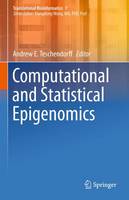
This book introduces the reader to modern computational and statistical tools for translational epigenomics research. Over the last decade, epigenomics has emerged as a key area of molecular biology, epidemiology and genome medicine. Epigenomics not only offers us a deeper understanding of fundamental cellular biology, but also provides us with the basis for an improved understanding and management of complex diseases. From novel biomarkers for risk prediction, early detection, diagnosis and prognosis of common diseases, to novel therapeutic strategies, epigenomics is set to play a key role in the personalized medicine of the future. In this book we introduce the reader to some of the most important computational and statistical methods for analyzing epigenomic data, with a special focus on DNA methylation. Topics include normalization, correction for cellular heterogeneity, batch effects, clustering, supervised analysis and integrative methods for systems epigenomics. This book will be of interest to students and researchers in bioinformatics, biostatistics, biologists and clinicians alike.
Dr. Andrew E. Teschendorff is Head of the Computational Systems Genomics Lab at the CAS-MPG Partner Institute for Computational Biology, Shanghai, China, as well as an Honorary Research Fellow at the UCL Cancer Institute, University College London, UK.
Contents:
Part 1: Normalization and Analysis Methods for DNA methylation and ChIP-Seq data.- Part 2: Integrative and Medical Epigenomics.
PRODUCT DETAILS
Publisher: Springer
Publication date: May, 2015
Pages: 230
Weight: 5022g
Availability: Available
Subcategories: Epidemiology, General Issues
From the same series