
(To see other currencies, click on price)
MORE ABOUT THIS BOOK
Main description:
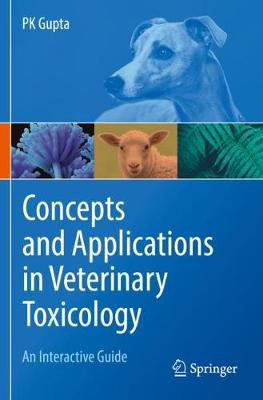
This book: "Concepts and Applications in Veterinary Toxicology: An Interactive Guide": covers a broad spectrum of topics related to students specializing in veterinary toxicology and for veterinary medical practitioners. Since the major emphasis of the book is to teach veterinary students, therefore more attention has been given to common toxicants to which several species are exposed including pet animals. The subject of veterinary toxicology is complicated greatly by the wide variations in responses of domestic, companion, aquatic, wild, and zoo species to toxicants. Therefore, emphasis has also been given to species variation and diagnostic toxicology including clinical management that is more relevant to veterinary profession.
Key Features
* Highlights specialized topics essential for veterinary specialists.
* Covers a variety of common toxicants to which several species including pet animals are exposed.
* Includes sample questions and answers that are extremely valuable for students, clinical pharmacists, teachers, and academicians in preparing for their board and other examinations.
Contents:
Chapter 1: GENERAL AND PRINCIPLES OF TOXICOLOGY
1.0 Introduction 2.0 Key Points 4.0 Roots in Veterinary Medicine and Toxicology 5.0 Current Status 6.0 Toxicology and the Risk of Paradigm 7.0 Definitions and Classification of Toxic Agents
8.0 Factors Affecting the Activity of Toxicants
8.1 Factors related to Exposure
8.2 Biological Factors
8.3 chemical factors
9.0 Natural Law Concerning Toxicity
9.1 Dose-Response Relationship
9.2 Statistical Concept of Toxicity 9.3 Variables of Dose-Response Curves 9.4 Interaction with Receptors 10.0 Brain Storming Exercises
10. 1 Short Questions and Answers
10.2 Multiple Choice Questions
10.3 Fill in the Blanks
10.4 True or False Statements
10.5 Match the Statements
11.0 Answers to Exercises
11.1 Multiple Choice Questions
11.2 Fill in the Blanks
11.3 True or False Statements
11.4 Match the Statements
12. Further Reading
Chapter 2: MECHANISM OF TOXICITY
1.0 Introduction 2.0 Key Points 3.0 Definitions 4.0 Mode of Action 5.0 Mechanism of Toxicity 6.0 Brain Storming Exercises
6.1 Short Questions and Answers
6.2 Multiple Choice Questions
6.3 Fill in the Blanks
6.4 True or False Statements
6.5 Match the Statements
7.0 Answers to Exercises
7.1 Multiple Choice Questions
7.2 Fill in the Blanks
7.3 True or False Statements
7.4 Match the Statements
8.0. Further Reading
Chapter 3: DISPOSITION AND TOXICOKINETICS
1.0 Introduction 2.0 Key Points 3.0 Absorption, 4.0 Distribution, 5.0 Biotransformation / metabolism 5.1 Phase I Reactions 5.2 Phase I Reactions 5.3 Elimination 6.0 Induction and Inhibition of Metabolizing Enzymes 7.0 Bioactivation and Tissue Toxicity 8..0 Essentials of Toxicokinetic/Pharmacokinetic Principles 9.0 Plasma Drug Concentration versus Time 10.0 Orders of Rate Processes 11.0 Toxicokinetic Models 12.0 Determination of Dose/Dosage Regimen 13.0 Brain Storming Exercises 13. 1 Short Questions and Answers
13.2 Multiple Choice Questions
13.3 Fill in the Blanks
13.4 True or False Statements
13.5 Match the Statements
14.0 Answers to Exercises
14.1 Multiple Choice Questions
14.2 Fill in the Blanks
14.3 True or False Statements
14.4 Match the Statements
15.0 Further Reading
CHAPTER 4 : TOXIC EFFECTS OF PESTICIDES (AGROCHEMICALS)
1.0 Introduction 2.0 Key Points 3.0 Historical Background 4.0 Definition and Classification 5.0 Toxicity Rating 6.0 Insecticides 6.0 Herbicides 7.0 Fungicides 8.0 Rodenticides 9.0 Fumigants 10.0 Fertilizers
11.0 Epidemiology of Poisonings 12.0 Brain Storming Exercises 12.1 Short Questions and Answers
12.2 Multiple Choice Questions
12.3 Fill in the Blanks
12.4 True or False Statements
12.5 Match the Statements
13.0 Answers to Exercises
13.1 Multiple Choice Questions
13.2 Fill in the Blanks
13.3 True or False Statements
13.4 Match the Statements
14.0 Further Reading
CHAPTER 5: TOXIC EFFECTS OF METALS AND MICRONUTIENTS 1.0 Introduction 2.0 Key Points 3.0 Arsenic (Sankhyal, Somalkar) 4.0 Cadmium 5.0 Chromium, Iodine, and Phosphorus 6.0 Copper 7.0 Fluoride 8.0 Iron 9.0 Lead 10.0 Mercury 11.0 Molybdenum 12.0 Selenium 13.0 Salt Poisoning/Deficiency 14.0 Sulfur 15.0 Zinc 16.0 Brain Storming Exercises 16. 1 Short Questions and Answers
16.2 Multiple Choice Questions
16.3 Fill in the Blanks
16.4 True or False Statements
16.5 Match the Statements
17.0 Answers to Exercises
17.1 Multiple Choice Questions
17.2 Fill in the Blanks
17.3 True or False Statements
17.4 Match the Statements
18.0 Further Reading
Chapter 6: Toxicologic Hazards of GASES, vapors and other Chemicals 1.0 Introduction 2.0. Key Points 3.0 Chemicals
3.1 Alcohol
3.2 Ethylene Glycol 3.3 Propylene Glycol
3.4 Corrosive Bleaches
3.5 Detergents Soaps and Shampoos
4.0 Petroleum Products
5.0 Persistent Halogenated Aromatic
6. Coal Tar Products
7. Pentachlorophenol product
7. Gasses
8. Carbon Monoxide 7. Cyanide poisoning 8.0 Hydrogen Sulfide 9.0 Nitrogen Dioxide 10 Phosphine Gas Sources 11.0 Lack of Oxygen 12.0 Smoke inhalation
13.0 Brain Storming Exercises 13. 1 Short Questions and Answers
13.2 Multiple Choice Questions
13.3 Fill in the Blanks
13.4 True or False Statements
13.5 Match the Statements
14.0 Answers to Exercises
14.1 Multiple Choice Questions
14.2 Fill in the Blanks
14.3 True or False Statements
14.4 Match the Statements
15.0 Further Reading
CHAPTER 7: TOXICITIES FROM HUMAN DRUGS 1.0 Introduction 2.0 Key Words 3 Toxicities from Over-the-Counter Drugs 4.0 Toxicities from Prescription Drugs 5.0 Toxicities from Illicit and Abused Drugs 6.0 Brain Storming Exercises 6. 1 Short Questions and Answers
6.2 Multiple Choice Questions
6.3 Fill in the Blanks
6.4 True or False Statements
6.5 Match the Statements
7.0 Answers to Exercises
7.1 Multiple Choice Questions
7.2 Fill in the Blanks
7.3 True or False Statements
7.4 Match the Statements 8.0 Further Reading
CHAPTER 8: POISONOUS AND VENOMOUS ORGANISMS 1.0 Introduction 2.0 Key Points 3.0 Arthropods 4.0 Amphibia, Anura: Toads 5.0 Brain Storming Exercises 5. 1 Short Questions and Answers
5.2 Multiple Choice Questions
5.3 Fill in the Blanks
5.4 True or False Statements
5.5 Match the Statements
6.0 Answers to Exercises
6.1 Multiple Choice Questions
6.2 Fill in the Blanks
6.3 True or False Statements
6.4 Match the Statements
7. Further Reading
CHAPTER 9: BACTERIAL AND CYANOBACTERIAL (BLUE-GREEN ALGAE) 1.0 Introduction 2.0 Key Points 3.0 Botulinum toxins 4.0 Entero Toxemias (Clostridium perfringens infections) 5.Blue-Green Algae (Cyanobacterial Toxins) 6.0 Brain Storming Exercises 6. 1 Short Questions and Answers
6.2 Multiple Choice Questions
6.3 Fill in the Blanks
6.4 True or False Statements
6.5 Match the Statements
7.0 Answers to Exercises
7.1 Multiple Choice Questions
7.2 Fill in the Blanks
7.3 True or False Statements
7.4 Match the Statements
8.0 Further Reading
CHAPTER 10: MYCOTOXICOSIS 1 Introduction 2. Key Points 3. Aflatoxicosis 4. Ochratoxin A 5. Ergotism 6. Estrogenism and Vulvovaginitis 7. Facial Eczema 8. Fescue Lameness (Fescue foot) 9. Fumonisin Toxicosis 10. Mycotoxic Lupinosis 11Trichothecene Toxicosis 12. Paspalum Staggers
13.0 Slaframine Toxicosis
14.0 Brain Storming Exercises 14. 1 Short Questions and Answers
14.2 Multiple Choice Questions
14.3 Fill in the Blanks
14.4 True or False Statements
14.5 Match the Statements
15.0 Answers to Exercises
15.1 Multiple Choice Questions
15.2 Fill in the Blanks
15.3 True or False Statements
15.4 Match the Statements 16.0 Further Reading
CHAPTER 11: POISONOUS PLANTS 1 Introduction 2 Key Points 3. Astragalus and Oxytropis Species 4 Nitro-containing Astragalus (milkvetches) 5 Seleniferous Astragalus 6 Larkspurs (Delphinium Spp.) 7 Lupines (LUPINUS Spp.) 8 Poison Hemlock (Conium Maculatum) 9 Water Hemlock (Cicuta Spp.) 10 Ponderosa Pine Needles (Pinus Spp.) 11 Broom Snakeweed (Gutierrezia Spp.) 12 Rayless Goldenrod (Haplopappus Heterophyllus) 13 Halogeton (Halogeton G Lomeratus) 14 Pyrrolizidine Alkaloid Containing Plants 15 Photosensitizing Plants 16 Bracken Fern (Pteridium and Aquilinum) 17 Cannabis Sativa (Cannabinaceae Family) 18 Colchicum Autumnale L (Liliaceae or Colchicaceae Family) 19 Datura Spp. (Solanaceae Family)
20 Nerium Oleander (Apocynaceae Family) 21 Aconitum napellus (Ranunculaceae Family) 22 Ricinus Communis (Euphorbiaceae Family) 23 Lantana (Verbenaceae, Family) 24 Descurainia Pinnata (Family Brassicaceae) 25 Plants Containing Cyanogenic Glycosides 26 Nitrate- and Nitrite-Accumulating Plants 27 Toxicity of Yew (Taxus spp.) Alkaloids 28 Mushroom Toxins 29.0 Brain Storming Exercises 29. 1 Short Questions and Answers
29.2 Multiple Choice Questions
29.3 Fill in the Blanks
29.4 True or False Statements
29.5 Match the Statements
30.0 Answers to Exercises
30.1 Multiple Choice Questions
30.2 Fill in the Blanks
30.3 True or False Statements
30.4 Match the Statements 31.0 Further Reading
CHAPTER 12: FEED CONTAMINANT TOXICITY 1.0 Introduction 2.0 Key Points 3.0 Melamine and Cyanuric Acid 4.0 Ionophore Toxicity 5.0 Nonprotein Nitrogen Poisoning 6.0 Brain Storming Exercises 6. 1 Short Questions and Answers
6.2 Multiple Choice Questions
6.3 Fill in the Blanks
6.4 True or False Statements
6.5 Match the Statements
7.0 Answers to Exercises
7.1 Multiple Choice Questions
7.2 Fill in the Blanks
7.3 True or False Statements
7.4 Match the Statements 8.0 Further Studies
CHAPTER 13: FOOD HAZARDS 1.0 Introduction 2.0 Key Points 3.0 Avocado 4.0 Beard Doughs 5.0 Chocolate 6.0 Macadamia Nuts 7.0 Xylitol 8.0 Raisins and Grapes 6.0 Brain Storming Exercises 6. 1 Short Questions and Answers
6.2 Multiple Choice Questions
6.3 Fill in the Blanks
6.4 True or False Statements
6.5 Match the Statements
7.0 Answers to Exercises
7.1 Multiple Choice Questions
7.2 Fill in the Blanks
7.3 True or False Statements
7.4 Match the Statements 8.0 Further Studies
CHAPTER 14: VETERINARY CLINICAL TOXICOLOGY 1.0 Introduction 2.0 Key Points 3.0 Concepts and Terminology 4.0 .Prevention and Management
4. Diagnosis of Toxicosis
5. Principles of Therapy 6.0 Brain Storming Exercises 6. 1 Short Questions and Answers
6.2 Multiple Choice Questions
6.3 Fill in the Blanks
6.4 True or False Statements
6.5 Match the Statements
7.0 Answers to Exercises
7.1 Multiple Choice Questions
7.2 Fill in the Blanks
7.3 True or False Statements
7.4 Match the Statements 8.0. Further Reading.
PRODUCT DETAILS
Publisher: Springer (Springer Nature Switzerland AG)
Publication date: August, 2020
Pages: 350
Weight: 665g
Availability: Available
Subcategories: Pharmacology, Veterinary Medicine