
(To see other currencies, click on price)
MORE ABOUT THIS BOOK
Main description:
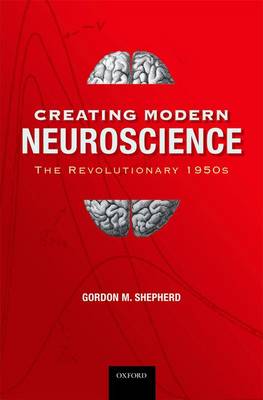
For modern scientists, history often starts with last week's journals and is regarded as largely a quaint interest compared with the advances of today. However, this book makes the case that, measured by major advances, the greatest decade in the history of brain studies was mid-twentieth century, especially the 1950s. The first to focus on worldwide contributions in this period, the book ranges through dozens of astonishing discoveries at all levels of the brain,
from DNA (Watson and Crick), through growth factors (Hamburger and Levi-Montalcini), excitability (Hodgkin and Huxley), synapses (Katz and Eccles), dopamine and Parkinson's (Carlsson), visual processing (Hartline and Kuffler), the cortical column (Mountcastle), reticular activating system (Morruzzi and
Magoun) and REM sleep (Aserinsky), to stress (Selye), learning (Hebb) and memory (HM and Milner). The clinical fields are also covered, from Cushing and Penfield, psychosurgery and brain energy metabolism (Kety), to most of the major psychoactive drugs in use today (beginning with Delay and Deniker), and much more.
The material has been the basis for a highly successful advanced undergraduate and graduate course at Yale, with the classic papers organized and accessible on the web. There is interest for a wide range of readers, academic, and lay because there is a focus on the creative process itself, on understanding how the combination of unique personalities, innovative hypotheses, and new methods led to the advances. Insight is given into this process through describing the struggles between male and
female, student and mentor, academic and private sector, and the roles of chance and persistence. The book thus provides a new multidisciplinary understanding of the revolution that created the modern field of neuroscience and set the bar for judging current and future advances.
Contents:
Preface ; 1. Introduction: Why Study History? Why the 1940s and the 1950s? ; 2. Genes: Starting with DNA ; 3. Signaling Molecules: The First Growth Factor ; 4. The First Neurotransmitters in the Brain ; 5. Cell Biology and the Synapse ; 6. Physiology: The Action Potential ; 7. Phsyiology: Synaptic Potentials and Receptor Potentials ; 8. Functional Organization of Neurons and Dendrites ; 9. Neural Circuits: Spinal Cord, Retina, Invertebrate Systems ; 10. Neural Circuits: Cortical Columns and Cortical Processing ; 11. Neural Systems: The Neural Basis of Behavior ; 12. Learning and Memory: Donald Hebb, Brenda Milner, and HM ; 13. Neurology: Foundations of Brain Imaging ; 14. Neurosurgery: From Cushing to Penfield ; 15. Neuropsychiatry: The Breakthrough in Psychopharmacology ; 16. Theoretical Neuroscience: The Brain as a Computer and the Computer as a Brain ; References ; Links ; Notes ; Index
PRODUCT DETAILS
Publisher: Oxford University Press (Oxford University Press Inc)
Publication date: November, 2009
Pages: 304
Dimensions: 156.00 x 241.00 x 23.00
Weight: 637g
Availability: Available
Subcategories: Neurology, Neuroscience