
(To see other currencies, click on price)
MORE ABOUT THIS BOOK
Main description:
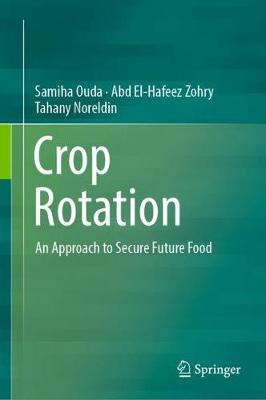
This book tackles the issue of using crop rotation to increase food production and secure it for the growing population of the future. Crop rotation can be a solution of food gaps in the developing counties. Crop rotation plays an important role in attaining soil sustainability and in controlling pests and weeds. It can alleviate damage caused by climate change by reducing losses in productivity of the crops, minimizing soil fertility loss and increase irrigation water productivity. This book also includes the reviews of a large number of crop rotations that have been published internationally, and additionally, the crop rotations that have been implemented in Egypt have a unique characteristic to them and therefore, a large number of those reviews have also been included.
Contents:
Chapter 1: Introductory Synopsis of the Natural Resources Involved in Food Production
Chapter 2: Irrigation Scheduling to Maximize Water Utilization of the Crop Rotation
Chapter 3: Crop Rotation Increases Land Productivity
Chapter 4: Crop Rotation Maintains Soil Sustainability
Chapter 5: Crop Rotation Defeats Pests and Weeds
Chapter 6: Crop Rotation Could Diminish Summer Feed Gap in Egypt
Chapter 7: Crop Rotation and Edible Oil Production-Consumption Gap in Egypt
Chapter 8: Suggested Crop Rotations to Increase Food Security and Reduce Water Scarcity
Chapter 9: Crop Rotation Could Alleviate Climate Change Damage
PRODUCT DETAILS
Publisher: Springer (Springer Nature Switzerland AG)
Publication date: December, 2018
Pages: 194
Weight: 477g
Availability: Available
Subcategories: Public Health