
(To see other currencies, click on price)
MORE ABOUT THIS BOOK
Main description:
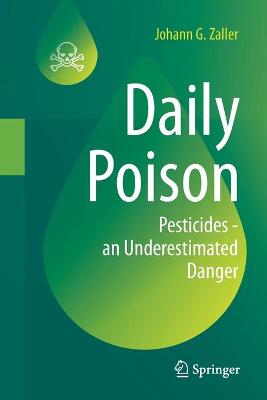
This book is a sound science report about the consequences of pesticides to nature, health and environment.
The book shares essential insights into the use of pesticides in agriculture, discusses the politics, rhetoric and profits involved, addresses the potential health and ecological risks of pesticides in our daily lives, and debates possible solutions. Does sustainable agriculture exist, and is agriculture without pesticides possible at all?
Moreover, the author gives insight into his scientific work, the set-up of the experiments, and also writes about his very own experiences with the media and press after publication of his studies.
For many years, Johann G. Zaller, an ecologist at the University of Natural Resources and Life Sciences in Vienna, and his team, have been researching applied chemicals and their effects on the environment. Their findings, together with relevant literature and media reports, are presented in this book, which offers a unique resource for anyone who wants to know the nature and background of pesticides and how we come into contact with them in our daily lives.
Ever ate an apple? Read this book!
Contents:
Preface
What's the problem? Pesticides in everyday life
Agriculture in the pesticide treadmill
Pesticides are also used elsewhere
What substances are we talking about?
Loose approval and situation-elastic limits
War rhetoric sets the mood
Agroecosystems also have a social benefit
What are the consequences for nature and humans?
From "Silent Spring" to own experiments
Earthworms become lazy and have fewer offspring
Tadpoles with crippled tails
Bees and bumblebees without orientation
Birds and bats starve to death
Agroecosystems loose their self regulation
Getting used to constant pesticide applications: resistances
The pesticide boomerang is already on its way back
Various side effects on humans
Does the use of pesticides pay off at all?
Critical scientists come on the internet pillory
Wheres is the solution to the problem?
Agriculture without pesticides, is that even possible?
How should the growing world population be fed?
Food waste promotes pesticide use
Agricultural subsidies to curb use of pesticides
Politics should decide and act on the basis of facts
Epilog
References
Acknowledgements
PRODUCT DETAILS
Publisher: Springer (Springer Nature Switzerland AG)
Publication date: October, 2020
Pages: 266
Weight: 498g
Availability: Available
Subcategories: Pharmacology