
(To see other currencies, click on price)
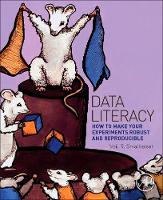
MORE ABOUT THIS BOOK
Main description:
Data Literacy: How to Make Your Experiments Robust and Reproducible provides an overview of basic concepts and skills in handling data, which are common to diverse areas of science. Readers will get a good grasp of the steps involved in carrying out a scientific study and will understand some of the factors that make a study robust and reproducible.The book covers several major modules such as experimental design, data cleansing and preparation, statistical analysis, data management, and reporting. No specialized knowledge of statistics or computer programming is needed to fully understand the concepts presented.
This book is a valuable source for biomedical and health sciences graduate students and researchers, in general, who are interested in handling data to make their research reproducible and more efficient.
Contents:
Part A: Experimental Design 1. "Most published findings are false!" 2. How to identify a promising research problem? 3. Experimental designs: measures, validity, randomization 4. Experimental design: Sampling, bias, hypotheses 5. Positive and negative controls
Part B: Getting a "feel" for your data 6. Refresher on basic concepts of probability and statistics 7. Data cleansing 8. Case studies of data cleansing 9. Hypothesis testing 10. The "new statistics" 11. ANOVA. 12. Nonparametric tests 13. Other statistical concepts you should know
Part C: Data Management 14. Recording and reporting experiments 15. Data sharing and re-use 16. Publishing
PRODUCT DETAILS
Publisher: Elsevier (Academic Press Inc)
Publication date: September, 2017
Pages: 200
Weight: 590g
Availability: Available
Subcategories: Biomedical Engineering, Diseases and Disorders