
(To see other currencies, click on price)
MORE ABOUT THIS BOOK
Main description:
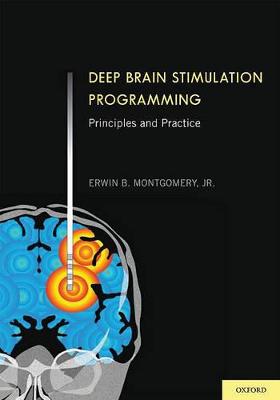
Deep Brain Stimulation (DBS) is a remarkable therapy for an expanding range of neurological and psychiatric disorders. In many cases it is better than best medical therapy and succeeds even when brain transplants fail. Yet despite the remarkable benefits, many physicians and healthcare professionals seem hesitant to embrace this therapy. Post-operative programming of the DBS systems seems unfamiliar, even mysterious, and is viewed as difficult and time consuming. However, DBS programming is rational and can be efficient and effective if one understands the basing underlying concepts of electronics, electrophysiology, and the relevant regional anatomy. Even these principles can be relatively easy to grasp. The book helps the reader to obtain an intuitive understanding of the basic principles of electronics, electrophysiology and the relevant regional anatomy through the use of readily understood metaphors and numerous illustrations. In addition a number of tools are provided including algorithms to ensure efficient and thorough programming. Forms are provided to help with documentation.
In addition, DBS related research provides a remarkable tool to understand how the brain works and what happens in diseases such as Parkinson's disease. Already long cherished theories of the pathophysiology of Parkinson's disease must be abandoned. Indeed, these DBS derived insights suggest fundamental revisions of theories of brain function are in order. The book provides an introduction to where some of the new theories may lead particularly with the growing awareness of the importance of oscillations in the brain's activities. The brain has more in common with electrical devices, such as computers, than it does to a stew of chemicals. DBS operates at the electrical level in the brain, which is fundamental to how the brain creates, manipulates and conveys information and may indeed be fundamental to the misinformation the results in the dysfunction related to disorders of the brain.
Contents:
Abbreviations
Chapter 1. Introduction
Principles of Effective and Efficient Programming
Proximate Effects and Distal Interventions: What the Brain Sees versus What You See
The Basis of DBS Effects
Commentary 1.1, The Case for Deep Brain Stimulation
Commentary 1.2, The Future of Deep Brain Stimulation
Chapter 2. Principles of DBS Electronics
Chapter 3. Principles of Electrophysiology
Therapeutic Mechanisms Versus Delivery of Therapy
Commentary 3.1, Sorting out DBS and Pharmacotherapy
Commentary 3.2, Antidromic Activation as a Mechanism of DBS Action
Controlling the Flow of Electrical Charges
Current Intensity in Monopolar and Bipolar Electrode Configurations
Commentary 3.3, The DBS System
Chapter 4. DBS Safety
The Potential Psychosocial Consequences of DBS
Chapter 5. The Issue of DBS Frequency
Commentary 5.1, Emergence of Therapeutic Low-Frequency DBS
Chapter 6. Approaches to Programming
Optimizing Battery Life
The Special Case of the U-Shaped Response
Commentary 6.1. The Paradox of Worsening Function with Increasing Strength of DBS: The U-shaped Response
Optimizing Therapeutic Effects and Minimizing Side Effects
An Algorithm for Selecting Electrode Configurations
Chapter 7. Approach to Subthalamic Nucleus DBS for Parkinson's Disease
Regional Anatomy of the Subthalamic Nucleus
Side Effects Created by the Position of the DBS Lead Relative to the Subthalamic Nucleus
Approach to Subthalamic Nucleus DBS for Parkinson's Disease
Chapter 8. Approach to Globus Pallidus Internal
Regional anatomy of the Globus Pallidus Internal Segment
Side Effects Resulting from the Position of the DBS Lead Relative to the Globus Pallidus Interna
Approaches to Globus Pallidus Interna DBS for Parkinson's Disease
Treating Dystonia with DBS of the Globus Pallidus Interna
Treating Hyperkinetic Disorders.
Chapter 9. Approach to Thalamic DBS
Regional Anatomy of the Ventral Intermediate Thalamus
Side Effects Resulting from the Position of the DBS Lead Relative to the Ventral Intermediate Thalamus
Effects of DBS on Speech and Swallowing
An Approach to Thalamic DBS for Tremor
Chapter 10. Helpful Programming Hints
Conduct a Monopolar Survey
Always Increase the Voltage to Clarify Any Side Effects
Check Therapeutic Impedances on Commercial IPGs
Confirm that the Parameters under Patient Control are within Safe Limits
Systematically Document all Clinical Responses to all DBS Stimulation Parameters and Electrode Configurations
Always Reset Counters and Trouble-Shoot Inconsistent Responses
Advise Patents to Take Their DBS Devices with Them to Emergency Rooms or Doctor's Visits
Be Patient and Persistent!
When in Doubt, Turn the Pulse Generator Off and Wait
Trouble Shooting
Chapter 11. The Basic Unit of Information in the Brain
Commentary 11.1, The Curious Case When Inhibition is not Inhibition
Chapter 12. What DBS Tells Us about Physiology and Pathophysiology
Chapter 13. Variability in the Latency of Responses to DBS
Chapter 14. Oscillator Basics
Chapter 15. Paradoxes in DBS
Appendix 1. Index to Side DBS Effects, by Side Effect and Site of Stimulation
Appendix 2. Aids to Programming: Paper Documentation
Parkinson's Disease
Cerebellar Outflow Tremor or Essential Tremor
Dystonia
Dyskinesia
Tourette's Syndrome
Appendix 3. Aid to Programming: Algorithm and Check List for Electrode Configurations
References
Glossary
Index
PRODUCT DETAILS
Publisher: Oxford University Press (Oxford University Press Inc)
Publication date: April, 2010
Pages: 200
Weight: 708g
Availability: Contact supplier
Subcategories: Diseases and Disorders, Neurology