
(To see other currencies, click on price)
MORE ABOUT THIS BOOK
Main description:
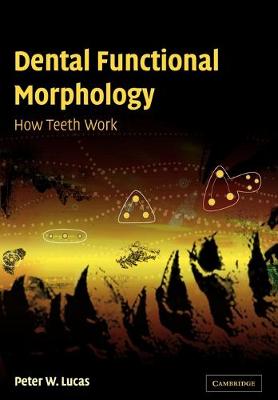
Dental Functional Morphology offers an alternative to the received wisdom that teeth merely crush, cut, shear or grind food and shows how teeth adapt to diet. Providing an analysis of tooth action based on an understanding of how food particles break, it shows how tooth form from the earliest mammals to modern-day humans can be understood using very basic considerations about fracture. It outlines the theoretical basis step by step, explaining the factors governing tooth shape and size and provides an allometric analysis that will revolutionize attitudes to the evolution of the human face and the impact of cooked foods on our dentition. In addition, the basis of the mechanics behind the fracture of different types of food, and methods of measurement are given in an easy-to-use appendix. It will be an important sourcebook for physical anthropologists, dental and food scientists, palaeontologists and those interested in feeding ecology.
Contents:
Preface; Flickart; 1. How to get excited about teeth; 2. The basic structure of the mammalian mouth; 3. How the mouth operates; 4. Tooth shape; 5. Tooth size; 6. Tooth wear; 7. The evolution of the mammalian dentition; Appendix A. Mechanical properties and their measurement: material properties made easy; Appendix B. Properties of teeth and potential foods; Notes; References; Index.
PRODUCT DETAILS
Publisher: Cambridge University Press
Publication date: January, 2007
Pages: 372
Dimensions: 174.00 x 244.00 x 20.00
Weight: 595g
Availability: Available
Subcategories: Physiology