
(To see other currencies, click on price)
MORE ABOUT THIS BOOK
Main description:
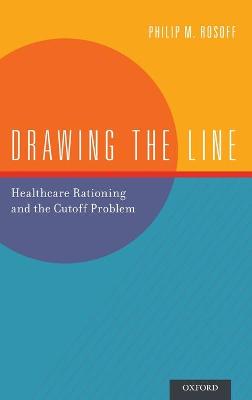
Unlike the rest of the advanced industrialized world, the United States does not have a national healthcare system that guarantees that all residents have access to medical services. Over the past century a number of unsuccessful attempts have been made to create and implement a unified, coordinated healthcare system. Piecemeal progress has been made, such as with the passage of Medicare, Medicaid, and the Affordable Care Act. However, the US still has the dubious
distinction of possessing the most expensive healthcare in the world as well as health-related outcomes that are shameful for a wealthy country, mostly due to the number of people who lack decent care. The continuing escalation in medical costs is also threatening the financial stability of the
nation.
In his first book, Rationing is Not a Four-Letter Word, Philip M. Rosoff argued that the only way to control costs is to impose rationing, and the only way to do so fairly is to have it apply to all. The key to rationing is how it is accomplished. He outlined a general approach to making rationing decisions that involved a comprehensive explication of procedural fairness and illustrated this with the real-life accepted system of solid organ allocation for transplantation. In this
book, he discusses how to decide what should and should not be covered in a generous benefits plan for all. He considers a variety of ways this might be done and concludes that the most just approach is to utilize a transparent process in which experts and lay people develop a consensus on what should be
covered by focusing on both clinical evidence of need and the effective and appropriate means to address those needs. He also considers the various objections and impediments to this proposal and concludes that they are obstacles that can be successfully met.
Contents:
Preface
Chapter 1. The Problem
Chapter 2. Characteristics Used as Cutoff Points
Chapter 3. Needs, Wants, Preferences and Demands
Chapter 4. Prediction, Prognosis and Uncertainty
Chapter 5. Rules, Rescues and Miracles
Chapter 6. Luck
Chapter 7.Conclusions
Bibliography
Index
PRODUCT DETAILS
Publisher: Oxford University Press (Oxford University Press Inc)
Publication date: January, 2017
Pages: 320
Dimensions: 156.00 x 240.00 x 28.00
Weight: 586g
Availability: Available
Subcategories: Ethics, General Issues, General Practice