
(To see other currencies, click on price)
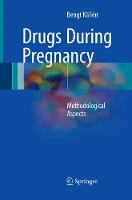
MORE ABOUT THIS BOOK
Main description:
This book addresses methodological aspects of epidemiological studies on maternal drug use in pregnancy. Discussing the existing sources of error and how they can produce incorrect conclusions, it examines various epidemiological techniques and assesses their strengths and weaknesses. These refer both to the identification of outcomes (with special emphasis on congenital malformations) and to the types of exposure (drug use).
Further, the book discusses the problem of confounding and how to handle it, and provides a simple introduction to statistics. Special situations, e.g. different types of parental exposure, are examined. Lastly, the book discusses pharmacovigilance and the information problem, concluding with a short list of aspects to consider when one wants to evaluate a published paper in the field.
Though the book is primarily intended for pharmacologists, gynecologists and obstetricians, it will benefit all doctors working in perinatal care.
Contents:
Introduction.- The alert clinician.- Thalidomide.- Anticonvulsants.- Warfarin.- Drugs for thyrotoxicosis.- Retinoids.- Mycophenolate mofetil.- Animal experiments and adverse drug reaction reports.- Animal experiments.- Adverse drug reaction reports.- Some epidemiological principles.- Population studies.- Case-control studies.- Cohort studies.- Comparison between case-control and cohort studies.- Nested case-control studies.- The sibling approach.- Pregnancy outcomes with the exception of congenital malformations.- Maternal pregnancy complications.- Spontaneous abortion.- Stillbirth and infant death.- Gestational duration and birth weight.- Intrauterine growth.- Other body dimensions.- Perinatal morbidity.- Long term effects.- Congenital malformations.- Definition.- Major and minor malformations.- Single and multiple malformations.- .- Causes of congenital malformations.- Sources of information on malformations.- Prenatal diagnosis and induced abortion.- Grouping of congenital malformations .- Identification of maternal use of drugs.- Questionnaires or interviews in a case-control setting.- Prospective randomized studies.- Teratology Information Services (TIS).- Prospective studies of pregnant populations.- Pregnancy registers.- The Swedish Medical Birth Register.- Prescription registers.- The effect of errors in drug exposure ascertainment.- Information on dosage of drugs used .- The problem of confounding.- Mediating factors should not be adjusted for.- Some common and sometimes important confounders.- Interaction between confounders.- Residual confounding.- Statistics .- Risk estimates.- Is the odd ratio or risk ratio statistically significant?.- The confidence interval.- Expected numbers.- Dealing with confounders.- Survival analysis.- Power analysis.- The p value and mass significance.- Lumping or splitting? Lumping or splitting of drug exposures.- Lumping or splitting of outcomes.- Paternal use of drugs.- Timing of drug use and effects on the embryo or fetus.- Exposures before conception.- Period of organogenesis, first trimester exposure.- Exposure after the first trimester.- Repeated studies and meta-analysis.- Pharmacovigilance.- Information on the risk with drug use during pregnancy.- Concluding remarks.
PRODUCT DETAILS
Publisher: Springer (Springer International Publishing AG)
Publication date: April, 2018
Pages: 111
Weight: 2226g
Availability: Available
Subcategories: Obstetrics and Gynaecology, Pharmacology