
(To see other currencies, click on price)
MORE ABOUT THIS BOOK
Main description:
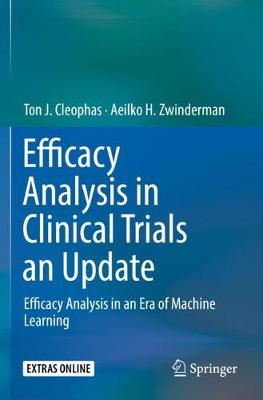
Machine learning and big data is hot. It is, however, virtually unused in clinical trials. This is so, because randomization is applied to even out multiple variables
Modern medical computer files often involve hundreds of variables like genes and other laboratory values, and computationally intensive methods are required
This is the first publication of clinical trials that have been systematically analyzed with machine learning. In addition, all of the machine learning analyses were tested against traditional analyses. Step by step statistics for self-assessments are included
The authors conclude, that machine learning is often more informative, and provides better sensitivities of testing than traditional analytic methods do
Contents:
Preface
Contents
Chapter 1
Traditional and Machine-Learning Methods for Efficacy Analysis
1. Introduction
2. The Principle of Testing Statistical Significance
3. The T-Value = a Standardized Mean Result of a Study
4. Unpaired T-Test
5. Null-Hypothesis Testing of Three or More Unpaired Samples
6. Three Methods to Test Statistically a Paired Sample
7. Null-Hypothesis Testing of Three or More Paired Samples
8. Null Hypothesis Testing with Complex Data
9. Paired Data with a Negative Correlation
10. Rank Testing
11. Rank Testing for Three or More Samples
12. Regression Analysis in the Efficacy Analysis of Clinical Trials
13. Predictors in Clinical Trials
14. Discrete and Discretized Data for Efficacy Analysis
15. Summary of Traditional Methods for Efficacy Analysis Applied in this Edition
16. Summary of Machine Learning Methods for Efficacy Analysis
17. Discussion
18. References
Chapter 2
Optimal-Scaling for Efficacy Analysis
1. Introduction
2. Example
3. Traditional Efficacy analysis
4. Optimal Scaling for Efficacy Analysis
5. Discussion
6. References
Chapter 3
Ratio-Statistic for Efficacy Analysis
1. Introduction
2. Data Example
3. Traditional Efficacy Analysis
4. Ratio-Statistic for Efficacy Analysis
5. Discussion
6. References
Chapter 4
Complex-Samples for Efficacy Analysis
1. Introduction
2. Data Example
3. Traditional Efficacy Analysis
4. Complex-Samples for Efficacy Analysis
5. Discussion
6. References
Chapter 5
Bayesian-Networks for Efficacy Analysis
1. Introduction
2. Data Example
3. Traditional Efficacy Analysis
4. Bayesian-Network for Efficacy Analysis
5. Discussion
6. References
Chapter 6
Evolutionary-Operations for Efficacy Analysis
1. Introduction
2. Data Example
3. Traditional Efficacy Analysis
4. Evolutionary-Operations for Efficacy Analysis
5. Discussion
6. References
Chapter 7
Automatic-Newton-Modeling for Efficacy Analysis
1. Introduction
2. Traditional Efficacy Analysis
Dose-Effectiveness Study
Time-Concentration Study
3. Automatic-Newton-Modeling for Efficacy Analysis
Dose-Effectiveness Study
Time-Concentration Study
4. Discussion
5. References
Chapter 8
High-Risk-Bins for Efficacy Analysis
1. Introduction
2. Traditional Efficacy Analysis
The Fruit table
The Snacks table
The Fastfood table
The Physicalactivities table
3. High-Risk-Bins for Efficacy Analysis
4. Discussion
5. References
Chapter 9
Balanced-Iterative-Reducing-Hierarchy for Efficacy Analysis
1. Introduction
2. Traditional Efficacy Analysis
Example 1
Example 2
3. Balanced-Iterative-Reducing-Hierarchy for Efficacy Analysis
Example 1
Example 2
4. Discussion
5. References
Chapter 10
Cluster-Analysis for Efficacy Analysis
1. Introduction
2. Data Example
3. Traditional Efficacy Analysis
4. Cluster Analysis for Efficacy Analysis
1. Hierarchical cluster analysis
2. K-means cluster analysis
3. Density-based cluster analysis
5. Discussion
6. References
Chapter 11
Multidimensional-Scaling for Efficacy Analysis
1. Introduction
2. Traditional Efficacy Analysis
3. Multidimensional Scaling for Efficacy Analysis
1. Proximity Scaling
2. Preference Scaling
4. Discussion
5. References
Chapter 12
Binary Decision-Trees for Efficacy Analysis
1. Introduction
2. Data Example with Binary Outcome
3. Traditional Efficacy Analysis
4. Decision-Trees for Efficacy analysis
5. Discussion
6. References
Chapter 13
Continuous Decision-Trees for Efficacy Analysis
1. Introduction
2. Data Example with a Continuous Outcome
3. Traditional Efficacy Outcome
4. Decision-Trees for Efficacy Analysis
5. Discussion
6. References
Chapter 14
Automatic-Data-Mining for Efficacy Analysis
1. Introduction
2. Data Example
3. Traditional Efficacy Analysis
4. Automatic-Data-Mining for Efficacy Analysis
1. Step 1 open SPSS modeler
2. Step 2 the distribution node
3. Step 3 the audit node
4. Step 4 the plot node
5. Step 5. the web node
6. Step 6 the type and c5.0 nodes
7. Step 7 the output node
5. Discussion
6. References
Chapter 15
Support-Vector-Machines for Efficacy Analysis
1. Introduction
2. Data Example
3. Traditional Efficacy analysis
4. Support-Vector-Machines for Efficacy Analysis
1. File reader node
2. The nodes x-partitioner, svm learner, x-aggregator
3. Error rates
4. Prediction table
5. Discussion
6. References
Chapter 16
Neural-Networks for Efficacy Analysis
1. Introduction
2. Data Example
3. Traditional Efficacy Analysis
4. Neural-Networks Efficacy Analysis
5. Discussion
6. References
Chapter 17
Ensembled-Accuracies for Efficacy Analysis
1. Introduction
2. Data Example
3. Traditional Efficacy Analysis
4. Ensembled-Accuracies for Efficacy Analysis
1. Step 1 open SPSS modeler
2. Step 2 the statistics file node
3. Step 3 the type node
4. Step 4 the auto classifier node
5. step 5 the expert tab
6. step 6 the settings tab
7. step7 the analysis node
5. Discussion
6. References
Chapter 18
Ensembled-Correlations for Efficacy Analysis
1. Introduction
2. Example
3. Traditional Efficacy Analysis
4. Ensembled-Correlations for Efficacy Analysis
1. Step 1 open SPSS modeler
2. Step 2 the statistics file node
3. Step 3 the type node
4. Step 4 the auto numeric node
5. Step 5 the expert node step
6. Step 6 the settings tab
7. Step 7 the analysis node
5. Discussion
6. References
Chapter 19
Gamma-Distributions for Efficacy Analysis
1. Introduction
2. Data Example
3. Traditional Efficacy Analysis
4. Gamma-Distributions for Efficacy Analysis
5. Discussion
6. References
Chapter 20
Validation with Big Data, a Big Issue
1. Introduction
2. Semantics of the Term Validation
3. Clinical Trial Validation
4. Diagnostic Test Validation
5. Big Data Validation
6. Big Data Jargon
7. Discussion
8. References
Index
PRODUCT DETAILS
Publisher: Springer (Springer Nature Switzerland AG)
Publication date: September, 2020
Pages: 304
Weight: 576g
Availability: Available
Subcategories: General Issues