(To see other currencies, click on price)
MORE ABOUT THIS BOOK
Main description:
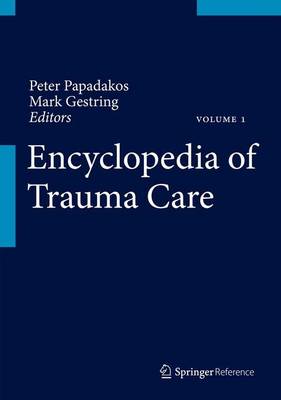
This encyclopedia is an authoritative compilation of practical information on major topics in trauma management. Its encyclopedic format will allow the reader to rapidly find up-to-date information on a specific topic of interest. The book is organized in an organ-based manner for ease of use when a practitioner is confronted with a particular injury. Each chapter takes the form of a clearly structured review of the subject in question and includes informative illustrations and tables as well as lists of classic references. In addition to the full range of organ-specific injuries, a number of important further topics are covered, including critical care of the trauma patient, trauma system organization, mass injury scenarios, the impact of new technologies, complications in trauma care, and ethical issues. All of the authors are leading experts, and the encyclopedia will provide an excellent source of information for both basic and clinical scientists and trainees in various fields.
Contents:
Overview of general trauma care: Injury epidemiology and control. Trauma system development and design. Injury scoring. Trauma outcome measures. Mechanisms of injury. Prehospital care of the trauma patient.- Early evaluation and management of the trauma patient: Initial assessment of the injured patient. Airway management in the trauma patient. Blood product utilization and resuscitation strategies following injury. Medications vital to trauma resuscitation. Role of ED thoracotomy.- Organ Systems Approach: Head: Concussion and mild brain injury. Traumatic brain injury. Maxillofacial injury. Ocular injury.- Neck: Cervical spine injury. Penetrating injury to the neck. Blunt cervical vascular injury.- Chest: Chest wall and lung injuries. Tracheal and esophageal injury. Thoracic vascular injuries. Cardiac injuries. Diaphragmatic injuries.- Abdomen: General approach to trauma laparotomy. Injury to the stomach and small bowel. Injury to duodenum and pancreas. Injury to liver and biliary tract. Injury to spleen. Colon and rectal injury. Abdominal vascular injury. Damage control and the management of the open abdomen.- Renal injury. Genitourinary injury.- Peripheral vascular injury.- Musculoskeletal: Pelvic fracture management. Extremity fracture management. Hand injury. Compartment syndrome and fasciotomy. The mangled extremity. Spinal cord injury.- Specific considerations in trauma care: Pediatric trauma. Trauma in the elderly. Trauma in pregnancy. Rural trauma. Combat casualty care. Burn injury.- Imaging in the trauma patient: Ultrasound. Advances in cross-sectional imaging. Interventional radiology. Anesthesia management in trauma. Ethical issues in trauma care. Disaster and mass-casualty care. Blast injury. Rehabilitation: Brain injury rehabilitation. Rehabilitation following traumatic injury. Management of the potential organ donor.-
Complications in trauma care: Deep vein thrombosis and pulmonary embolus. Infection. Missed injuries. Abdominal compartment syndrome.- Critical Care for the trauma patient: Hemodynamic monitoring. Invasive versus non-invasive modalities. Shock. Respiratory insufficiency. Ventilator modalities. Cardiac failure. Cardiac support modalities. Sepsis and multi-system organ dysfunction. Renal failure. Renal support modalities. Nutritional support in the trauma patient. Transfusion therapy. Pain control and sedation. ICU imaging.
PRODUCT DETAILS
Publisher: Springer (Springer-Verlag Berlin and Heidelberg GmbH & Co. K)
Publication date: July, 2015
Pages: 1200
Weight: 4189g
Availability: Available
Subcategories: Accident & Emergency Medicine, Critical Care Medicine
Publisher recommends