(To see other currencies, click on price)
MORE ABOUT THIS BOOK
Main description:
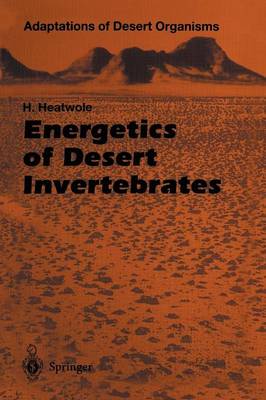
Desert invertebrates live in an environment where resources alternate unpredictably between brief periods of plenty and prolonged scarcity. This book describes the adaptive strategies of desert invertebrates in acquiring energy and sustaining life with such fluctuations. Some cooperate in foraging; others compete for resources. Some are nomadic and migrate to more favorable sites as conditions change. Others conserve energy by going into a deep dormancy until better conditions return. Still others store food during plentiful periods so as to retreat underground during less favorable times. The adaptive modes of economizing on scarce energy resources are diverse and lead to an appreciation of the intricate interactions of animals living close to their environmental limits.
Contents:
1 Introduction.- 1.1 Energetics.- 1.2 Deserts and Their Environments.- 1.2.1 Formation of Deserts.- 1.2.2 Diagnostic Features of Deserts.- 1.3 The Deserts of the World.- 1.4 Desert Invertebrates.- 2 Foraging: The Acquisition of Energy.- 2.1 Introduction.- 2.2 Optimal Foraging.- 2.3 Sit-and-Wait Foragers.- 2.4 Patterns of Active Foraging.- 2.5 Factors Influencing Foraging.- 2.5.1 Internal Rhythms.- 2.5.2 Physical Factors.- 2.5.2.1 Temperature.- 2.5.2.2 Moisture.- 2.5.2.3 Light.- 2.5.2.4 Other Physical Factors.- 2.5.2.5 Adaptive Strategies in Response to Harsh Physical Conditions.- 2.5.3 Food Supply.- 2.6 Biotic Interactions and Foraging.- 2.6.1 Cooperation.- 2.6.1.1 Factors Affecting Mass Recruitment of Foragers by Ants.- 2.6.2 Competition and Aggression.- 2.6.2.1 Exploitative Competition.- 2.6.2.2 Interference Competition.- 2.6.3 Predation.- 2.7 Interactions of Factors.- 2.8 Differences Among Ant Colonies in Foraging Activity.- 2.9 Role of Learning and Memory in Foraging and Food Processing.- 2.10 Apportionment of Foraging and other Activities.- 2.11 Foraging Success.- 3 Metabolism: The Expenditure of Energy.- 3.1 Introduction.- 3.2 Metabolism and Temperature.- 3.2.1 Q10.- 3.2.2 Acclimation.- 3.3 Metabolism and Water.- 3.3.1 Metabolic Water.- 3.4 Metabolism and Activity.- 3.5 Metabolism and Body Size.- 3.6 Metabolism and Sex.- 3.7 Metabolism and Life-History Stage.- 3.8 Metabolism and Biological Rhythm.- 3.9 Metabolism and Depth in Ground.- 3.10 Group Effects on Metabolism.- 3.11 Depressed Metabolism as a Desert Adaptation.- 3.11.1 Taxa with Generally Low Metabolic Rates.- 3.11.2 Temporary Metabolic Depression During Food Shortage.- 4 Budgeting of Energy.- 4.1 Introduction.- 4.2 Ingestion.- 4.3 Digestion.- 4.4 Assimilation.- 4.5 Maintenance and Activity.- 4.6 Respiratory Quotients.- 4.7 Growth.- 4.8 Reproduction.- 4.8.1 Direct Responses to Environmental Stimulation.- 4.8.2 Inhibition of Reproduction.- 4.8.3 Evolutionarily Adjusted Rhythms.- 4.8.4 Adaptations in Life-History Characteristics.- 4.9 Egestion.- 4.10 Energy Budgets.- 4.11 Energetics of Different Life-History Stages.- 4.12 Energy Expended in Desert Adaptation.- 5 Storage: The Hoarding of Energy.- 5.1 Introduction.- 5.2 Food Storage.- 5.3 Body Reserves.- 5.3.1 Use of Larvae or Workers as Storage Receptacles.- 5.3.2 Cannibalism as Storage -.- 5.4 Agriculture and Animal Husbandry.- 6 Quiescence and Dormancy: Waiting Out Energy Shortages.- 6.1 Introduction.- 6.2 Quiescence and Dormancy.- 6.3 Diapause.- 6.4 Anhydrobiosis.- 6.5 Encystment of Protozoans.- 6.6 Risks of Dormancy.- 7 Migration and Nomadism: Tracking Energy Sources.- 7.1 Introduction.- 7.2 Orthopteran Movements.- 7.2.1 Individual Flights.- 7.2.2 Gregarious Flights.- 7.3 Other Nomadic Insects in Deserts.- 7.4 Migration on a Microscale.- 8 Community Dynamics: The Flow of Energy.- 8.1 Introduction.- 8.2 Community Structure.- 8.3 Food Webs: Pathways of Energy Flow.- 8.4 Trophic Structure.- 8.5 Quantitative Cycling of Energy and Nutrients.- 8.6 Interaction of Climatic and Biotic Factors in Cycling.- 9 Overview.- References.
PRODUCT DETAILS
Publisher: Springer (Springer-Verlag Berlin and Heidelberg GmbH & Co. K)
Publication date: March, 2012
Pages: 284
Weight: 435g
Availability: Available
Subcategories: Biochemistry
From the same series