
(To see other currencies, click on price)
MORE ABOUT THIS BOOK
Main description:
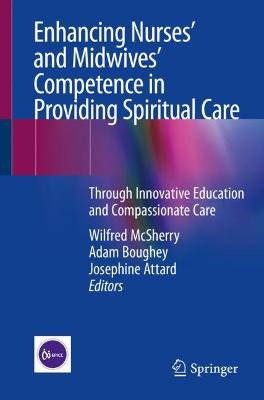
This book is the first of its kind, addressing key issues in the teaching and learning of spirituality and spiritual care in the context of nursing and midwifery practice. The content is based on the outcomes of a European-wide project (EPICC) that brought together leading nursing and midwifery educators and practitioners from 21 countries. It highlights the importance of ensuring student nurses' and midwives receive sufficient educational preparation to provide spiritual/person-centred care.
In turn, the book puts forward an innovative and creative approach to the teaching of spiritual/person-centred care, based on an evaluation of best practice across Europe. The content and activities presented will enable nursing and midwifery educators to acquire new knowledge/skills for learning about and teaching on the personal, religious and spiritual aspects of person-centred care. Both interactive and engaging, it will equip nursing and midwifery students to holistically address the needs of the people they care for.
The book has the potential to transform the nursing and midwifery workforce of the future by ensuring they are prepared to face the global challenges that are impacting international nursing and midwifery practice.
Contents:
Chapter 1. Introduction
Professor Wilfred McSherry Staffordshire University/University Hospitals of North Midlands NHS Trust, VID, Bergen Norway
Dr Adam Boughey Staffordshire University
This chapter will address the following: a) Why a need for this book, b) an overview of the EPICC project, c) set the objectives for the over manuscript d) discussion the Gold Standard Matrix and the factors that influence this field, e) set the manuscript within a specific cultural context.
Chapter 2. Spirituality and Spiritual Care
Professor Tormod Kleiven
Professor Tove Giske, VID University Norway
This chapter will explore: a) the different elements of spirituality (existential, religious, life-events, suffering), b) provide an overview of the many views of what it means to be a Human Being, c) how to understand spiritual care and, c) discuss spirituality and spiritual care in the European context.
Chapter 3. Educational Context/Evidence and Exploration of Professionals fields of Nursing and Midwifery
Professor Linda Ross, University of South Wales
Dr Josephine Attard, University of Malta
Drawing upon international evidence, this chapter will explore the need for nurses/midwives to be competent in spiritual care to meet expectations of nursing/midwifery regulatory bodies, professional educational guidelines and to respond to the patient/client/carer voice. The chapter will thus provide context for the chapters that follow.
Chapter 4. Self-Care
Professor Anthony Schwartz, Staffordshire University
This chapter will address: a) the challenges students/nurses face when working in health care, b) the importance of promoting a healthy working environment so students/nurses/teachers can manage to stay sensitive to patients' needs and sufferings and lastly, c) how the individual student and nurse can carry out self-care physically, psychologically, social and spiritually.
Chapter 5. Competence #1 - Intrapersonal
Professor Rene van Leeuwen, Christian University of Applied Sciences Viaa in Zwolle, Netherlands
Chapter 6. Competence #2 - Interpersonal
Dr Josephine Attard, University of Malta
This chapter addresses interpersonal spirituality which engages with the persons' spirituality, acknowledging their unique spiritual and cultural worldviews beliefs and practices influencing their healthcare. The central themes in this chapter involve the education and development of interpersonal relationships and communication skills of nursing/midwifery students by exploring; a) the impact of the spiritual and cultural worldviews beliefs and practices in the provision of care b) the importance of effective, reciprocal verbal and non-verbal interaction between persons and carer c) the development of nurse/midwife-client relationships which evoke feelings of companionship, and compassionate care d) the development of spiritual care attitudes, such as sharing, caring empathy, listening, touch and presence.
Chapter 7. Competence #3 - Spiritual Care, Assessment and Planning
Professor Wilfred McSherry, Staffordshire University/University Hospitals of North Midlands NHS Trust, VID, Bergen Norway
Professor Linda Ross, University of South Wales
This chapter will introduce the reader to some fundamental principles and practices with regards to spiritual assessment, and the planning of spiritual care. The chapter will introduce several different approaches to assessing spiritual needs and resources. It will provide valuable insights into appropriate formal or informal approaches, detailing how care plans can be used to support the delivery of spiritual care. The importance of maintaining confidentiality and obtaining informed consent will be reinforced ensuring practice is based upon sound ethical and professional values.
Chapter 8. Competence #4 - Spiritual Care, Intervention and Evaluation
Professor Tove Giske, VID University Norway
This chapter will explore different ways spiritual care can be a) addressed and evaluated and, b) documented in nursing and midwifery.
Chapter 9. Conclusion
All EPICC Strategic partners
PRODUCT DETAILS
Publisher: Springer (Springer Nature Switzerland AG)
Publication date: May, 2021
Pages: 160
Weight: 454g
Availability: Available
Subcategories: Nursing