
(To see other currencies, click on price)
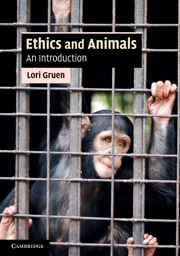
MORE ABOUT THIS BOOK
Main description:
In this comprehensive introduction to animal ethics, Lori Gruen weaves together poignant and provocative case studies with discussions of ethical theory, urging readers to engage critically and empathetically reflect on our treatment of other animals. In clear and accessible language, Gruen provides a survey of the issues central to human-animal relations and a reasoned new perspective on current key debates in the field. She analyses and explains a range of theoretical positions and poses challenging questions that directly encourage readers to hone their ethical reasoning skills and to develop a defensible position about their own practices. Her book will be an invaluable resource for students in a wide range of disciplines including ethics, environmental studies, veterinary science, women's studies, and the emerging field of animal studies and is an engaging account of the subject for general readers with no prior background in philosophy.
Contents:
1. Why animals matter; 2. The natural and the normative; 3. Eating animals; 4. Animal research; 5. Dilemmas of captivity; 6. Animals in the wild; 7. Protecting animals.
PRODUCT DETAILS
Publisher: Cambridge University Press
Publication date: February, 2011
Pages: 246
Dimensions: 174.00 x 247.00 x 12.00
Weight: 510g
Availability: Not available (reason unspecified)
Subcategories: Veterinary Medicine
Publisher recommends
From the same series


CUSTOMER REVIEWS
'Ethics and Animals is a work of exceptional clarity and intelligence, and it is hard to imagine how it could be surpassed as a concise introduction to the competing philosophical approaches that underpin contemporary animal protection.' Wayne Pacelle, President and CEO, The Humane Society of the United States 'Ethics and Animals is a wonderfully readable introduction to the range of issues that come under that heading. Lori Gruen is not only a fine philosopher, but also a person with genuine empathy for animals, and the ability to express that in writing.' Peter Singer, University Center for Human Values, Princeton University