
(To see other currencies, click on price)
MORE ABOUT THIS BOOK
Main description:
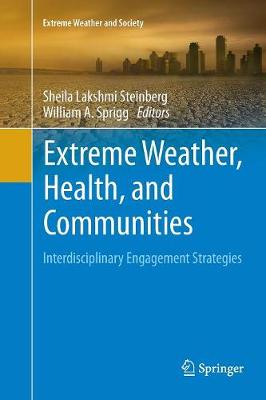
This volume presents a unique interdisciplinary approach, drawing on expertise in both the natural and social sciences. A primary goal is to present a scientific and socially integrated perspective on place-based community engagement, extreme weather, and health. Each year extreme weather is leading to natural disasters around the world and exerting huge social and health costs. The International Monetary Fund (2012) estimates that since 2010, 700 worldwide natural disasters have affected more than 450 million people around the globe. The best coping strategy for extreme weather and environmental change is a strong offense. Communities armed with a spatial understanding of their resources, risks, strengths, weaknesses, community capabilities, and social networks will have the best chance of reducing losses and achieving a better outcome when extreme weather and disaster strikes.
Contents:
Introduction.- Extreme Weather and the World.- The Purpose of the Book.- The
Power of "Interdisciplinary".- Superstorm Sandy: a Game Changer?.- Introduction.-
New Jersey at a Glance.- Historic Mid-Atlantic Storms.- Tropical storms and
hurricanes.- Nor'easter.- Historic storms.- Recent storms.- Sandy's Fury.- Genesis
and early days.- New Jersey prepares.- New Jersey in the cross hairs.- Storm
day: Monday morning.- Storm day: afternoon.- Storm day: evening landfall.- Sandy's
Aftermath.- Lessons learned.- Seemingly slight differences can have major
consequences.- Storm conditions do
not change at a steady pace.- Storms stronger than Sandy are within the realm
of possibility.- Do not fully rely on storms of the past to provide a look to
the future.- Heed weather forecasts.- Regional infrastructure is too vulnerable
in severe storm conditions.- Messaging needs improvement.- Do not rely solely
on lessons from Sandy.- Conclusion - A Game Changer?.- Extreme Weather:
Politics and Public Communication.- Introduction.- Blizzards Bring
Cooperation.- The Interconnectedness of U.S. Government Agencies.- Politics
and Extreme Weather: Historical Context.- New York City.- Chicago.- Denver.-
Fort Worth.- Extreme Weather Campaign/Political Influences.- Tornadoes
and Politics.- Contemporary Public Communication Methods: The Role of Social
Media.- Public Communication Theories.- Knowledge Gap Theory.- Uses and
Gratifications Theory.- Conclusion.- Best Practices for Extreme Weather
Communication.- Dust Storms, Human Health and a Global Early Warning System.- Global
Dust-Health Early Warning System (D-HEWS) - The Motive.- Meningitis.- Asthma.- Valley Fever.- Interviews
with Valley Fever Sufferers.- Acquired Insights for a Valley Fever Early
Warning System.- This Chapter's Focus on Airborne Dust and Human Health.- The
Dust-Health Challenge.- Dust-Health Early Warning System - The Means.- Atmospheric
Dust Modeling.- Model Forecast and Simulation Verification.- Satellite-based Remote Sensing.- Surface-Based
Remote Sensing and In-Situ Observations.- Upward Looking Remote Sensing.-
In-Situ Dust Measurements and Monitoring.- Global Partners in Public Health
Applications: Dust-Health Early Warning System - The Opportunity.- A Conceptual
Framework.- Global Dust Movement.- Regional and Local Dust Exposure.- Transdisciplinary
Information Exchange (TIE).- Implementation.- Conclusions: Best Practices in
Technology Transfer, Capacity Building, Training and Education.- Interdisciplinary
Engagement of People and Place around Extreme
Weather.- Introduction.- Extreme Weather and Changing Patterns.- Religious
Leaders Note Environmental Changes.- Extreme Weather and Places.- Extreme
Weather Community Health Model.- Description of Extreme Weather Community
Health Model.- Model Flow.- Extreme Weather Interdisciplinary Community
Engagement.- What is engagement?.- Why Interdisciplinary?.- Place.- Sociospatial
Strategies for Place-Based Policy.- Understanding People Community/Culture.- How
Context (Space or Proximity) Influences Outcome.- Knowledge about the Local
Environment.- Geographies and Community Type.- Importance of community
engagement.- Interdisciplinary Teaming for engagement.- Place-based
Interdisciplinary Approaches for Extreme Weather Engagement.- Navigating local
geographies.- Interaction, Establish Consistent & Ongoing Interaction.- Know
your Culture/Community.- Understand
General Population and Sub-populations.- Establish Trust.- Engage Using
Interdisciplinary Teams with Different Sectors of the Community.- Create Two-way
Place-Based Communication.- Choosing A
Reasonable Plan for Stakeholders.- Conclusion.- Engaging Communities to Assess
the Health Effects of Extreme Weather in the Arctic.- The Setting: The physical landscape.- Climate Change in
Alaska: Observed and Expected Changes.- Rising Temperatures.- Warming Oceans.- Decreased
Freshwater Ice and Snow Cover.- Thawing Permafrost.- Changes in Extremes.- The
Setting: The cultural landscape.- Climate Change, Health Impacts on Arctic
Communities.- Findings and Strange Weather Patterns.- Threats to Local
Lifestyle.- Changing Food Sources.- Environmental Changes/Challenges to Health.-
Conclusions.- Refining the Process of Science Support for Communities around
Extreme Weather Events and Climate Impacts.- Introduction.- Community and
Understanding a Place.- Challenges of Scientists' Community Engagement for
Adaptation.- Variety of environmental change signals.- Changing Louisiana
Environments.- Community responses.- Research Methods.- Community Background.- Adaptation
Collaboration.- Participatory Action Research (PAR).- Science and Traditional
Ecological Knowledge (Sci-TEK).- Effective Engagement Strategies.- First
Peoples' Conservation Council (FPCC)
2012.- Community Observations and Stories about Changing Environments.- A
Scientists' Perspective.- Changing Environments/Changing Food Sources.- Observations
on Health and Changing Environments.- A Proposal for Collaboration Going
Forward: Climate Change, Regional Science and Community Task Forces.- Value of
Co-Location.- Preparation of participants - scientists and community residents.-
Content of science shared and scenario planning.- Using Stories for science
communication.- Conclusions and Lessons Learned: How to Engage Effectively with
Communities.- Establish Different Types of Collaboration.- Build Capacity
through Collaboration.- Create Collaborations Now.- Increase Capacity/Mitigate
Vulnerability to Extreme Weather.- Build Collaboration on Trust and Time.- Share
Collaboration Strategies with Scientists.- Embrace Different Knowledge Types.-
Embrace Action Research Models.- Acknowledgement.- Reducing Vulnerability to
Extreme Heat through Interdisciplinary Research and Stakeholder Engagement.- Introduction.-
Extreme heat vulnerability: an interdisciplinary perspective.- Vulnerability.- Interdisciplinary
research on extreme heat: the SIMMER project.- Stakeholder engagement.- Stakeholders' knowledge, attitudes,
and practices with regard to extreme heat in Houston.- Stakeholder
Identification.- The Online Stakeholder Survey.- Extreme Heat Preparedness and
Response in Houston: Co-production of Knowledge.- Disseminating Research
Results to Stakeholders.- Summary and Best Practices for Stakeholder Engagement.-
Decision-Maker Engagement.- Dual Engagement Approach.- Early Stakeholder
Involvement.- Stakeholder Adaptive Capacity.- Relevance to Local Needs.- Sociospatial
Modeling for climate-based emergencies: Extreme Heat Vulnerability.- Introduction.-
Social Vulnerability.- Age.- Education.- Income.- Physical Vulnerability.- Heat
Vulnerability.- Micro-UHI.- Built-up environment.- Vegetation.- Temperature
Warnings.- Social-Spatial vulnerability.- Social Vulnerability Index (SoVI).- Extreme
Heat Vulnerability Index.- Statistical Modelling.- Heat Contributing Mortality
Causes.- Principal Component Analysis Findings.- Chicago Heat Wave.- Data
Hindrance.- Satellite Data.- Mitigation Practices - How to use Vulnerability
models to improve health.- EHVI Mitigation Examples - Practiced and Theoretical.-
Cooling Center Assessment.- Climate Region Considerations.- Residences.- Concluding
Remarks.- Preventative Practices to reduce Heat impacts on Community Health.- Heat
mitigation is multidisciplinary.- Heat waves are a local phenomena.- Heat wave
vulnerability evolves with the population and location.- Mitigation is a local
problem and requires local response.- Drought
and Health in the Context of Public Engagement.- Introduction.- What is
Drought?.- Drought Impacts.- Water Quality and Water Quantity Impacts.- Mental
Health and Stress Impacts.- Dust and Windblown Agents.- Wildlife Intrusion.- Drought
Risk Management.- Droughts and Climate Change.- Engagement Strategies.- Community
Capitals Framework.- Drought Scenario Exercises and Tournaments.- Case Study:
Greater Horn of Africa.- Case Study: Community Capitals Framework and Drought
Impact Assessment.- California.- Case Study: Missouri River Basin.- MRB RDEWS
Tribal Activities.- Conclusions.- Extreme Weather: Mental Health Challenges and Community Response
Strategies.- Introduction.- Extreme Weather
and India.- Extreme Weather and Mental Health.- Impacts of Extreme Weather Events on Communities.- Floods.- Cyclones.- Drought.- Displacement due
to Extreme Weather Events.- Extreme
Weather Events and Community Engagement.- Best Practices for Extreme
Weather Community Engagement.- Enhancing Preparedness, Reducing Vulnerabilities
and Building Resilience.- Importance
of Early Warnings, Timely Evacuation,
and Emergency Planning.- Creating Awareness through Interdisciplinary
Teaming.- Knowledge Sharing.- Land use
planning.- Regional Cooperation.- Best Practices for Mental Health Care.- Extreme Winter:
Weaving Weather and Climate into a Narrative through Laura Ingalls Wilder.- A
Famous Mid-American Author.- Setting the Stage for the Hard Winter.- Overview
of the Hard Winter of 1880-1881.- Meteorological Causes and Context of the Hard
Winter of 1880-1881.- Climate Patterns During the Winter of 1880-1881.- Pioneers
and Modernistas: Information and Impacts
Then and Now.- Vulnerability during Extreme Winter Weather.- Narratives and
Stories as a Communication Tool.- The Wilder Weather Narrative.- Testing the
Wilder Weather Narrative.- Moral of the Story.- Best Practices: Using
Narratives for Weather and Climate Engagement.- The Air We Breathe: How Extreme
Weather Conditions Harm Us.- The Connection Between Extreme Weather and Health.-
Airborne Particulates.- Role of Gaseous Pollutants.- Geographical Concerns.- Air
Pollution and Respiratory Disease.- Air Quality and the Immune System.- Climate
and Extreme Weather and Health.- Community Engagement Strategies.- Strategies
for Future Health Communication.- Human Response to and Consequences of the May
22, 2011, Joplin Tornado.- Introduction.- Background.- Health and Safety
Impacts.- The NIST Investigation.- Chapter Overview.- Data Collection and
Analysis using Spatially Integrated, Multidisciplinary Methods.- Introduction.-
Tornado Wind Field.- Design Practices and Building Damage.- Fatalities and
Injuries.- Emergency Communications and Public Response.- Summary.- Analysis
and Results of Fatalities/Injuries and Discussion of Health and Safety
Impacts.- Fatalities that Occurred Outside of
Buildings.- Spatial Analysis.- Fatalities that Occurred Inside of Structures.- Critical Buildings.- Commercial Buildings.- Residential
Buildings.- Summary.- Conceptual
Model of Protective-Action Decision-Making; A Path to Best Practices.- Protection is Unnecessary.- Unawareness.- No Personal Risk
Perceived.- Protective Action is Necessary.- Recommendations and Future
Work.- Best Practices and Recommendations for Human Health and Community
Engagement.- Future Research.- Overall Summary.- Approaches for Building Community Resilience
to Extreme Heat.- Introduction.- Understanding vulnerability to extreme heat.- Health
risks from extreme heat.- Individual and community level factors that increase
vulnerability.- Role of Space and Place.- Vulnerability associated with climate
change, heat and air quality.- Adapting to the health impacts of climate change.-
Actions to protect people from extreme heat events.- Health Canada's
approach to increasing heat-health resiliency and preparing Canadians for
climate change.- Developing heat alert and
response systems to protect health.- Supporting heat-health adaptation through proactive communication and
outreach.- Health Canada's heat-health education
and outreach approach.- CASE STUDY- Harmonizing heat-health messaging in
Ontario.- Testing HARS to increase community preparedness for extreme heat
events.- Health Canada's efforts to support heat-health preparedness through
table-top exercises.- CASE STUDY - Extreme heat and health table-top exercise
in the City of Winnipeg, Manitoba.- Preventative approach to building heat
resiliency by modifying the built environment.- Development of information and
tools at Health Canada to mitigate the urban heat island.- CASE STUDY -
Measures to reduce the urban heat island effect in Windsor, Ontario.- Multi-sector
collaboration on heat-health adaptation to achieve health co-benefits.- CASE
STUDY -Toolkit for increasing the resiliency of health care facilities to
climate change impacts including extreme heat events.- Lessons for supporting
heat-health adaptation and building resiliency to other climate change
impacts.- Addressing vulnerability factors for effective heat-health adaptation.
PRODUCT DETAILS
Publisher: Springer (Springer International Publishing AG)
Publication date: April, 2018
Pages: 388
Weight: 6204g
Availability: Available
Subcategories: General Practice, Public Health