
(To see other currencies, click on price)
MORE ABOUT THIS BOOK
Main description:
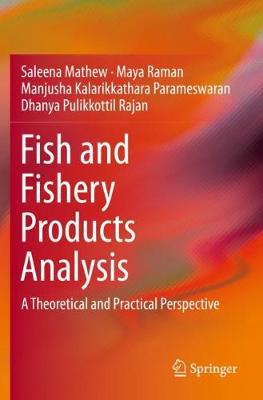
This novel and informative book discusses the various aspects of seafood quality. The book is divided into 7 broad sections, each tackling a different aspect. The first section covers the general aspects relevant to the nutritional quality of the fish and the various extraction protocols for macro-/ micro-nutrients. The second section provides insights into handling and the principles of thermal and non-thermal processing techniques for commercially important fishery products. The quality standards and safety concerns in the seafood industry and consumption are discussed in this section. The freshness indices of the processed products including biochemical, microbiological and toxicological characteristics are also included. The third section discusses the physico-chemical characteristics and quality parameters of potable water/ ice. The fourth section includes the quality assessment of various toxicants related to seafood products. The fifth section deals with the specific aspects such as principle, instrument and procedures of conventional and novel analytical instruments relevant to the seafood industry. The sixth section deals with the seafood waste management including solid and liquid seafood wastes. Presently, there is a great awareness regarding environmental sustainable processing/ preservation techniques. The final chapter discusses the bioactive compounds from under-utilized marine sources showing pharmaceutical/ nutraceutical applications.
Contents:
Section I: ASSESSMENT OF NUTRITIONAL QUALITY OF FISH
1. Nutritional quality of Fish
2. Extraction of macro- and micro-molecules
3. Proximate Composition/ nutritional quality
3.1. Physical:
3.1.1. Measurement of yield
3.1.2. Measurement of pH
3.1.3. Analysis of moisture
3.2. Chemical:
3.2.1. Analysis of carbohydrate and saccharide
3.2.2. Analysis of protein
3.2.3. Analysis of crude lipid
4. Analysis of non-protein nitrogen
5. Analysis of minerals, vitamins and trace elements
6. Analysis of polyphenols
7.Enzyme assays- protease, lipases, lactic dehydrogenase, transglutaminases (glutamate oxaloacetate transaminase, glutamate pyruvate transaminase),
8.Quality of protein: Protein efficiency ratio, Biological value, Net Protein Utilization,
Section II: FISH AND FISHERY PRODUCTS: QUALITY INDICES
1. Processing of various fish and sea food
1.1. High and low thermal preservation techniques
1.1.1. Chilling and Freezing
1.1.2. Drying and Curing
1.1.3. Smoking
1.1.4. Canning
1.2. Novel non-thermal processing and preservation techniques.
1.2.1. High-Pressure Processing
1.2.2. Pulsed Electric Field Processing
1.2.3. Ohmic processing
1.2.4. UV processing
1.2.5. Microwave processing
1.2.6. Radio Frequency Electric Fields
1.2.7. High-Intensity Pulsed Light Technology
1.2.8. Irradiation
1.2.9. Biochemical and Chemical hurdles/ hurdle technology
1.2.10. Cold Plasma
1.2.11. Ozone
1.2.12. Combined microwave vacuum drying
1.2.13. Hybrid drying technologies
1.2.14. Infrared
1.3. Value addition
1.3.1. Mince or mince based products
1.3.1.1. Surimi and surimi based products
Chikuwa
Satsumage
Hampen
Kamaboko
1.3.2. Battered and breaded or coated productsFish ball
Fish roll
Fish finger
Fish cutlet
Fish nuggets
Fish batter fry
Fish sandwich
Fish samosa/ pakora
1.3.3. Extruded fish products
Fish sausage
Fish burgers/ patties (Brunei Darussalam)
Fish noodles
Fish papad/ chakli/ wafers
1.3.4. Allied seafood delicacies
Fish satay
Fish curies
Sushi
Chilli fish
Fish paturi
Fish pickle/ prawn pickle
Frozen Fish Dessert
1.3.5. Miscellaneous products
Fish protein concentrate
Fish soup powder
Fish hydrolysate
Fish paste
Fermented fish products
Fish oil
Masmin
Imitation products
Isinglass
Shark fin rays
Beche-de-mer
Caviar
Ambergris
Ensilage
Biogas/Biodiesel
1.4. Packaging and storage
1.5. Fermentation technology
2. Trends in quality control and assurance in seafood processing industry
2.1. HACCP
2.2. ISO
3. Determination of functional quality of processed food
1.1. Determination of color and odor
1.2. Determination of salt content
1.3. Determination of water activity
1.4. Evaluation of sensory parameters
1.5. Evaluation of texture
1.6. Determination of whiteness
1.7. Determination of electrical properties/ redox potential
1.8. 5-point Folding test for surimi
1.9. Specific gravity of fish oils
1.10. Analysis of starch in breaded and battered products
4. Determination of freshness indices of processed food
4.1. Protein
2.1.1. Determination of -amino nitrogen
2.1.2. Analysis of buffering capacity of fish muscle
2.1.3. Analysis of free amino acids
2.1.4. Analysis of biogenic amines
2.1.5. Determination of extractable protein nitrogen
4.2. Lipids
4.2.1. Determination of FFA
4.2.2. Determination of oxidative rancidity (PV)
4.2.3. Determination of TBA/ TBARS
4.2.4. Determination of refractive index
4.2.5. Determination of total volatile acids
4.3. Carbohydrates
4.3.1. Determination of lactic acid/ metabolites
4.4. Non-protein nitrogen
4.4.1. Determination of TVBN
4.4.2. Determination of TMA/ DMA
4.5. Nucleotides
4.5.1. Determination of nucleotide catabolites
4.5.2. Determination of Hypoxanthine
4.6. Miscellaneous
4.6.1. Determination of Na+/K+
4.6.2. Determination of formaldyhyde
4.6.3. Determination of ammonia
4.6.4. Determination of G/P value
4.6.5. Determination of ethanol
4.7. Microbiological parameters
4.7.1. Evaluation of total plate count
4.7.2. Isolation, identification and characterization of seafood bacteria
4.7.3. Detection and identification of fecal Streptococci
4.7.4. Detection and identification of Salmonella
4.7.5. Detection and identification of Vibrio cholerae and Vibrio parahaemolyticus
4.7.6. Detection and identification of E. coli
4.7.7. Detection and identification of Staphylococcus aureus
4.7.8. Detection and identification of Listeria monocytogenes
4.7.9. Detection and identification of Klebsiella
4.7.10. Detection and identification of Shigella
4.7.11. Detection and identification of Campylobacter
4.8. Quality evaluation of dried seafood products
4.8.1. Determination of water activity
4.8.2. Determination of salt soluble nitrogen
4.8.3. Determination of non-protein nitrogen and total volatile base nitrogen
4.8.4. Determination of PV, FFA
4.8.5. Determination of TPC, total fungal count/ mold growth
Section III: TECHNIQUES USED IN FISH AND FISHERY PRODUCTS ANALYSIS
1.1. Instruments used for physiochemical analysis
1.1.1. pH Meter
1.1.2. Moisture meter
1.1.3. Protein Analysis
1.1.4. Dietary fiber fractionation
1.1.5. Muffle furnace
1.1.6. Soxlet apparatus
1.1.7. Electrical Conductivity Meter
1.2. Chromatography
1.2.1. HPLC
1.2.2. GC
1.2.3. HPTLC
1.2.4. Conventional methods
1.3. Electrophoresis and blotting techniques
1.3.1. Polyacrylamide gel electrophoresis
1.3.1.1. Native PAGE
1.3.1.2. SDS - PAGE
1.3.1.3. DGGE
1.3.2. Agarose gel electrophoresis
1.3.2.1. AGE for Nucleic acids
1.3.2.2. AGE for Complex carbohydrates
1.3.3. Isoelectric focusing
1.4. Photometry, Colorimetry and Spectrometry
1.4.1. Flame photometer
1.4.2. Spectro - Colorimeter
1.4.3. UV/Vis Spectrophotometer
1.4.4. Atomic Absorption Spectrophotometer
1.4.5. FTIR
1.4.6. NMR
1.4.7. Mass-Specctrometry
1.5. Microscopy
1.5.1. Dark field
1.5.2. Oblique illumination
1.5.3. Dispersion staining
1.5.4. Phase contrast
1.5.5. Differential interference contrast
1.5.6. Interference reflection
1.5.7. Fluorescence
1.5.8. Confocal
1.5.9. Single plane illumination microscopy and light sheet fluorescence microscopy
1.5.10. Wide-field multiphoton microscopy
1.5.11. Scanning electron microscopy
1.5.12. Transmission electron microscopy
1.5.13. Atomic force microscopy
1.5.14. Ultrasonic force microscopy
1.5.15. Ultraviolet microscopy
1.5.16. Infrared microscopy
1.5.17. Digital holographic microscopy
1.6. Refractometer
1.7. PCR
1.8. Centrifuge
1.9. Texture Analyzer
1.10. Rheometer/ Viscometer
1.11. Differential Scanning Calorimeter
1.12. XRD
1.13. Torry meter
1.14. CHNS Analyser
1.15. Geiger Muller counter
Section IV: BIOACTIVE COMPOUNDS FROM MARINE SOURCES AND HEALTH BENEFITS
1. Fish as biomedicine
2. Collagen and gelatin
3. Glycosaminoglycans/ Proteoglycans
4. Vitamins and pigments
5. Biogas/ biodiesel
6. Biomanure/ bio-fertilizer
7. Polysaccharides
8. Polyphenols
9. Polyunsaturated fatty acids
10. Miscellaneous
Section V: TOXICANTS: ASSESSMENT OF QUALITY
1. Analysis of food additives, regulations, permitted food additives and safety management in seafood products1.1. Analysis of pesticides
1.2. Analysis of antibiotics
2. Analysis of natural toxins/ poisons/ antinutritives
2.1. Analysis of heavy metals and metallothionines
2.2. Analysis of aflatoxin
2.3. Finfish-Ciguatera, Scombroid, pufferfish poisoning, sardine poisoning (clupeotoxism), hallucinogenic fish poisoning
2.4. Shellfish-red tides, paralytic shellfish poisoning, neurotoxic shellfish poisoning, diarrheal shell fish poisoning, amnestic shellfish poisoning (domoic acid poisoning), azaspiracid poisoning
2.5. Others: Botulism, escolar, whelk, yessotoxin, pectenotoxin, maitoxin
2.6. Analysis of filth
2.7. Emerging pathogens
Section VI: WATER/ ICE: ASSESSMENT OF QUALITY
1. Physical characteristics
1.1. Determination of temperature
1.2. Determination of color
1.3. Determination of taste
1.4. Determination of turbidity
1.5. Determination of odor
1.6. Determination of pH
1.7. Determination of specific conductance/ conductivity
1.8. Determination of total dissolved solids
1.9. Determination of total suspended solids
2. Chemical characteristics
2.1. Determination of alkalinity
2.2. Determination of hardness
2.3. Determination of calcium, magnesium, chloride, sulphate, floride, nitrate, phosphate
3. Toxic metals
3.1. Determination of copper, chromium, cadmium, zinc, lead, mercury, iron, manganese
4. Organic nutrient and demand
4.1. Determination of biological oxygen demand
4.2. Determination of chemical oxygen demand
4.3. Determination of phenols
4.4. Determination of oil/ grease
4.5. Determination of pesticides
4.6. Determination of nitrates
5. Microbiological characteristics
5.1. Determination of most probable number
5.2. Determination of standard plate count
5.3. Determination of total coliforms/ faecal coliforms
5.4. Determination of biofouling and biofilm formation
5.5. Determination of pathogens
6. Biological characteristics
6.1. Determination of phytoplanktons and zooplanktons
7. Radioactive elements
7.1. Alpha emitter
7.2. Beta emitter
Section VII: WASTE MANAGEMENT IN SEAFOOD INDUSTRY
1. Seafood waste disposal methods
2. Waste water characterization
3. Waste water treatment and monitoring
3.1. Hydrolysis
3.2. Bioremediation
3.3. Anaerobic treatment
3.4. Filtration/ screening
3.5. Miscellaneous
ANNEXURES
REFERENCES
PRODUCT DETAILS
Publisher: Springer (Springer Verlag, Singapore)
Publication date: November, 2020
Pages: 443
Weight: 830g
Availability: Available
Subcategories: Biochemistry, Pharmacology