(To see other currencies, click on price)
MORE ABOUT THIS BOOK
Main description:
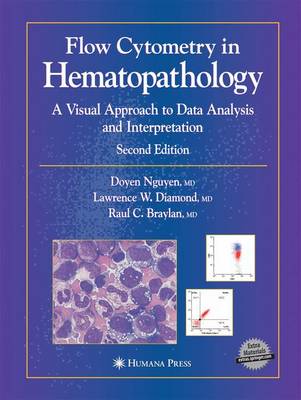
The second edition of this volume reflects the recent advances in the FCM analysis of hematopoietic disorders. The chapters have been revised to incorporate new text and figures. The volume is aimed at hematopathologists, hematologists, pathologists, and laboratory technicians.
Contents:
Table of Contents
Preface to second edition
Preface to first edition
Acknowledgements
List of Abbreviations
List of Case Studies
Color Plates
Chapter 1 Approach to Flow Cytometry - General Considerations
1.1 Reasons for the necessity of proper data analysis
1.1.1 The pitfalls of the FCM data format of 'percent positive' per
antibody tested
1.2 General aspects of FCM data analysis and interpretation
1.3 Other applications of FCM in hematopathology
1.4 Maturation and differentiation of hematopoietic elements, an
overview based on the immunologic markers currently in use in the FCM
laboratory
Chapter 2 FCM immunophenotyping and DNA analysis - Practical aspects
that can affect data analysis and interpretation
2.1 Sample selection
2.1.1 Liquid specimens
2.1.2 Solid tissue specimens
2.2 Preparing nucleated cell suspensions
2.3 Cell yield and viability
2.4 Sample staining.
2.4.1 Surface antigens
2.4.2 Intracellular antigens
2.4.3 DNA content
2.5 Data acquisition
2.5.1 Calibration
2.5.2 Color compensation
2.5.3 List mode data collection
2.5.4 Exclusion of nonviable cells
2.6 Antibody panel design
2.6.1 Antibody selection
2.6.1.1 Anti-light chain antibodies
2.6.2 Fluorochrome conjugation
2.7 Comprehensive antibody panels
2.7.1 Disease-oriented antibody panels
2.7.2 Antibody panels oriented by specimen type
2.8 Tailored panels and add-on testing
2.8.1 Minimal residual disease
2.9 FCM immunophenotyping data representation
2.9.1 Analysis panels
2.9.2 Color display
2.10 Approach to DNA data analysis
2.10.1 DNA ploidy
2.10.2 S-phase
Chapter 3 FCM data analysis on nearly homogeneous samples
3.1 FCM parameters
3.1.1 Forward scatter
3.1.2 Side scatter
3.1.3 Fluorescence
3.1.3.1 Heterogeneous fluorescence intensity (bimodal, variable)
3.2 Fluorescence dynamic range
3.3 Strategy to the visual review of FCM immunophenotyping data
3.4 Common SSC/CD45 patterns
3.4.1 Assessment of the blast population
3.4.2 Immature neoplastic cells with downregulated CD45
3.4.3 SSC/CD45 in mature lymphoid disorders
3.5 Other dot plot patterns useful in acute leukemia diagnosis
3.5.1 Useful antigenic features in AML
3.5.1.1 Myeloid phenotypic abnormalities and MRD detection
3.5.2 Precursor B-ALL vs bone marrow B-cell progenitors
3.5.3 Useful antigenic features in precursor T-lymphoma/leukemia
3.6 Evaluation of mature lymphoid malignancies
3.6.1 Assessment of surface light chain expression
3.6.2 Assessment of pan B-cell antigens
3.6.3 Useful antigenic features in mature B-cell malignancies
3.6.3.1 CD10 expression: Follicular center cell lymphomas
3.6.3.2 Pattern of CD20 and CD11c coexpression
3.6.3.3 CD5 expression
3.6.3.4 Aberrant B-cell profile
3.6.4 Identification of abnormal mature T-cells
3.6.5 Useful antigenic features in mature T-cell malignancies
3.7 Assessing the biological behavior of mature lymphoid neoplasms
3.8 Dot plot patterns in histiocytic proliferations and
nonhematopoietic malignancies
Chapter 4 FCM data analysis on heterogeneous specimens
4.1 Identifying normal FCM samples
4.1.1 Benign/reactive solid lymphoid tissue (e.g., lymph nodes,
tonsils)
4.1.1.1 Pattern of CD10/CD20 coexpression. Distinction between FRFH
and FCC lymphoma
4.1.2 Normal peripheral blood and normal bone marrow
4.1.2.1 Blast region
4.1.2.2 Bone marrow B-cell precursors
4.1.2.3 Lymphocytes
4.1.2.4 Monocytes
4.1.2.5 Plasma cells
4.1.2.6 Erythroid precursors
4.1.2.7 Maturing myeloid cells
4.2 Abnormal heterogeneous samples with a detectable immature
neoplastic population
4.2.1 Blasts of lymphoid lineage
4.2.2 Blasts of myeloid lineage
4.2.2.1 AML
4.2.2.2 High-grade MDS and MPD with increased blasts
4.3 Minimal residual disease
4.4 Abnormal heterogeneou
PRODUCT DETAILS
Publisher: Springer (Humana Press Inc.)
Publication date: November, 2014
Pages: 384
Weight: 944g
Availability: Available
Subcategories: General Issues, Haematology, Pathology
Publisher recommends