
(To see other currencies, click on price)
MORE ABOUT THIS BOOK
Main description:
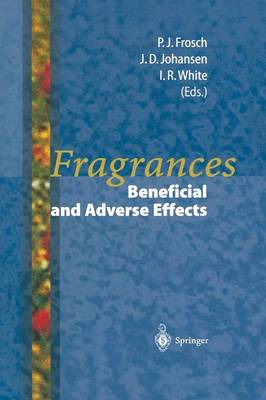
Aromas are an integral part of our civilised society. They are not only used in fine perfumes, but also in numerous other articles with which we have daily contact. Another new development has been the agricultural use of aromas as a "biological weapon" to combat insects and other pests. In the field of dermatology, aromas are today among the most frequent sensitizers and may trigger allergic contact eczemas. This volume presents numerous aspects of the topic for the first time in comprehensive form. In an introduction, the chemistry of frequently used aroma components is described, together with the art of perfume composition that has been refined over the centuries. In a chapter on neuropharmacology, the mechanisms of scent recognition are described in detail.
Contents:
I: The Basics.- The Art of Creating a Perfume.- Cerebral Representation of Odour Perception.- II: Beneficial Biological Effects.- The Structure, Origin and Function of Human Axillary Odours.- Communication by Odour-The Influence of Body Odour on the Attractiveness of Men.- Orientation of Insects in a Multitrophic System: The Role of Fragrances.- Chemical Signals During Raids by the Robber BeeLestrimelitta limao on Other Stingless Bee Nests (Hymenoptera, Apidae, Meliponinae).- III: Adverse Effects in Humans.- Molecular Aspects of Fragrance Sensitisation.- Identification of Fragrance Sensitizers by QSAR.- Fragrances as a Cause of Contact Dermatitis in Cosmetics: Clinical Aspects and Epidemiological Data.- How Do We Test for Fragrance Allergy?.- Fragrance Hypersensitivity and Its Control.- Are Major Components of Fragrances a Problem?.- Quantitative Aspects in Patch Testing and Usage Tests.- d-Limonene-An Old Perfume Ingredient Introduced as a "Natural" Solvent in Industry: Is There a Risk of Sensitization?.- of Sensitizing Fragrance Materials in Natural Ingredient Based Cosmetics.- RIFM Activities in the Safety Assessment of Systemic Effects of Fragrance Materials.- Absorption of Fragrance Ingredients Using In Vitro Models with Human Skin.- Synthetic, Musk Fragrances in Human Fat and Their Potential Uptake by Dermal Resorption.- IV: Safety Assessment-Predictive Assays for Irritation and Sensitization.- A Reappraisal of the Guinea Pig Maximization Test.- The Hydroxycitronellal Story: What Can We Learn from It?.- The Value of Animal Assays and the Quenching Phenomenon.- In Vitro Phototoxicity Tests for Fragrances.- RIFM Activities in the Safety Assessment of the Dermal Effects of Fragrance Materials.- V: The Producer's View.- The Producer's View: Do We Worry About Adverse Effects?.- The IFRA Guidelines.- Fragrances and Environmental Issues: A Case Example of Environmental Risk Assessments of Ingredients.- Fragrances-Future Aspects.
PRODUCT DETAILS
Publisher: Springer (Springer-Verlag Berlin and Heidelberg GmbH & Co. K)
Publication date: December, 2011
Pages: 252
Weight: 400g
Availability: Available
Subcategories: Dermatology, Immunology