
(To see other currencies, click on price)
MORE ABOUT THIS BOOK
Main description:
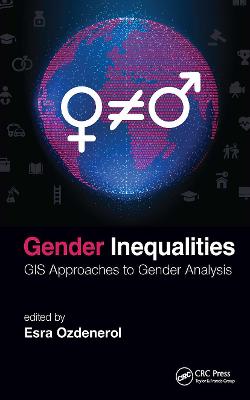
Gender inequality is entrenched in the cultural, political and market systems that operate at household, community, and national levels. Global changes in market access, climatic conditions, and the availability of natural resources intensify disparities in income, in assets and in power among genders. This book aims to explain these gender dynamics at macro and micro levels through GIS and spatial analysis. The first part of the book introduces key concepts of how to integrate GIS in gender inequality research. The second part presents more in-depth case studies, carefully selected such as mapping gender-based violence, gender-inequality in the labor force, refugee mapping, etc.
Contents:
1 The Global Problem in Gender Inequality: Putting Gender on the Map with GIS 2 Mapping Domestic Violence 3 Geospatial Approaches to Intimate Partner Violence 4 Gender Disparity and Economy in U.S. Counties: Change and Continuity, 2000-2017 5 Social and Environmental Injustice Experienced by Female Migrant Workers in China: The Case of Guiyu Town 6 Spatial Concentration of Social Vulnerability and Gender Inequalities in Mexico 7 The Evolving American Opioid Crisis: An Analysis of Gender, Racial Differences, and Spatial Characteristics 8 How to Undertake an Inequality, Gender and Sustainable Development Analysis: A GIS Approach to Gender Analysis in Pakistan 9 Visualizing Equality in the New Mobility Workforce 10 Spatial-Temporal Patterns of Gender Inequalities in University Enrollment in Nigeria: 2005-2015
PRODUCT DETAILS
Publisher: Taylor & Francis (CRC Press)
Publication date: February, 2021
Pages: 272
Weight: 594g
Availability: Available
Subcategories: Public Health