
(To see other currencies, click on price)
MORE ABOUT THIS BOOK
Main description:
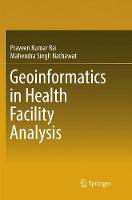
This book demonstrates how GIS techniques and statistical methods can be used to emphasise the characteristics of population and its related variables, vis-a-vis care facilities and the status of vector borne diseases, as well as for malaria modeling. Concentrating on the Varanasi district of India, the main aim of the book is to determine and map the density areas of vector borne diseases using GIS techniques.
The book explores how health GIS is an important sub-discipline of health science and medical geography, which is traditionally focused on the spatial aspects of disease ecology and health care facility analysis.
Contents:
1. Health Care System and Geospatial Technology: A Conceptual Framework of the Study.- 2. Varanasi District: Study Area Profile.- 3. Integration of Census Data with GIS for Analysis of Population Characteristics.- 4. Analysis of Health Care Facility Using GIS.- 5. GIS in Vector Borne Disease Mapping.- 6. Malaria Susceptibility Mapping Using Statistical Methods with GIS.- 7. A Geographical Survey for Utilization of Health Care Facilities.- 8. GIS in Health Care Planning.- Bibliography.- Appendix.
PRODUCT DETAILS
Publisher: Springer (Springer International Publishing AG)
Publication date: June, 2018
Pages: 231
Weight: 4327g
Availability: Available
Subcategories: Epidemiology, General Issues, Public Health