
(To see other currencies, click on price)
MORE ABOUT THIS BOOK
Main description:
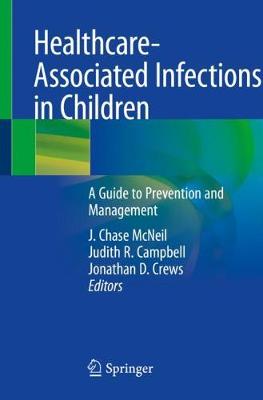
With advances in technology and medical science, children with previously untreatable and often fatal conditions, such as congenital heart disease, extreme prematurity and pediatric malignancy, are living longer. While this is a tremendous achievement, pediatric providers are now more commonly facing challenges in these medical complex children both as a consequence of their underlying disease and the delivery of medical care. The term healthcare-associated infections (HAIs) encompass both infections that occur in the hospital and those that occur as a consequence of healthcare exposure and medical complexity in the outpatient setting. HAIs are associated with substantial morbidity and mortality for the individual patient as well as seriously taxing the healthcare system as a whole. In studies from the early 2000s, over 11% of all children in pediatric intensive care units develop HAIs and this figure increases substantially if neonatal intensive care units are considered. While progress has been made in decreasing the rates of HAI in the hospital, these infections remain a major burden on the medical system. In a study published in 2013, the annual estimated costs of the five most common HAIs in the United States totaled $9.8 billion. An estimated 648,000 patients developed HAIs in hospitals within the US in 2011 and children with healthcare-associated bloodstream infection have a greater than three-fold increased risk of death.While a number of texts discuss HAIs in the broader context of infectious diseases or pediatric infectious diseases (such as Mandell's Principles and Practice of Infectious Diseases or Long and Pickering's Principles and Practice of Pediatric Infectious Diseases) no single text specifically focuses on the epidemiology, diagnosis and management of HAI in children. Many infectious diseases texts are organized based on the microbiology of infection and from this starting point then discussing the clinical syndromes associated with the organism of interest. For instance, a chapter on Staphylococcus aureus may contain a brief discussion of the role of S. aureus in surgical site infections in the wider context of all staphylococcal disease. For clinicians caring for children at the bedside, however, the clinical syndrome is typically appreciated and intervention necessary prior to organism identification. We propose a text that details both the general principles involved in HAIs and infection prevention but also provides a problem oriented approach. Such a text would be of interest to intensivists, neonatologists, hospitalists, oncologists, infection preventionists and infectious diseases specialists. The proposed text will be divided into three principle sections: 1) Basic Principles of Infection Control and Prevention, 2) Major Infectious Syndromes and 3) Infections in Vulnerable Hosts. Chapters in the Major Infectious Syndromes section will include discussion of the epidemiology, microbiology, clinical features, diagnosis, medical management (or surgical management as appropriate) and prevention of the disease entity of interest. Chapters will seek to be evidenced based as much as possible drawing from the published medical literature as well as from clinical practice guidelines (such as those from the Infectious Diseases Society of America) when applicable. We intend to include tables, figures and algorithms as appropriate to assist clinicians in the evaluation and management of these often complex patients. Finally, we intend to invite authors to participate in this project from across a number of medical specialties including infectious diseases, infection control, critical care, oncology and surgery to provide a multidisciplinary understanding of disease. It is our intent to have many chapters be co-written by individuals in different subspecialties; for instance, a chapter on ventilator-associated pneumonia may be co-written by both infectious disease and critical care medicine specialists. Such a unique text has the potential to provide important guidance for clinicians caring for these often fragile children.
Contents:
Section 1. Overview of Infection Control and Prevention
Chapter 1. Basic Principles of Infection Control
Chapter 2. The Role of the Environment and Colonization in Healthcare Associated Infections
Chapter 3. The Role of Antimicrobial Stewardship
Chapter 4: Infection Control and the Need for Family/Child Centered Care
Section 2. Major Healthcare-Associated Infection Syndromes
Chapter 5: Fever in the Hospitalized or Critically Ill Child
Chapter 6: Central Line-Associated Bloodstream Infections (CLABSI)
Chapter 7: Ventilator Associated Pneumonias
Chapter 8: Infections Complicating Abdominal Surgery Procedures
Chapter 9: Infections Complicating Orthopedic Surgery and Implants
Chapter 10: Infections Complicating Neurosurgical Procedures/Devices
Chapter 11: Infections Complicating Cardiothoracic Surgery and Cardiac Devices
Chapter 12: Healthcare-Associated Gastrointestinal Infections
Chapter 13: Healthcare-associated Urinary Tract Infections
Chapter 14: Healthcare Associated Viral Infections: Considerations for Nosocomial Transmission and Infection Control
Section 3. Infections in Vulnerable Hosts
Chapter 15: Healthcare-associated infections in the NICU: a brief review
Chapter 16: Infection Prevention in pediatric oncology and hematopoietic stem cell transplant recipients
Chapter 17: Nosocomial Infections in Pediatric Solid Organ Transplantation
Chapter 18: Infections in Pediatric Patients with End Stage Renal Disease
PRODUCT DETAILS
Publisher: Springer (Springer International Publishing AG)
Publication date: November, 2018
Pages: 351
Weight: 557g
Availability: Available
Subcategories: Infectious Diseases, Paediatrics and Neonatal, Public Health