
(To see other currencies, click on price)
MORE ABOUT THIS BOOK
Main description:
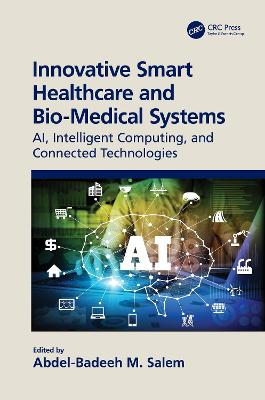
Advances in smart healthcare systems (SHS) and artificial intelligence (AI) domains highlight the need for ICT systems that aim not only to improve human quality of life but improve safety too. SHS bring together concepts and methodologies from various fields, such as communications and network systems, computer science, life sciences and healthcare. The well-known smart healthcare paradigms are; real-time monitoring devices, computer-aided surgery devices, telemedicine devices, population-based care devices, personalized medicine from a machine learning perspective, ubiquities intelligent computing, expert decision support systems, Health 2.0 and Internet of Things (IoT).
This book presents models for the deployment of intelligent computing, information, and networking technologies to aid in preventing disease, improving the quality of care and lowering overall cost. It also discusses the potential role of the AI paradigms, computational intelligence and machine learning techniques which are used in developing the SHS. It will provide examples of potential usage of such technology in smart healthcare and and bio-medical systems.
It will be an important read for researchers and professionals working in smart healthcare systems, as well as those working in the individual areas of networks, artificial intelligence and healthcare who want to see how an interdisciplinary approach can enhance the current technology.
Contents:
Contributors
1. Smart Software for Real- Time Image Analysis
Marius Popescu and Antoanela Naaji
2. A Best Practice for Establishing a Telemedicine Project
Dina Ziadlou, Seyed Mojtaba Mir Hosseini, Nasim Nasiri, and Amin Saberinia
3. Intelligent Algorithms for the Diagnosis of Alzheimer's Disease
Sarah A. Soliman, Rania R. Hussein, El- =Sayed A. El-Dahshan, and Abdel-Badeeh M. Salem
4. An Efficient Protein Structure Prediction Using Genetic Algorithm
Mohamad Yousef, Tamer Abdelkader, and Khaled El-Bahnasy
5. Evaluating the Effectiveness of Healthcare Services by Using the Method of Data Envelopment Analysis
Vitalina Babenko
6. Computer Simulation Study of Oscillation Mechanisms and Physical Properties of Nanosized Biostructures
P.J. Kervalishvili and T.N. Bzhalava
7. Adapting Smartphone-Based Applications for Performance Improvement Metrics' Tracking in Healthcare Facilities as a Managerial Tool
Adriana Burlea-Schiopoiu and Koudoua Ferhati
8. Intelligent Approaches for Developing Knowledge-Based System for Diabetes Diet
Ibrahim M. Ahmed, Marco Alfonse, and Adbel-Badeeh M. Salem
9. An Approach for Designing of Domain Models in Smart Health Informatics Systems Considering Their Cognitive Characteristics
Olena Chebanyuk and Olexandr Palahin
10. Medical Images of Breast Tumors: Classification with Application of Hybrid CNN-FNN Network
Yuriy Zaychenko and Galib Hamidov
11. Artificial Intelligence-Empowered Mobile Healthcare: A Wireless Access Perspective
S. Lenty Stuwart and El-Sayed A. El-Dahshan
12. Computational Intelligence in the Identification of COVID- 19 Patients
Shaymaa Adnan Abdulrahman and Abdel-Badeeh M. Salem
Index
PRODUCT DETAILS
Publisher: Taylor & Francis (CRC Press)
Publication date: December, 2020
Pages: 376
Weight: 499g
Availability: Available
Subcategories: Biomedical Engineering, General Practice