
(To see other currencies, click on price)
MORE ABOUT THIS BOOK
Main description:
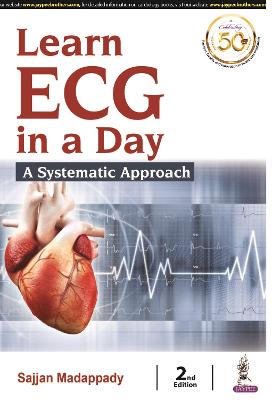
An ECG, or electrocardiogram, is a simple test that records the rhythm and electrical activity of the heart. It is commonly used to detect abnormal heart rhythms and investigate the cause of chest pains. It is important for clinicians to recognise and interpret ECG patterns accurately to ensure correct diagnosis and effective treatment.
This book is step by step guide to performing and interpreting ECGs.
Divided into 11 sections, the text begins with an overview of the history of ECGs and the physiology of the heart and its conduction system. The next chapters discuss the basics of ECG, the leads and their placement, and normal ECG morphology.
The following sections cover systematic interpretation of ECGs, arrhythmias, paediatric ECG interpretation and congenital anomalies, and finally, differential diagnosis.
The second edition of this practical guide has been fully revised to include the latest advances in the field. Line diagrams and clinical images further enhance learning.
Key points
Step by step guide to performing and interpreting ECGs
Fully revised, second edition covering latest advances in the field
Highly illustrated with line diagrams and clinical images
Previous edition (9789350900864) published in 2012
Contents:
History of ECG
Physiology of Conduction System of Heart
Basics of ECG Electrocardiography
ECG Leads
Placement of Leads
Normal ECG Morphology
Systematic Interpretation of ECG
Arrhythmias
Systematic Interpretation of Arrhythmias
Pediatric ECG Interpretation and Congenital Anomaly Detection
Differential Diagnosis
PRODUCT DETAILS
Publisher: Jaypee Medical (Jaypee Brothers Medical Publishers)
Publication date: January, 2021
Pages: 110
Weight: 652g
Availability: Available
Subcategories: Cardiovascular Medicine, Diseases and Disorders, Radiology