
(To see other currencies, click on price)
MORE ABOUT THIS BOOK
Main description:
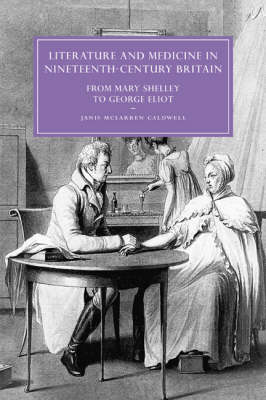
Although we have come to regard 'clinical' and 'romantic' as oppositional terms, romantic literature and clinical medicine were fed by the same cultural configurations. In the pre-Darwinian nineteenth century, writers and doctors developed an interpretive method that negotiated between literary and scientific knowledge of the natural world. Literary writers produced potent myths that juxtaposed the natural and the supernatural, often disturbing the conventional dualist hierarchy of spirit over flesh. Clinicians developed the two-part history and physical examination, weighing the patient's narrative against the evidence of the body. Examining fiction by Mary Shelley, Carlyle, the Brontes and George Eliot, alongside biomedical lectures, textbooks and articles, Janis McLarren Caldwell demonstrates the similar ways of reading employed by nineteenth-century doctors and imaginative writers and reveals the complexities and creative exchanges of the relationship between literature and medicine.
Contents:
Acknowledgements; 1. Introduction: Romantic materialism; 2. Science and sympathy in Frankenstein; 3. Natural supernaturalism in Thomas Carlyle and Richard Owen; 4. Wuthering Heights and domestic medicine: the child's body and the book; 5. Literalization in the novels of Charlotte Bronte; 6. Charles Darwin and Romantic medicine; 7. Middlemarch and the medical case report: the patient's narrative and the physical exam; Notes; Bibliography; Index.
PRODUCT DETAILS
Publisher: Cambridge University Press
Publication date: June, 2008
Pages: 220
Dimensions: 152.00 x 229.00 x 13.00
Weight: 330g
Availability: Available
Subcategories: General Issues