(To see other currencies, click on price)
MORE ABOUT THIS BOOK
Main description:
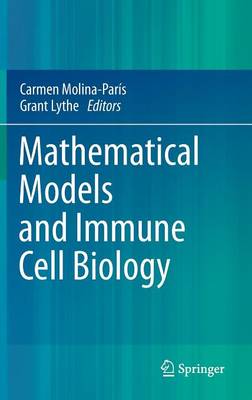
Whole new areas of immunological research are emerging from the analysis of experimental data, going beyond statistics and parameter estimation into what an applied mathematician would recognise as modelling of dynamical systems. Stochastic methods are increasingly important, because stochastic models are closer to the Brownian reality of the cellular and sub-cellular world.
Contents:
Preface.- Thymocyte development.- A review of mathematical models for T cell receptor triggering and antigen discrimination.- Dynamic tuning of T cell receptor specificity by co-receptors and costimulation.- T cell activation and function: role of signal strength.- The cyton model for lymphocyte proliferation and differentiation.- Modeling itravital two-photon data of lymphocyte migration and interaction.- Modeling lymphocyte dynamics in vivo.- Continuous-time birth and death processes: diversity maintenance of naive T cells in the periphery.- Multivariate competition processes: a model for two competing T cell clonotypes.- Stochastic modeling of T Cell homeostasis for two competing clonotypes via the master equation.- Dendritic cell migration in the intestinal tract.- Reassessing germinal center reaction concepts.- B cell strategies of Ag recognition in a stratified immune system.- Dynamics of Peripheral regulatory and effector T cells competing for antigen presenting cells.- Mathematical models of the role of IL-2 in the interactions between helper and regulstory CD4+ T cells.- A Physicist's approach to immunology.- Timescales of the adaptive immune response.- Using mathematical models to explore the role of cytoxic T lymphocytes in HIV infection.- Viral immunity and persistence.- Index.
PRODUCT DETAILS
Publisher: Springer (Springer-Verlag New York Inc.)
Publication date: May, 2011
Pages: 424
Weight: 799g
Availability: Available
Subcategories: Immunology
Publisher recommends