
(To see other currencies, click on price)
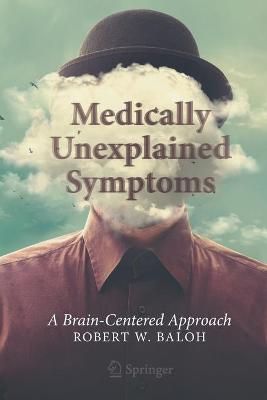
MORE ABOUT THIS BOOK
Main description:
Despite the rapid advances in medical science, the majority of people who visit a doctor have medically unexplained symptoms (MUS), symptoms that remain a mystery despite extensive diagnostic studies. The most common MUS are back pain, abdominal pain, headache, fatigue, and dizziness. This book addresses the obstacles of managing people with MUS in our modern day society from both a historical and contemporary perspective.
Most MUS are psychosomatic in origin, caused by a complex interaction between nature and nurture, between biological and psychosocial factors. Psychosomatic symptoms are as real and as severe as the symptoms associated with structural damage to the brain. Unique and concise, the book explores the biological and psychosocial mechanisms, the clinical features, and current and future treatments of common MUS.
Exploring the unsolved in an accessible manner, Medically Unexplained Symptoms invokes the methodologies of medical science, history, and sociology to investigate how brain flaws can lead to debilitating symptoms.
Contents:
Introduction
Chapter 1. Overview of Medically Unexplained Symptoms
Pain
Brain flaws
Fear
Anxiety
Dizziness
Stress
Fatigue
Diagnostic uncertainty
Chapter 2. Early ideas on hysteria
Hysteria and female sexuality
Bizarre behaviors
Hysteria and the occult
Nerves
Hysteria, a nervous disorder
Early treatments of hysteria
Spinal irritation and the spinal reflex theory
The attack on the female genitalia
Hysteria and fasting girls
Chapter 3. The Golden age of Hysteria
Briquet's syndrome
Charcot and his hysterical circus
Hysteria and hypnosis
Borderlands of hypnosis
Nature or nurture
Ideas about hysteria evolve
Neurasthenia and neurosis
Americanitis
S Weir Mitchell and the Civil War
The Rest Cure
S Weir Mitchell, the enigma
Nerve doctors
Evolution and the brain
Chapter 4. Psychosomatic illness in the 20th Century
Freud, the early years
Breuer's famous patient, Bertha Pappenheim
Freud and Breuer's book on hysteria
Suppressed memories and childhood sexuality
Freud's model of the mind
Overall impact of psychoanalysis
Physicians, patients and psychosomatic symptoms
Common sense psychotherapy
Alternate medical treatments and suggestibility
War and Psychogenic Illness
PTSD the prototypical delayed stress disorder
Relationship between PTSD and mild traumatic brain injury (mTBI)
Psychosomatic medicine
Chapter 5. Biological mechanisms of Psychosomatic Symptoms
The biological link between stress and illness
The hypothalamic-sympathetic-adrenal axis
The brain's emotional center, the limbic system
The hypothalamic-pituitary-adrenal axis
Pavlov and neural plasticity
Hebb's Synapse
Molecular mechanisms of brain plasticity
Stress and the limbic system
Nerve growth factors and stress
The amygdala-prefrontal cortex connection
Central sensitization, a model of neuroplasticity
The descending pain modulatory system (DPMS)
Brain neurotransmitters
Gamma aminobutyric acid (GABA)
Noradrenalin
Serotonin
Dopamine
Cannibinoids
Stress and human behavior
Operant conditioning and behavioral therapy
Chapter 6. Psychosocial mechanisms of psychosomatic Symptoms
How can beliefs and expectations change brain function?
Doctor patient relationship and psychosomatic symptoms
The power of the placebo
Placebo's evil twin, nocebo
Statins and muscle pain and weakness
Glutens and Celiac disease
Expectations and beliefs
Hyperventilation syndrome
Idiopathic environmental intolerance and the nocebo effect
The Belgium Coca-Cola fiasco
Electromagnetic hypersensitivity
Infrasound sensitivity
Sick building syndrome
Summary of Idiopathic environmental intolerance mechanisms
Chapter 7. Low back pain, abdominal pain and headache
Overview of common pain syndromes
Low back pain
Historical perspective
Current approach to chronic low back pain
Physical activity and expectation
Depression and fear avoidance
Abdominal pain
Autonomic nervous system and the gut
Irritable bowel syndrome (IBS)
Peptic ulcer disease
Primary headache disorders
Migraine as a model for psychophysiological illnesses
Historical perspective
Migraine Auras
Early ideas on the cause of migraine
Mechanism of the migraine aura
Genetic susceptibility to migraine
Chapter 8. Fibromyalgia/Chronic Fatigue Syndrome
Pain but much more
Fibromyalgia
Tender points
Central sensitization to pain
Repetitive strain injury (RSI)
Chronic fatigue
Epidemic and sporadic neuromyasthenia
Epstein-Barr virus (EBV)
Chronic fatigue immune dysfunction syndrome (CFIDS)
Myalgic encephalomyelitis (ME)
Overlap with depression and other psychogenic illnesses
Genetics of fibromyalgia and chronic fatigue syndrome
Chapter 9. Chronic dizziness
Anxiety and Dizziness
Near faint dizziness and fainting
Postural orthostatic tachycardia syndrome (POTS)
Dizziness and mass psychogenic illness
Persistent Postural Perceptual Dizziness (PPPD)
Migrainous dizziness
Post Concussion Dizziness
Sea legs and mal de Debarquement syndrome
Height vertigo and acrophobia
Chapter 10. Treatment of psychosomatic symptoms
Lifestyle changes
Exercise and the brain
Sleep and eating habits
Mindfulness
Cognitive Behavioral Therapy
Internet Directed Therapy
Drug treatments
Drugs that increase brain monoamines (antidepressants)
Drugs that decrease excitatory (glutamate) transmission
Antiepileptic drugs
Anxiolytic drugs
Drugs that enhance neuroplasticity and neurogenesis
Ketamine, the new "wonder drug"
Drugs that effect endocannibinoid neurotransmission
Extracranial Brain stimulation
Electroconvulsive therapy (ECT)
Transcranial direct current stimulation (tDCS)
Transcranial magnetic stimulation (TMS)
Deep brain stimulation
DBS for PTSD
Future Directions
PRODUCT DETAILS
Publisher: Springer (Springer Nature Switzerland AG)
Publication date: December, 2020
Pages: 211
Weight: 454g
Availability: Available
Subcategories: General Practice, Neurology, Psychiatry