
(To see other currencies, click on price)
MORE ABOUT THIS BOOK
Main description:
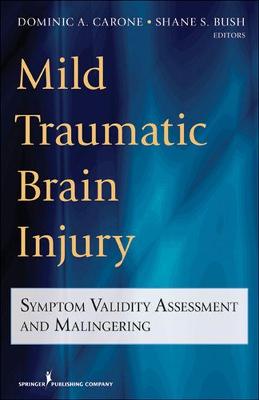
No other neuropsychological condition presents as many opportunities and instances of ""faking"" symptoms as mild traumatic brain injury (mTBI). This authoritative volume is the first book specifically devoted to the integration of symptom validity assessment with individuals who have mTBI. It brings together leading experts in mTBI and malingering to provide a thorough and practical guide to the challenging task of assessing the validity of closed head injuries. In addition to covering the most important symptom validity assessment methods, this timely volume provides guidance to clinicians on professional and research issues and information on symptom validity testing in varied populations.
The book covers mTBI assessment in such specific settings and populations as clinical, forensic, sports, children, gerontological, and military. It also addresses professional issues such as providing feedback to patients about symptom validity, ethical issues, and diagnostic schemas. A recent search of the legal literature has shown that the number of cases involving neuropsychology and symptom validity testing has skyrocketed over the last decade. Mild Traumatic Brain Injury will provide neuropsychologists and related professionals with the in-depth, current information that is critical for the accurate and ethical evaluation of mTBI.
Key Features:
Provides up-to-date coverage of one of the most critical topics for clinical neuropsychologists
Includes contributions from the leading authorities on both mTBI/post-concussive syndrome and malingering/symptom validity
Covers assessment in such contexts as civil and criminal forensics, sports, military/veterans, and gerontological settings
Contents:
1. Introduction: Historical Perspectives on Mild Traumatic Brain Injury, Symptom Validity Assessment, and Malingering
2. The Role of Clinical Judgment in Symptom Validity Assessment
3. Ethical Considerations in Mild Traumatic Brain Injury Cases and Symptom Validity Assessment
4. Diagnostic Schemas in Mild Traumatic Brain Injury and Symptom Validity Assessment
5. Noncredible Explanations of Noncredible Performance on Symptom Validity Tests
6. Providing Feedback to Patients about Symptom Validity Failure, Brain Injury, and Symptom Persistence after Mild Traumatic Brain Injury
7. Research Designs in Mild Traumatic Brain Injury and Symptom Validity Assessment
8. Free-standing Cognitive Symptom Validity Tests: Use and Selection in Mild Traumatic Brain Injury
9. Use of Embedded Cognitive Symptom Validity Measures in Mild Traumatic Brain Injury Cases
10. The Use of Self-Report Scales in Mild Traumatic Brain Injury and Symptom Validity Assessment
11. Strategies for Non-neuropsychology Clinicians to Detect Non-Credible Presentations after Mild Traumatic Brain Injury
12. The Uses of Non-Memory Tests to Assess Symptom Validity after Mild Traumatic Brain Injury
13. Functional Neuroanatomical Bases of Deceptive Behavior and Malingering
14. Cognitive Performance Validity Assessment in Mild Traumatic Brain Injury, Physical Pain, and Posttraumatic Stress
15. Symptom Validity Assessment of Mild Traumatic Brain Injury (mTBI) Cases in Disability and Civil Litigation Contexts
16. Mild Traumatic Brain Injury and Symptom Validity Assessment in Criminal Forensic Contexts
17. Symptom Validity Assessment and Sports Concussion
18. Symptom Validity Assessment of Military and Veteran Populations Following Mild Traumatic Brain Injury
19. Symptom Validity Assessment with Special Populations
PRODUCT DETAILS
Publisher: Springer (Springer Publishing Co Inc)
Publication date: August, 2012
Pages: 430
Weight: 874g
Availability: Available
Subcategories: Neurology