
(To see other currencies, click on price)
MORE ABOUT THIS BOOK
Main description:
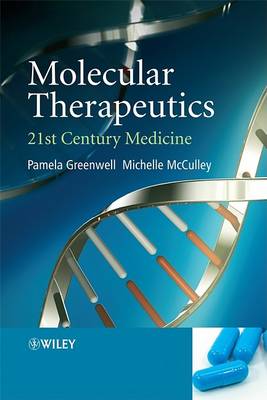
"This book should be useful to lecturers who teach senior undergraduates, graduate students, and students in the biomedical sciences in general. More globally, Greenwell and McCulley's book should encourage academicians of any stripe who for some time have been honing their lectures in a niche subject area to turn their courses into textbooks." -Biochemistry and Molecular Biology Education Molecular therapeutics refers to the developments in molecular biology that are focused on treating disease with new molecular-based drugs. By taking advantage of recent advances and increased understanding in the field of human genetics, this book provides essential background knowledge and key literature on a broad range of novel approaches and disciplines. These include making recombinant proteins, xenotransplantation gene therapy and therapeutic cloning. Molecular Therapeutics: 21st Century Medicine describes the techniques - including their associated benefits, problems, pitfalls - and discusses their applicability with respect to treating microbial, inherited, multifactoral and acquired diseases. The book also pays specific attention to the ethical issues associated with this new field.*
Cutting-edge topics and clinically relevant materials engage and maintain student interest* Self-assessment questions are included throughout the book* Features an additional web site, with a web forum, regular updates and PowerPoint slides of figures from the book Molecular Therapeutics: 21st Century Medicine is a comprehensive, accessible and engaging guide to the rapidly developing field of molecular therapeutics. It is essential reading for all students in this area of research and also of interest for health professionals involved in these novel therapies.
Contents:
Prologue 1 Introduction 1.1 Microbial diseases 1.2 Cancer and heart disease 1.3 Genetic diseases 1.4 Role of molecular biology in therapeutics 2 Prenatal diagnosis and pre-implementation 2.1 Should we treat inherited diseases? 2.2 Genetic screening 2.2.1 Pre-implementation genetic diagnosis 2.3 Counselling 3 Simple protein replacement therapy 3.1 Preventing transfusion-transmissible infectious diseases in the UK 3.2 Ensuring the safety of organ transplants 3.3 Preventing transfusion-transmissible infectious diseases worldwide 3.4 HIV 4 Recombinant protein production 4.1 Choice of organism 4.2 Alternatives to E. coli for the production of recombinant proteins 4.3 Problems with recombinant protein production 4.4 All recombinants must be tested before they are given to humans 4.5 Why make recombinant proteins? 4.6 Recombinant products 4.7 Generics 5 Recombinant vaccines 5.1 Vaccine history 5.2 Vaccines 5.3 Vaccine methods 5.4 Types of vaccine 5.5 The limitations of vaccine programmes 5.6 The role of the WHO 5.7 Problems specific to developing countries 5.8 Economics and logistics of vaccinology 5.9 Recombinant vaccines 5.10 Rational design: bioinformatics and proteomics 5.11 Other interesting areas for vaccine development 5.12 Conclusion 6 Therapeutic antibodies and immunotherapy 6.1 Monoclonal antibodies 6.2 Monoclonal production 6.3 Therapeutic monoclonal antibodies 6.4 Transgenic monoclonals 6.5 The uses of monoclonal antibodies in therapy 6.6 Specific examples of therapeutic strategies 6.7 Other recombinant proteins used in immunotherapy 7 Transgenic animals 7.1 Why do we want to engineer the genomes of animals? 7.2 Experimental procedure 7.3 DNA constructs, insertional mutagenesis and homologous recombination 7.4 Uses of inducible and tissue-specific promoters 7.5 Introduction of the DNA into the cells 7.6 Uses of transgenics 8 Transplantation: a form of gene therapy 8.1 Introduction 8.2 Bone marrow 8.3 Solid organ transplantation 8.4 Other cells and tissues 8.5 Summary of the problems associated with transplantation 8.6 Transplantation statistics 8.7 Legislation 8.8 Religious beliefs and transplantation 9 Xenotransplantation 9.1 Introduction 9.2 Rationale for the use of non-human donors 9.3 Organs from non-human primates 9.4 Pigs 9.5 Problems with pigs 9.6 Government legislation 9.7 When will xenotransplantation start? 9.8 Patient attitudes 9.9 Ethics 9.10 Alternatives to xenotransplants 10 Reproductive cloning 10.1 History 10.2 Problems 10.3 Why was there so much interest in Dolly? 10.4 Was Dolly a lone example? 10.5 Why is cloning useful? 10.6 Is human cloning a reality? 10.7 Why can we not produce human clones that are identical? 10.8 So why clone humans? 10.9 What are the ethical and moral problems? 11 Stem cell therapy 11.1 The potency of cells 11.2 Cloning 11.3 Potency of stem cells 11.4 Potential sources of stem cells 11.5 Stem cells and therapeutic cloning 11.6 Legislation and therapeutic cloning 11.7 Other sources of stem cells 11.8 What can be done? 11.9 Experiments on embryonic cells 11.10 Experiments on fetal tissue and cord blood 11.11 Stem cells from adult tissues 11.12 Safety and technical problems 11.13 Perceived scope of therapy 11.14 Clinical trials of stem cell therapy 11.15 What are the future prospects for stem cell research? 12 Gene augmentation therapy 12.1 Introduction 12.2 Strategy 13 Gene therapy trials for inherited diseases 13.1 Introduction 13.2 Examples of disease treated with retroviral gene therapy 13.3 Cystic fibrosis 13.4 Animal trials with Factor IX 13.5 Adenoviruses have also been used to introduce genes into brain 13.6 Duchenne's muscular dystrophy 13.7 Problems with adenoviruses 13.8 The uses of adeno-associated viruses 13.9 Liposome vector trials 13.10 Trials with polymer mareix delivery 14 Gene silencing technologies 14.1 Antisense therapy 14.2 Triple helix (triplex) technology 14.3 Ribozymes 14.4 Small interfering RNAs (siRNAs) 15 Gene therapy for cancer 15.1 What causes cancer? 15.2 Cancer: a multifactorial disease 15.3 Cancer statistics 15.4 Best treatment currently available 15.5 Do chemo- and radiotherapy cause problems? 15.6 New cancer therapies 15.7 Cancer models in animals 15.8 What kinds of gene therapy can we use to treat cancer? 15.9 Perceived problems in cancer gene augmentation therapy 15.10 Gene silencing technologies and cancer 15.11 Conclusion 16 Single-nucleotide polymorphisms (SNPs) and therapy 17 Legislation, clinical trials and ethical issues 17.1 Legislative bodies 17.2 Clinical trials 17.3 The problems of placebo controlled trials 17.4 The need for informed consent 17.5 Trials in developing countries 17.6 Recent trial issues 17.7 Conclusion Epilogue Sourcing references Index
PRODUCT DETAILS
Publisher: John Wiley & Sons Ltd (John Wiley & Sons Inc)
Publication date: November, 2007
Pages: 264
Dimensions: 170.00 x 244.00 x 15.00
Weight: 467g
Availability: Available
Subcategories: Diseases and Disorders, Pharmacology