(To see other currencies, click on price)
MORE ABOUT THIS BOOK
Main description:
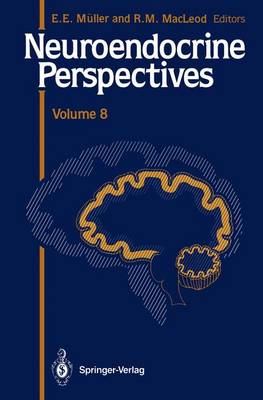
The flow of information in neuroendocrinology and related disciplines is vigorous, favored by the availability of sensitive and specific biochemical and histochemical techniques that advance our knowledge of CNS neurotransmitter and neuropeptide systems. Volume 8 of Neuroendocrine Perspectives illuminates new findings inthis areawhich add complexity to the traditional view ofthe hypothalamo- pituitary control, and to established concepts ofthe modulation ofbrain function by target hormones. In the first chapter, Ben-Jonathan exhaustively reviews evidence derived from her own work that demonstrates the importance of the posterior lobe as a regulator of prolactin secretion via two opposing influences, i. e. , dopamine released by the tuberohypophyseal dopaminergic system into the short portal vessels and a prolactin-releasing factor which is produced locally, though the identity of its innervating neurons is still unclear. Despite the wealth of information on prolactin and its cell of origin, little is known about the manner in which the hormone exerts its effects on target cells.
Frawley and coworkers thoroughlyexamine the direct actions ofprolactin on a broad spectrum ofmammalian tissues, dealing extensivelywith prolactin receptors and the putative second messengers. They also review new evidence, based on their original findings, for an indirect action ofprolactin exerted through the livervia synlactin and liver lactogenic factor, two extracellular modulators ofthe biological functions ofthe hormone. The relationships among the CNS, neuroendocrine and immune systems are bidirectional and constitute an integrated loop.
Contents:
Prolactin Releasing and Inhibiting Factors in the Posterior Pituitaiy.- The Hypothalamo-Pituitary Axis.- Structure-Function Relationship.- Vascular Connections.- Innervation.- Posterior Pituitary Dopamine.- Inhibition of PRL Secretion.- Changes in Synthesis and Turnover Rates.- Regulation of Release.- Posterior Pituitary PRF.- Participation in PRL Release under Different Physiological Conditions.- PRF Activity In Vitro and In Vivo.- Biochemical and Physiological Characterization of PRF.- Cellular Origin.- Summary.- Effects of Prolactin on Target Cells.- Target and Actions of Prolactin.- Reproduction.- Mammary Gland.- Ovary.- Testis.- Accessory Sex Glands.- Feto-Placental Unit.- Homeostatic Mechanisms.- Electrolyte Balance.- Adrenal Gland.- Immune Function.- Liver.- Vasculature.- Feedback Effects.- Additional Actions.- The Signal Transduction Pathway of Prolactin's Actions.- Prolactin and the Prolactin Receptor.- The Prolactin Molecule.- The Prolactin Receptor.- Prolactin-Receptor Complex.- Putative Second Messengers.- Cyclic Nucleotides.- Ions and Ion Channels.- Polyamines.- Prostaglandins and Leukotrienes.- The Phosphatidylinositol-Protein Kinase C System.- Alternative Future Approaches.- Indirect Effects of Prolactin on Target Tissues.- Synlactin.- Evidence for the Existence of Synlactin.- Physiologic Relevance of Synlactin.- Biochemical Characteristics of Synlactin.- Liver Lactogenic Factor.- Evidence for the Existence of Liver Lactogenic Factor.- Physiologic Relevance of LLF.- Biochemical Characteristics of LLF.- Speculation about Synlactin and LLF.- Conclusion.- Cellular and Molecular Aspects of the Neuroendocrine-Immune Dialogue in T-Cell Differentiation.- Cell Populations of the Thymic Microenvironment.- Pathways of T-Cell Differentiation.- Neural Crest Contribution to Thymic Development.- Neuroendocrine Markers of the Thymus.- Intrathymic Synthesis of Neuropeptides.- Thymic Neuropeptide Receptors.- Physiological Significance of Intrathymic Neuropeptide Synthesis.- Relationships between the Thymus and Endocrine Glands.- Growth Hormone and Prolactin.- Hypothalamo-Adrenal Axis.- Gonadal Axes.- Thyroid and Thymus Interactions.- Summary.- The Hippocampus: A Site for Modulatory Interactions between Steroid Hormones, Neurotransmitters and Neuropeptides.- Adrenal Steroid Receptors in Brain.- Distribution and In Vivo Occupancy.- Regulated Access of Steroids to Receptors In Vivo.- Corticosterone.- Dexamethasone.- Aldosterone.- Neural Sites and Mechanism of Regulation of Pituitary-Adrenal Activity.- What Is the Impact of Glucocorticoids Secreted During Stress on the Hippocampus and Other Brain Regions?.- Receptor Up- and Down-Regulation.- Glucocorticoid Modulation of Cyclic AMP Formation.- Neuropeptide Actions on and in the Hippocampus.- Vasopressin.- Vasoacive Intestinal Peptide.- ACTH Analogues and the Aging Hippocampus.- Glucocorticoids as General Maintenance Factors for Brain Structure and Glial Cell Neurochemistry.- Glucocorticoids and Neuronal Survival.- Glucocorticoids and Neuronal Death.- Adrenal Secretions Promote Neuronal Survival.- Conclusions and Speculations: Normal versus Pathological Effects of Glucocorticoids on the Hippocampus and Other Brain Structures.- Gastrointestinal Peptide Binding and Function in the Brain: Emphasis on Peptide YY.- Structure of the PP Family Peptide.- Distribution of PYY in the Gut and Brain.- PYY Receptors in the Brain.- Optimum Conditions for Binding Assay.- Affinity and Specificity of [125I]PYY Binding.- Receptor Subtypes.- G Protein and Second Messenger System.- Receptor-Receptor Interaction.- Regional Distribution of PYY Receptors.- Autoradiographic Localization of PYY and NPY Receptors.- Cross-linking of PYY and NPY to Their Receptors.- PYY Actions in the Brain.- Effects of PYY on the Secretion of Adrenocorticotropin (ACTH) and Other Pituitary Hormones.- Effects of PYY on Feeding Behavior.- Effects of PYY on Temperature Regulation.- Effects of PYY on Learning Behavior.- Other Central Effects and Clinical Implications of PYY in the CSF.- Summary.
PRODUCT DETAILS
Publisher: Springer (Springer-Verlag New York Inc.)
Publication date: October, 2011
Pages: 200
Weight: 312g
Availability: Available
Subcategories: Endocrinology, Neuroscience
From the same series