
(To see other currencies, click on price)
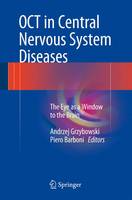
MORE ABOUT THIS BOOK
Main description:
This book reviews recent important advances in the use of optical coherence tomography (OCT) in order to analyze neurodegeneration within the retina through the quantification of axonal loss. Detailed information is provided on the role of OCT as a promising tool for the evaluation of disease progression in numerous neurodegenerative disorders and as a biological marker of neuroaxonal injury. The disorders considered include multiple sclerosis, Parkinson’s disease, Alzheimer’s disease, intracranial hypertension, Friedreich’s ataxia, schizophrenia, hereditary optic neuropathies, glaucoma, and amblyopia. Individual chapters are also devoted to OCT technique, new OCT technology in neuro-ophthalmology, OCT and pharmacological treatment, and the use of OCT in animal models. By documenting the ability of OCT to provide key information on CNS diseases, this book illustrates convincingly that the eye is indeed the “window to the brain”.
Feature:
Describes the role of OCT in evaluating disease progression in neurodegenerative disorders
Covers a wide range of disorders
Documents recent advances and explains their significance
Back cover:
This book reviews recent important advances in the use of optical coherence tomography (OCT) in order to analyze neurodegeneration within the retina through the quantification of axonal loss. Detailed information is provided on the role of OCT as a promising tool for the evaluation of disease progression in numerous neurodegenerative disorders and as a biological marker of neuroaxonal injury. The disorders considered include multiple sclerosis, Parkinson’s disease, Alzheimer’s disease, intracranial hypertension, Friedreich’s ataxia, schizophrenia, hereditary optic neuropathies, glaucoma, and amblyopia. Individual chapters are also devoted to OCT technique, new OCT technology in neuro-ophthalmology, OCT and pharmacological treatment, and the use of OCT in animal models.
As well as being a valuable tool for diagnosis of many retinal diseases and monitoring of surgical and medical treatment, OCT allows study of the retinal nerve fiber layer (RNFL) containing the axons of the retinal ganglion cells, which form the optic nerves, chiasm, and optic tracts. Since retinal axons are nonmyelinated until they penetrate the lamina cribrosa, the RNFL is an ideal structure for visualization of any process of neurodegeneration, neuroprotection, or regeneration. It is for this reason that OCT has been applied in various areas of neurology over the past decade, becoming a hot topic and generating great enthusiasm among neurologists and ophthalmologists. By documenting the ability of
OCT to provide key information on CNS diseases, this book illustrates convincingly that the eye is indeed the “window to the brain”.Contents:
Introduction.- OCT Technique – Past, Present and Future.- Optic Disc Edema.- Compressive Optic Neuropathy.- Multiple Sclerosis.- Parkinson’s Disease.- Alzheimer’s Disease.- Friedreichs Ataxia and More.- Other Neurological Disorders: Migraine, Neurosarcoidosis, Schizophrenia, Obstructive Sleep Apnea-Hypopnea Syndrome (OSAHS).- Hereditary Optic Neuropathies.- Trans Neuronal Retrograde Degeneration.- New OCT Technology in Neuro-Ophthalmology.- OCT and Pharmacological Treatment.- Animal Models in Neuro-Ophthalmology.- OCT in Glaucoma.- OCT in Amblyopia.- Conclusions.
PRODUCT DETAILS
Publisher: Springer (Springer International Publishing)
Publication date: December, 2015
Pages: 340
Availability: Not available (reason unspecified)
Subcategories: Neurology, Ophthalmology and Optometry, Radiology