(To see other currencies, click on price)
MORE ABOUT THIS BOOK
Main description:
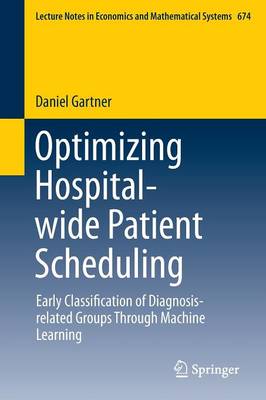
Diagnosis-related groups (DRGs) are used in hospitals for the reimbursement of inpatient services. The assignment of a patient to a DRG can be distinguished into billing- and operations-driven DRG classification. The topic of this monograph is operations-driven DRG classification, in which DRGs of inpatients are employed to improve contribution margin-based patient scheduling decisions. In the first part, attribute selection and classification techniques are evaluated in order to increase early DRG classification accuracy. Employing mathematical programming, the hospital-wide flow of elective patients is modelled taking into account DRGs, clinical pathways and scarce hospital resources. The results of the early DRG classification part reveal that a small set of attributes is sufficient in order to substantially improve DRG classification accuracy as compared to the current approach of many hospitals. Moreover, the results of the patient scheduling part reveal that the contribution margin can be increased as compared to current practice.
Contents:
Introduction.- Machine learning for early DRG classification.- Scheduling the hospital-wide flow of elective patients.- Experimental analyses.- Conclusion.
PRODUCT DETAILS
Publisher: Springer (Springer International Publishing AG)
Publication date: June, 2015
Pages: 200
Weight: 2175g
Availability: Available
Subcategories: General Issues, General Practice
From the same series