
(To see other currencies, click on price)
MORE ABOUT THIS BOOK
Main description:
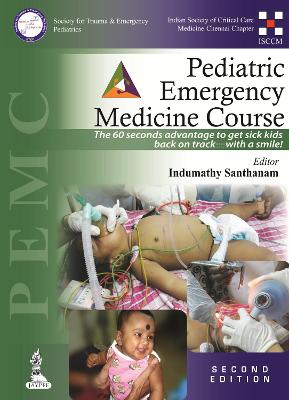
The long awaited second edition of the Pediatric Emergency Medicine Course (PEMC) manual is here. A veritable atlas of resuscitation, it has the largest number of photographs taken before, during and after resuscitation. It explains how the pediatric assessment triangle has been modified to help take therapeutic decisions. Current evidence-based guidelines have been incorporated such that safer and more effective treatments are employed during resuscitation.
In-depth explanations of underlying mechanisms of disease and pathophysiology are given. These help the reader to understand in a 'back to basics' way what is going on in a patient and help make differential diagnoses. There is also considerable detail and up to date information on key drugs, emergency treatments and essential equipment. For the first time evidence from patients has been used to teach how to save a life in the initial minutes. This book teaches that the best resource in the successful resuscitation of seriously ill children is yourself.
Key features include:
The Pediatric Emergency Medicine Course (PEMC) manual helps you understand why the child has become seriously ill.
It shows you how you could pick up those early subtle signs of danger.
It shows you how you too can learn the skills to put yourself those vital minutes ahead in the race against death and neurological handicap.
It teaches you the 'Pearls and Pitfalls' of all the common interventions in the care of the acutely ill child.
It highlights the current state of the art evidence supporting many of the interventions during active resuscitation.
For the first time, you will be taught a unique 'step by step approach' to save a child's life using real life case scenarios.
For the first time, in this subspecialty, you will have a 'never before' experience with brilliant pictures of real time resuscitation.
Contents:
Section I Recognition of Critical Illness
1. Recognition of Early Signs of Critical Illness in the Out Patient Department
Section II Airway
2. Basic Airway Management
3. Pharmacologically Assisted Intubation (PAI) in the PED
4. Assessment and Management of the Difficult Airway
5. Flow Inflating Ventilation Device: Non-invasive CPAP in Settings Without Immediate Access to Mechanical Ventilation
Section III Approach to Stridor
6. Stridor
Section IV Breathing
7. Approach to Respiratory Distress
8. Management of an Asthmatic Exacerbation
9. Pulse Oximeter
Section V Circulation
10. General Approach to the Management of Shock
11. Intraosseous Access
12. Vasoactive Drugs in the ED
13. Approach to Acute Diarrhea and Shock in the ED
14. Cardiogenic Shock
15. Septic Shock
16. Approach to Recognition and Management of Dengue in the ED
17. Anaphylaxis
18. Cyanotic Spell
19. Hypertensive Emergencies
Section VI Disability
20. Approach to Decreased Level of Consciousness
21. Status Epilepticus
Section VII Envenomation
22. Scorpion Sting
23. Snake Bite Envenomation
Section VIII Poisoning
24. Poisoning: General Approach
25. Specific Poisons
Section IX Trauma
26. Approach to Traumatic Brain Injury (TBI)
27. Approach to Polytrauma
Section X Environmental Injury
28. Burns
29. Electrical Injury
30. Submersion Injury
Section XI Special Topics
31. Gastrointestinal Bleeding
32. Interpretation of Chest X-rays in Critically Ill Children
33. Procedural Sedation and Management of Pain in Children
34. Diabetic Ketoacidosis
35. Setting up Pediatric Resuscitation and Emergency Services
Section XII Procedures
36. Nebulizer Therapy
37. Needle Thoracocentesis and Thoracostomy
38. Pericardiocentesis
39. Cannulation of External Jugular Vein
40. Foley Catheter Insertion
41. Spinal Stabilization
Appendices
Appendices
Epilogue
Index
PRODUCT DETAILS
Publisher: Jaypee Medical (Jaypee Brothers Medical Publishers)
Publication date: October, 2013
Pages: 438
Weight: 450g
Availability: Available
Subcategories: Diseases and Disorders, Paediatrics and Neonatal